

Audio By Carbonatix
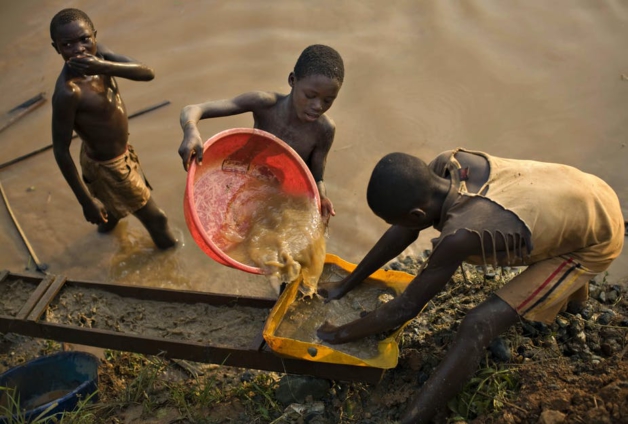
The 2021 Population and Housing Census (PHC) report reveals that 419,254 children aged 5 to 17 are engaged in economic activity in the country.
Out of the figure, 76,439 are aged 5 to nine, 153,189 aged 10 to 14, and 189,626 aged 15 to 17.
This is in a statement by the Ghana Statistical Service (GSS) on economic activities of children to mark World Day Against Child Labour.
The statement said children aged 5 to 17 worked on average 29.2 hours in the seven days preceding Census Night.
"Children 15 to 17 years worked an average of 35.2 hours, children 10 to 14 years worked an average of 26.5 hours (about 5 hours per weekday), and children 5 to 9 years worked an average of 19.8 hours (about 4 hours per weekday), " it said.
The statement said children engaged as paid apprentices worked the highest number of hours on average (48.4), almost twice that of those engaged as contributing family workers who worked the lowest hours on average (25.0).
It said children in the service sector worked 36.8 hours on average, while those in the agricultural sector worked an average of 25.6 hours.
"Nationally, 153,773 children aged 5 to 17 engaged in economic activity had never attended school.
"Out of this number, 37,963 children were 5 to 9 years. In all, 94,748 children aged 5 to 17 years engaged in economic activity were also attending school during the census," it said.
"Eight in every ten (81.3 per cent) children aged 5 to 9 who were engaged in economic activity lived in six regions – Northern (19,727), Oti (14,875), North East (8,073), Upper West (7,071), Savannah (6,525), and Upper East (5,851)," it said.
The statement said Nkwanta North (9,707), Krachi Nchumuru (7,598) and Nanumba North Municipal (7,598) had the highest number of children 5 to 14 years engaged in economic activities.
The three districts, the statement said had 21,726 children representing 10.8 per cent of all children 5 to 14 years engaged in economic activities.
It said the population of children engaged in economic activities in the Nkwanta North, Krachi Nchumuru and Nanumba North Municipal districts exceeded that of the Bono (3,635), Ahafo (3,261), Western North (2,088), Western (4,179) and Central (4,834) regions combined.
In all, 30 out of the 261 districts had more than 10 per cent of children 5 to 14 years
engaged in economic activity, the statement said.
It said the district with the highest percentage was Krachi Nchumuru, where one in every three children (34.8 per cent) was engaged in economic activity.
The percentage in the district was about 10 times the national average of 3.2 per cent. Nkwanta North with 27.8 per cent and Yunyoo Nasuan, 25.3 per cent, were the two other districts where over a quarter of children were engaged in economic activity, the statement added.
Latest Stories
-
National Sports Fund needs strong leadership from the top – Administrator David Wuaku
4 minutes -
JoySports Exclusive: Steve McLaren in talks with GFA after expressing interest in Black Stars job
9 minutes -
Fire guts auto parts warehouse at Bubuashie, one fire officer injured
15 minutes -
I owe my victory to coach Ofori Asare – Allotey after winning WBA Africa Gold Super Flyweight belt
20 minutes -
Church of Pentecost supports over 2,000 BECE candidates in Obuasi with career guidance seminar
2 hours -
Brandon Asante and Coventry all but promoted to Premier League despite Sheffield Wednesday draw
2 hours -
GPL 2025/26: Late Kwartemaa strike downs Hearts in Tema
2 hours -
Ghana Faces Sierra Leone Moment as Prosecutorial Powers come under strain
3 hours -
Don’t consume fish or seafood from Tema Shipyard until further notice – FDA warns
3 hours -
Why volunteering might be Africa’s most underrated career accelerator
3 hours -
ActionAid Ghana raises concern over gender gaps in Feed Ghana Programme
3 hours -
Windstorm wreaks havoc in Gushegu, displacing nearly 2,000 residents and damaging schools
3 hours -
Friends of Bridget Bonnie Marks her 35th birthday with donation to Kasseh Model Health Centre
4 hours -
From Ekumfi Kokodo to the Pulpit Stage: Essi Donkor’s gospel journey takes shape
4 hours -
Landfilling waste management creates no value, it’s an economic waste
4 hours