

Audio By Carbonatix
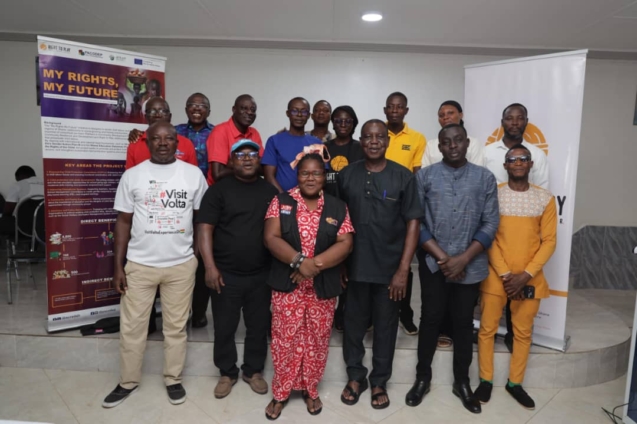
The grim reality of child labour and trafficking in Ghana’s fishing and cocoa-growing communities took centre stage at a media engagement held in Dambai, where journalists were urged to become stronger allies in protecting vulnerable children.
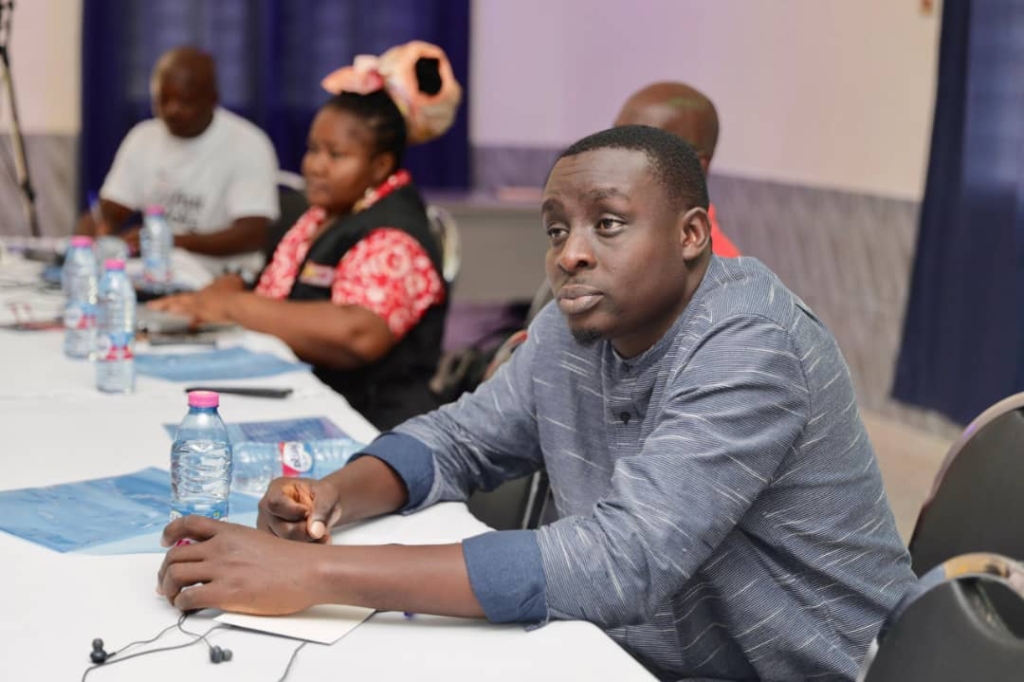
The event, organised by Right to Play in collaboration with Partners in Community Development Programme (PACODEP) and the Alliance for Community Resilience and Development (ACRAD), with funding support from the European Union (EU), aimed to equip media professionals with the skills to report responsibly and amplify the voices of children trapped in exploitative labour.
Children at risk
From children diving into dangerous waters to untangle fishing nets to others toiling on cocoa farms, participants painted a stark picture of the ongoing menace.

Despite years of advocacy, child labour remains deeply rooted in parts of the Volta and Oti regions, with poverty often forcing families to send children into hazardous work.
Mr. George Achibra, Director of PACODEP, described the situation as a national emergency that demands bold and united action.

“When a child dives into muddy waters to disentangle a net, or spends long hours on cocoa farms instead of being in school, we must all ask ourselves—are they not dying slowly? One child may die today, and another tomorrow, if we do not act,” he said passionately.
He emphasised the critical role of journalists, not only in exposing abuses but also in shaping policies and mobilising resources to protect children.
“Journalists must be resourced to travel, see where these children are suffering, and tell their stories with clarity. This way, the nation will understand the urgency to act,” Mr. Achibra added.
Tackling root causes
According to Bagonluri Kibuka, Project Manager of My Rights, My Future, poverty is the main driver of child exploitation. He explained that traffickers often deceive parents with false promises of better opportunities for their children.
“Being on the lake is not a right. Being in school is a right. That is why we rescue these children and reintegrate them into formal education. For older ones beyond school-going age, we are liaising with agencies like NBSSI and social welfare to provide vocational training,” Mr. Kibuka explained.

While rescues are ongoing, he noted that perpetrators often escape justice. The project, he said, is working closely with law enforcement and judicial services to ensure that communities understand punitive measures against offenders.
A call for collective action
Isaac Ahadzi, Communications Specialist at Right to Play, highlighted that the €800,000 EU-funded project was designed not only to rescue children but also to provide sustainable solutions.
“Rescuing a child is not enough. If we do not connect them to opportunities to add value to their lives, we have not done our job,” he said. “We need the media, policymakers, and everyday Ghanaians to work together. Ask questions when someone offers to take your child away. Where are they going? What will they be doing? We must be intentional about protecting our children.”
He also called on government to increase budgetary allocations for child protection, education, and safeguarding initiatives to match the scale of the problem.
A humanitarian fight, not just policy
Participants acknowledged that while Ghana has made significant policy progress—such as aligning with the UN Convention on the Rights of the Child and adopting child protection frameworks—implementation remains weak.
The engagement underscored that child labour is not just a statistic but a harsh reality cutting short the dreams of thousands of children. Behind every number is a child robbed of play, learning, and a chance at a brighter future.
The My Rights, My Future project operates in six communities across Krachi East, Krachi West, Kpando, and Ketu North districts. Its goal is to change the narrative through education, rescue operations, advocacy, and empowering community-based organisations.
The way forward
The session concluded with a renewed commitment to resource the media, strengthen community education, and ensure that perpetrators face justice. Above all, it was a call to protect children for the sake of the nation’s future.
As Mr. Achibra put it: “This is not drama. These are real children, with real stories. If we do not hold their hands today, Ghana will have no tomorrow.”
Latest Stories
-
Power restoration fault suspected in Kumasi Central Market fire
4 hours -
The 7-foot giant of Ngleshie Amanfro: Seven-foot Ghanaian Ephraim Saawa dreams of joining the national basketball team
5 hours -
Government promises support for Kumasi Central Market fire victims
5 hours -
Vibes The Movie: Big Ghun’s Ghanaian film earns five nominations at 2026 REFFA
6 hours -
MamaCare CEO warns unresolved conflicts among health workers could undermine maternal and neonatal care
6 hours -
Health professionals urged to translate medical knowledge into practice to save mothers
6 hours -
Conflicts among care providers linked to maternal, neonatal deaths – Expert
8 hours -
GIS marks 10th TIME conference, champions improved teaching practices
8 hours -
BRICS Or Balance? What Ghana’s bid really means
8 hours -
GPRTU wants full TRAFFITECH-GH implementation to start in 2027
9 hours -
How 10-mile walks for basic education birthed a 50-year legal career for Justice Korbieh
9 hours -
Mahama announces plans to import electric wheelchairs for PWDs
9 hours -
KGL U17 Colts 2026: Western beat Prempeh Elite Academy to set up final final with Greater Accra Region
9 hours -
Late Solanke strike salvages 10-man Spurs draw at Man United
9 hours -
Gender Ministry to monitor welfare of Nana Akua Addo’s children amid domestic violence case
9 hours