

Audio By Carbonatix
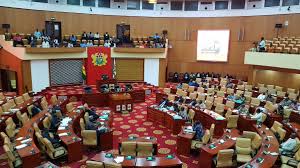
The Council of Indigenous Business Associations (CIBA), has called on government to ensure that the new Rent Bill is passed before the current Parliament is dissolved.
In a statement, CIBA said the new Bill, if passed into law, will reduce the burden of exorbitant rent advance on the working class especially businesses in the Micro, Small and Medium Enterprises (MSMEs) in the country.
“We envisage a new rent regime that is very friendly to the circumstances of MSMEs across the country being strictly enforced by the relevant state institutions in eliminating all the illegalities currently being perpetrated in the housing sector against tenants and releasing significant pressure on the working capital of MSMEs in the country to thrive,” the group said.
The group further said rent advance payment which is a feature of the moribund Rent Act of Ghana (Act 220), has been one of the biggest challenges SMSEs face in the country.
CIBA said companies are forced to pay exorbitant amounts to secure buildings ahead of time while these monies could be injected into other things that can boost their businesses.
The group is hopeful that the new bill will deal with the issue.
“Imagine a business starter having to mobilise funds to hire a property for years be it shop or residential accommodation. That will mean more than half the amount will go into the rent,” CIBA stated in a media release issued in Accra," they said.
Dr Bawumia earlier, in July, announced that government is designing a policy framework which will address rental issues in the country.
He stated that government is working towards replacing the the existing, moribund Rent Act of Ghana (Act 220), which was passed in 1963 with a new Rent Control Bill which will be submitted to Cabinet and subsequently Parliament, for approval.
CIBA is also calling for the new Bill to be passed and made law before the current Parliament is dissolved.
The group further noted that the Rent Control Department is operating under an old law when so much has changed since the law was passed in 1963.
“The department should be resourced to be able to bite. It must be well positioned so they can adjudicate and take their own decisions and not always refer cases to court or else passing the law will be one of those fine ones and not bite,” they said.
Latest Stories
-
What everyone should know about C-sections
2 hours -
Health Ministry engages Ga Mantse ahead of Free Primary Healthcare launch
2 hours -
We can tackle multiple priorities – Sam George defends Anti-LGBTQ Bill push
3 hours -
Statement: Ghana Chamber of Mines’ Response to Claims in Joe Jackson’s “Ananse Stories about the Economy of Ghana”
3 hours -
GES opens 2026 teacher recruitment for licensed B.Ed graduates
3 hours -
Ghana must value skilled trades, build resilient learners — Ibn Chambas
3 hours -
Ghana must rethink education around relevance, resilience and responsibility — Ibn Chambas
3 hours -
Prince Harry faces defamation lawsuit from charity he co-founded
3 hours -
South Korea deploys thermal cameras to track escaped zoo wolf
3 hours -
Calls for royal meeting with Epstein survivors grow ahead of US visit
3 hours -
Ibn Chambas advocates blend of technology and human values in education
3 hours -
UMA improves healthcare access in Asutifi North with GH₵700k ‘Kim Taylor Legacy’ Walkway
3 hours -
Scholarships Authority and Fanaka University offer sponsorship for procurement and supply chain studies
4 hours -
Bisa Kdei drops new single ‘Go N Look’ featuring Medikal
4 hours -
Benin facing rising terrorism in north as French military presence faces growing criticism
4 hours