

Audio By Carbonatix
Civil society organizations are urging Commonwealth countries to act on research findings to address global health disparities.
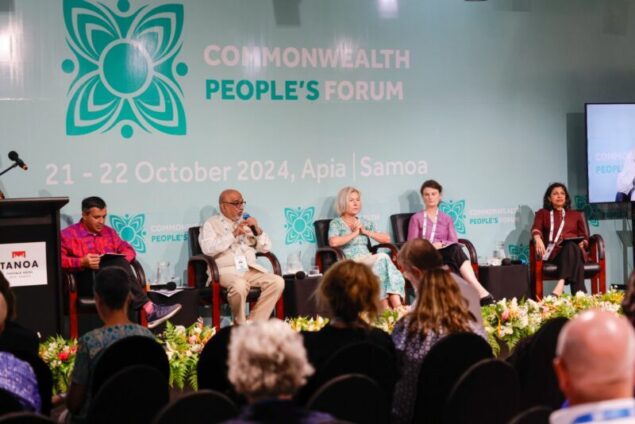
This call to action was made during the Commonwealth People’s Forum in Apia, Samoa, on Tuesday, October 22, which was attended by 250 delegates, including policymakers, leaders from civil society, and advocates from various Commonwealth countries.
The Commonwealth People’s Forum, the largest assembly of civil society within the Commonwealth, brought together leading experts in public health and infectious diseases to explore ways to enhance healthcare quality and accessibility for communities worldwide.
The advocates agreed that the global community needs to transition from research to action, indicating that the shortcomings of weak health systems disproportionately impact the most vulnerable populations. They emphasized that the Commonwealth should support Member States in providing healthcare that addresses the needs of their communities.

Health specialists, advocates for indigenous community health, and advisors to the World Health Organization discussed how the coalition of 56 Commonwealth Member States can promote health justice. This marks the first time that Commonwealth civil society has gathered in a Pacific island nation to focus on improving access to quality care in some of the world's most marginalized and underserved communities.
The Founder of Lake Health and Wellbeing (LHW), an NGO based in St Kitts and Nevis, Abi Begho, emphasized that Commonwealth countries require restorative health justice to tackle the historical and systemic causes of health inequalities, aiming to restore, repair, and heal communities.
Abi pointed out that the Commonwealth faces an implementation issue, noting that while countries are aware of the problems and have identified solutions through research, progress is still lacking.
“We need the Commonwealth to support the government to implement policy, legislation and interventions,” Abi said.
A well-known Niuean-born New Zealand doctor and public health advocate, Sir Collin Fonotau Tukuitonga, expressed concern that the ongoing discussions often repeat the same themes: those who need the most assistance are receiving the least. He questioned when meaningful changes would actually take place.
“We keep talking about the same thing: those who need the most get the least. When will that change? Health equity means some groups in society who require more resources to get the care and quality they need.”
A blind Samoan disability rights activist, Mataafa Faatino Utumapu, acknowledged the importance of healthcare frameworks but stressed that they will remain ineffective unless countries implement the necessary changes.
Mataafa stated the urgent need to bridge the significant gap between what is documented and the resources actually available for people with disabilities.
“It’s good to have healthcare frameworks. But frameworks will remain frameworks if we don’t make the necessary adjustments. It’s time to address the huge disconnect between what’s written and what resources are available for people with disabilities.”
The founding Executive Director of The Africa Center for Health Systems and Gender Justice, Dr. Stellah Bosire, emphasized that primary healthcare is rooted in the experiences of people living their daily lives. She argued that this is where investment should be focused.
“Primary health care is with the people who have experience day-to-day living. It’s where our investment should go.”
The People's Forum unites a variety of perspectives to address critical issues affecting the 2.7 billion people in the Commonwealth. Taking place every two years before the Commonwealth Heads of Government meeting, it is the only event of its kind for civil society to exchange ideas on transforming the systems and attitudes that marginalize many individuals. The outcomes from the Forum will be presented at a special meeting of Commonwealth Foreign Ministers later this week during the Commonwealth Heads of Government Meeting (CHOGM) in Samoa.
CHOGM is the premier decision-making summit for Commonwealth leaders globally. It is the largest international forum outside of the United Nations, bringing together countries at various stages of development, from some of the wealthiest to some of the poorest. The summit provides an opportunity to reinforce the Commonwealth's role as a strong advocate for global solidarity on issues that require collective action.
Latest Stories
-
A source of excellence across generations – Vice President Opoku-Agyemang lauds Mfantsipim
13 minutes -
(Photos) Mfantsipim School launches historic 150th anniversary
36 minutes -
Knights and Ladies of Marshall group backs Catholic Bishops’ stance on anti-LGBTQ+
2 hours -
Bright Simons writes: All the Filla in the Ibrahim Mahama/E&P – Gold Fields Saga
2 hours -
Monetise Idiocy In Ghana
2 hours -
The Ghanaian prophet and the mysterious death of his scottish wife Charmain Speirs
3 hours -
Nearly 400 sentenced in Nigeria for links to militant Islamists
3 hours -
Ghana’s recovery supported by gold strength despite global oil price pressures – Standard Bank Research
3 hours -
Methodist Church hails Mfantsipim@150; calls for “fresh consecration” to excellence
4 hours -
‘Excellence is our inheritance’ – Nana Sam Brew-Butler hails Mfantsipim’s 150-year reign in leadership
4 hours -
Kwaku Azar writes: A-G vs OSP
4 hours -
Mfantsipim–Adisadel rivalry built excellence, not division – Sam Jonah
4 hours -
Vice President launches Mfantsipim’s 150 years of shaping Ghana’s greatest mind
5 hours -
I assure Otumfuo, Mahama will join him to commission KNUST Teaching Hospital by end of this year – Haruna Iddrisu
5 hours -
Barcelona dominate derby to extend La Liga lead
5 hours