


Audio By Carbonatix
Every nation that takes its Constitution seriously must, from time to time, pause to reflect on it, not merely as a legal document, but as a living framework that confers power, protects liberty, and binds a people together. In Ghana, 7th January is such a moment.
Constitution Day is not simply another statutory public holiday; it is a deliberate affirmation that our democracy is anchored in law, restraint, and institutional continuity.
The 1992 Constitution came into force on 7th January 1993, marking Ghana’s return to constitutional rule after years of political instability and authoritarianism. It ushered in the Fourth Republic, restoring civilian governance, entrenching fundamental rights, and establishing a carefully calibrated system of checks and balances.
Yet, for many years, this foundational moment passed annually without formal national recognition. We witnessed the celebration of Independence Day, Workers’ Day, and Republic Day.
Curiously, however, the Constitution, the supreme law under which all authority is exercised, had no dedicated place in our civic calendar.
That omission was neither accidental nor trivial. Constitutionalism thrives on memory. When societies fail to ritualise their constitutional moments, they risk reducing the Constitution to a purely technical instrument, invoked only in courtrooms or moments of crisis.
Recognising Constitution Day through statute was therefore an intentional act of governance: a reminder that constitutional rule is not self-executing, and that democracy must be nurtured through both law and culture.
It was against this background that the Public Holidays Act was amended to formally establish Constitution Day as a statutory public holiday. The Explanatory Memorandum accompanying the Public Holidays (Amendment) Bill captured the rationale with clarity and conviction as follows:
“The 1992 Constitution established the Fourth Republic, which was inaugurated on 7th January, 1993. The Fourth Republic has provided the basis for the longest, uninterrupted period of stable, constitutional rule in the history of Ghana. It has witnessed seven successive presidential and parliamentary elections and the assumption of office of five Presidents, four of whom are still alive."
"The transfer of power between the two major political parties, on three occasions in the Fourth Republic, has been peaceful, without the unfortunate incidents of violence and war that have characterised the history of some of our neighbouring countries. During this period, there have been landmark cases that have shaped the constitutional jurisprudence and entrenched the fundamental human rights of the people of Ghana, including freedom of speech. It is therefore worth setting aside the 7th day of January as a national holiday to acknowledge our collective efforts, as a country, in ensuring that the tenets of democracy, the rule of law and the principles of constitutionalism are upheld.”
In my capacity as Legal Counsel to the President, I was privileged to participate in the legal and policy processes that led to this reform. The objective was clear: to embed constitutional reflection into the national consciousness and to signal that fidelity to the Constitution transcends administrations, ideologies, and political cycles.
By placing Constitution Day firmly on the statute books, Parliament affirmed a simple but profound truth, to wit, constitutional governance is neither optional nor partisan.
For that reason, it is appropriate to commend the current Mahama administration for retaining Constitution Day as part of Ghana’s statutory holiday framework. Constitutional continuity is itself a democratic virtue.
When successive governments preserve institutions established by their predecessors, particularly those tied to constitutional values, they reinforce public confidence in the stability and neutrality of the State. Constitution Day belongs to the Republic, not to any one government.
The symbolic power of Constitution Day was vividly demonstrated on its very first observance. On that day, Ghana witnessed the swearing-in of a Chief Justice, Justice Anin Yeboah, a Justice of the Supreme Court, an act that sits at the very heart of our constitutional architecture.
Judicial investiture is more than just another ceremony; it is a constitutional affirmation of the rule of law and the independence of the Judiciary.
That this moment occurred on Constitution Day was neither coincidental nor insignificant. It visually and institutionally reinforced the fundamental role of the Judiciary as the custodian of the Constitution and the sole authority constitutionally empowered to interpret and enforce its supremacy.
I was entrusted with coordinating the investiture, working closely with the President and other key stakeholders involved in organising the ceremony. It demanded exacting constitutional fidelity, strict adherence to procedure, precision in protocol, and a keen appreciation of symbolism.
The President’s public commendation of how the ceremony was conducted was not a personal accolade; it was an institutional endorsement of constitutional order, of getting the small things right because they safeguard the big principles. In constitutional democracies, process matters. Ceremony matters. Details matter.
In his address on that occasion, President Akufo-Addo aptly observed:
“Appropriately, we are doing so [swearing in Justice Anin Yeboah] on Constitution Day – a day chosen to celebrate as a public holiday to commemorate the virtues of constitutionalism which has enabled us in the Fourth Republic to enjoy the benefits of the most prolonged period of stable constitutional governance in our country’s history.”
As we commemorate Constitution Day today, the lesson is not nostalgia, but responsibility. Our Constitution is a living instrument, tested daily by governance choices: how power is exercised, how public funds are managed, how appointments are made, how rights are respected, and how institutions are allowed to function independently.
Constitution Day should therefore provoke honest national reflection: are we strengthening constitutional culture, merely reciting constitutional text, or sacrificing it on the altar of political expediency?
Our reflection must go beyond ceremony and symbolism to the more difficult question of how constitutional power and discretion are being exercised in practice. The Constitution is not threatened only by coups or open defiance; it is more subtly eroded when its safeguards are bent, ignored, or applied selectively in the pursuit of short-term political ends.
When the independence of the Judiciary, expressly guaranteed by the Constitution, is undermined through the removal of a Chief Justice on grounds that struggle to meet the constitutional threshold; when the report that formed the basis of such removal is withheld from the public despite clear legal obligations requiring its disclosure; when citizens are arrested and publicly treated as guilty before they are charged, in direct violation of the presumption of innocence; when accused persons are subjected to oppressive bail conditions beyond their means and left on remand for days before trial, with the courts seemingly unable to intervene; these are not isolated procedural concerns. They are constitutional red flags.
Equally troubling is the manner in which prosecutorial power is exercised. When the Attorney-General discontinues cases involving political allies and seeks to justify those decisions through press conferences rather than through the courts; when the same Attorney-General appears to “try and convict” his political opponents in the media who are yet to appear before a judge, only to adopt a different posture in court; when reputations are publicly damaged while the constitutional guarantee of innocence until proven guilty is ignored; then the integrity of the criminal justice system itself is called into question.
A functioning constitutional democracy also depends on vigilant intermediaries. When sections of the media and civil society, entrusted with the duty to hold power accountable, drift into uncritical praise-singing, public oversight weakens.
When state institutions treat the constitutional and statutory right to information with contempt, refusing disclosure without lawful justification, transparency suffers, and accountability recedes. These failures, taken together, should give us pause.
Constitution Day must therefore be a moment of collective introspection. The Constitution is not self-enforcing, nor is it preserved by anniversaries alone. It lives only if citizens insist upon it, institutions respect it, and officeholders exercise power within its bounds.
The responsibility to protect our constitutional order does not rest with one branch of government or one group of actors; it belongs to all of us. If the Constitution is to endure and serve generations yet unborn, we must be prepared not only to celebrate it, but to defend it in both principle and practice.
Ultimately, Constitution Day reminds us that the Constitution is not self-defending. It depends on lawyers who argue with integrity, judges who decide without fear, public officers who act with restraint, and citizens who insist on accountability.
By remembering 7th January, we recommit ourselves to the enduring principle that Ghana is governed not by men and women, but by law.
That is why Constitution Day must always matter.
About the Author
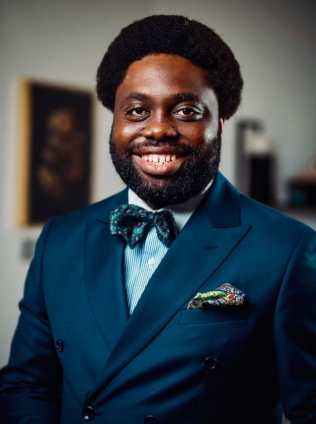
The author is the former Legal Counsel to President Nana Addo Dankwa Akufo-Addo, serving from 2017 to 2025, and acted as Secretary to the President during the final months of the Presidency.
He is a Senior Attorney at VINT & Aletheia PRUC, a Young Global Leader of the World Economic Forum and the author of an upcoming book on Governance and Law in Ghana, drawing on his experience at the heart of constitutional and executive decision-making.
Latest Stories
-
Gomoa Easter Carnival: Sarkodie, Kuami Eugene, Tinny, set festival ablaze as Day 3 ends on high note
21 minutes -
“Feels amazing” – Antoine Semenyo reveals after Manchester City dismantle Liverpool
47 minutes -
Mahama calls for emergency cabinet meeting over rising fuel prices
2 hours -
Asante Gold reports US$345million loss for 2025
2 hours -
Gov’t making progress in clearing $1.7bn power debt – Mahama
3 hours -
Justice is the engine of growth – Chief Justice
4 hours -
Meet us halfway – Trade Minister tasks private sector with AfCFTA success
5 hours -
After more than 14 years at Atletico Madrid, what next for Simeone?
5 hours -
Conquering the World – Building on the foundations laid by Otto Addo
5 hours -
[Playback] Sarkodie, Kwami Eugene, Tinny, Keche and others thrill fans at Gomoa Easter Carnival
5 hours -
Gomoa Easter Carnival: Experts charge indigenes to own festival to ensure sustainability
6 hours -
Gomoa Easter Carnival: Edem Agbana and Joy Prime fans shower festival with huge endorsements
8 hours -
Gathering of Royals 2026: Empowering women, boosting tomato production
8 hours -
Gov’t to overhaul free zones into manufacturing hubs for local production – Trade Minister
9 hours -
Ghana losing $2.5bn yearly from raw exports – Trade Minister reveals
9 hours