

Audio By Carbonatix
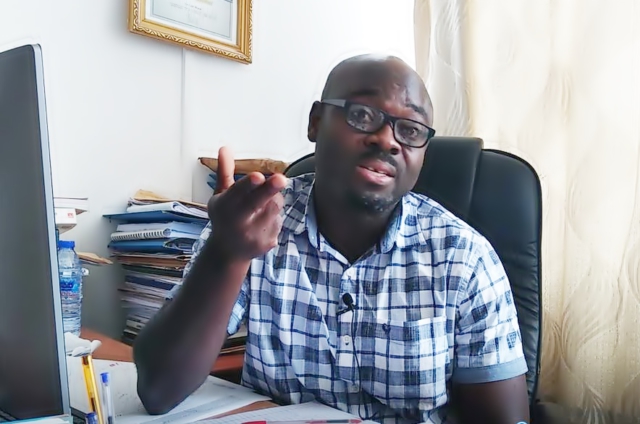
The cost of the Eurobond issued yesterday by government is relatively expensive compared to recent years, Economist and Finance Lecturer at the University of Ghana Business School, Dr. Lord Mensah has disclosed.
The country was successful in raising about $3 billion in debt instruments on the international capital market.
But the average cost of the bonds is a little above 8.0%.
Dr. Mensah told Joy Business the success of the bond doesn’t mean the country’s investment climate is the best, but rather because the government is desperate for money to finance the budget.
“If you look at the composition of the mixture [debt instrument] from the $3.0 billion bonds, you’ll realize that obviously because of covid-19 and the risk involved - as far as the investor funds are concerned - you are not going to get the same coupon rate as we did last year.”
“Last year, we raised a 7-year bond which was worth about 6.37% for the coupon rate, but then this time if you look at the mixture, 7-year bond is going for 7.75%; and I mean it signals were we are”, Dr. Mensah said.
He emphasized that it’s not only about raising the money, but it is about the cost of the debt which you [government] will pay a higher interest later.
The nation also raised a zero rated bond but the cost at the end of the tenure is about 5.0%.
“Somebody will talk about the 4-year zero coupon bond; it’s quite innovative in a way it will give us a breathing space, but in itself if you look at the amount that we are paying at the end of the fourth year relative to the beginning amount that we are raising, it gives you a return of about 5.0% which overall if you put all the bonds together we are doing around 8.0% for the $3.0 billion which has been broken on the average”, D. Mensah said
“So effectively, it is quite innovative way to approach the market. But in the end, the cost will still be high and because we are desperate for the money and in the end we needed the money in Ghana; and somebody will talk about investor appetite in our environment”, he noted.
“So I might see it to be more or less desperation for money, but then as the cost of bringing that money to Ghana...we don’t really care about it that much”, he concluded.
Ghana successfully raise $3bn Eurobond
Ghana successfully raised US$3 billion Eurobond from the international capital market, which was highly patronized.
The transaction comprised of four tranches; US$ 525 million 4-Year Zero Coupon, US$1 billion 7-year bond, US$1 billion bond and US$500 million 20-year.
The interest cost for the US$1 billion 7-year bond, US$1 billion bond and US$500 million 20-year were 7.75%, 8.625% and 8.875% respectively.
There was also the issuance of a Zero Coupon Bond.
Latest Stories
-
YEA clears majority of beneficiary arrears, assures completion of outstanding payments
5 minutes -
AfCFTA key to building globally competitive African businesses – Zambia envoy urges Ghanaian CEOs
17 minutes -
Albert Kobina Mensah, soil pollution and remediation: Risk assessment, phytoremediation, revegetation
23 minutes -
GIFEC supports national rollout of One Million Coders Programme with laptop presentation
31 minutes -
Old Tafo MP rolls out street lights project to boost security and night-time economy
38 minutes -
Telecel Ghana CEO urges urgent education reform and stronger industry-academia partnership at UEW Public Lecture
48 minutes -
Nigerian army general and several soldiers killed in assault on military base in northeast
49 minutes -
Dagbamete chief urges completion of road project, expansion of vocational training
57 minutes -
Urgently cancel Truedare AI Customs deal over cost concerns – Joseph Cudjoe to Mahama
1 hour -
Poor safety habits to blame for recurring boat fatalities — GMA boss, Kamal-Deen Ali
1 hour -
Owabi 75% blocked, Barekese loses 40% capacity as siltation, plastics threaten water supply crisis
1 hour -
Ashanti RCC seeks to clear unauthorised garages under new car mall initiative
1 hour -
DPS International steals spotlight at Ghana Interschool Festival Part 2
1 hour -
Republic Bank Ghana PLC leverages Kwahu Business Forum deliberations
1 hour -
Ghana and Artemis II: Hospitality, Love, and Conquest
1 hour