

Audio By Carbonatix
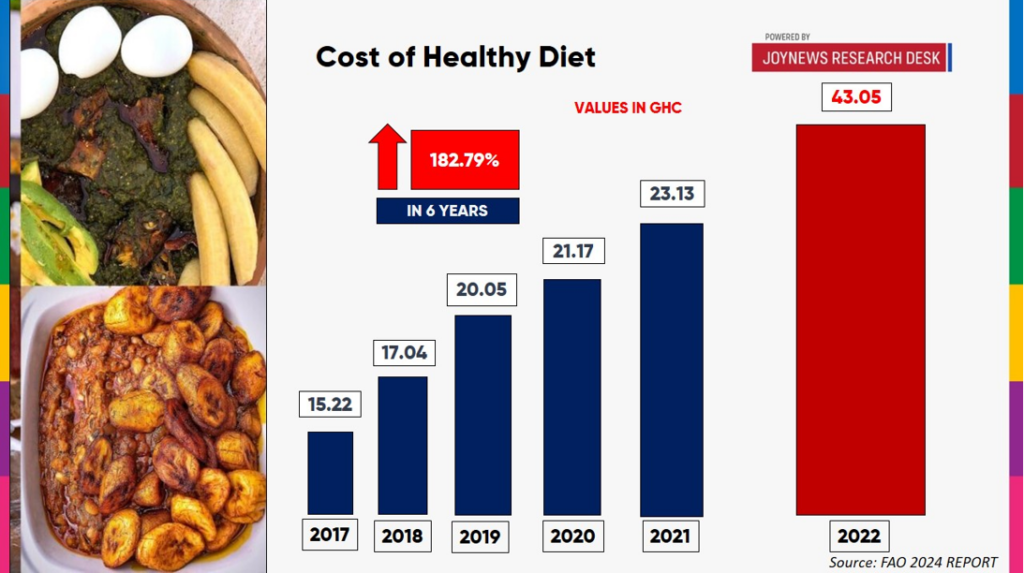
The cost of maintaining a healthy diet in Ghana has seen an alarming rise of almost 200% over the past six years. This is according to the 2024 Food and Agriculture Organization of the United Nations (FAO) State of Food Security and Nutrition in the World report.
The FAO defines a healthy diet as one that ensures diversity in food groups, adequacy of essential nutrients, and moderation of harmful ingredients, and balance in energy and macronutrient intake.
This approach supports overall well-being by promoting a varied, nutritious diet while minimizing the risk of chronic diseases.
In Ghana, the cheapest possible healthy diet relies on locally available foods that meet energy and nutritional standards. However, as prices soar, even this basic dietary requirement is becoming increasingly out of reach.
Between 2017 and 2022, the cost of a healthy diet increased from $3.45 to $4.29 per day, equivalent to GHS 15.22 and GHS 43.05, respectively. This 182.79% increase has significantly strained household budgets, making a healthy diet unattainable for many Ghanaians.
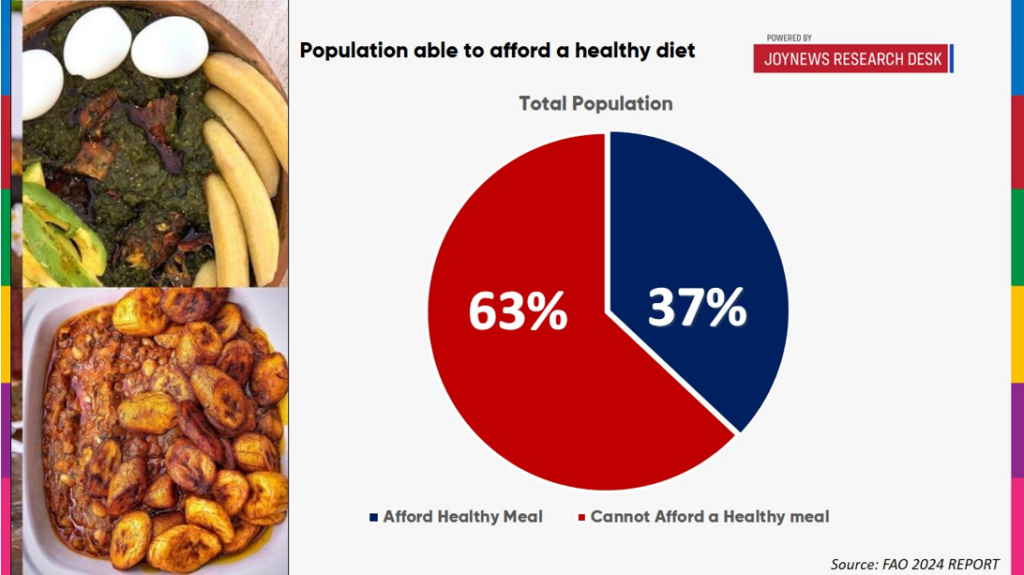
The report reveals that 21.1 million Ghanaians, that is 63% of the population, are unable to afford a healthy meal for a day.
This marks an increase of 1.4 million people since 2017, when 19.7 million faced the same challenge. The data highlights a worrying trend of deepening food insecurity in a country heavily reliant on agriculture yet increasingly vulnerable to global economic shocks.
The report further emphasizes two major events to have exacerbated this crisis. The COVID-19 pandemic disruption to global supply chains, driving up the cost of food and energy. Compounded by the war in Ukraine, which further strained global food supply networks, particularly in grains and fertilizers. As a result, inflationary pressures soared, pushing basic food prices beyond the reach of many households in Ghana.
According to FAO, this budget optimization could enable 4.2 million more Ghanaians to afford a healthy diet by 2025, with the number rising to 5.3 million by 2030 through sustained implementation.
The situation calls for urgent policy measures to improve food affordability and accessibility. The report suggests optimizing Ghana’s agricultural budget by reducing spending on seed subsidies and irrigation while increasing investments in mechanization and extension services. This reallocation aims to enhance Agrifood GDP.
The FAO's 2024 report is a stark reminder of the widening gap between income levels and food affordability, and the pressing need for both national and international interventions to secure the right to adequate nutrition for all Ghanaians.
Latest Stories
-
Kwaku Azar writes: A-G vs OSP
13 minutes -
Mfantsipim–Adisadel rivalry built excellence, not division – Sam Jonah
38 minutes -
Vice President launches Mfantsipim’s 150 years of shaping Ghana’s greatest mind
55 minutes -
I assure Otumfuo, Mahama will join him to commission KNUST Teaching Hospital by end of this year – Haruna Iddrisu
2 hours -
Gov’t to roll out free special education for persons with disabilities from July 1 – Education Minister
2 hours -
“We used it to test our officiating officials’ readiness” – Bawah Fuseini after CAA Athletics event
2 hours -
Volleyball emerges as Ghana’s fastest rising sport
3 hours -
National Sports Fund needs strong leadership from the top – Administrator David Wuaku
3 hours -
JoySports Exclusive: Steve McLaren in talks with GFA after expressing interest in Black Stars job
3 hours -
Fire guts auto parts warehouse at Bubuashie, one fire officer injured
3 hours -
I owe my victory to coach Ofori Asare – Allotey after winning WBA Africa Gold Super Flyweight belt
3 hours -
Church of Pentecost supports over 2,000 BECE candidates in Obuasi with career guidance seminar
5 hours -
Brandon Asante and Coventry all but promoted to Premier League despite Sheffield Wednesday draw
5 hours -
GPL 2025/26: Late Kwartemaa strike downs Hearts in Tema
5 hours -
Ghana Faces Sierra Leone Moment as Prosecutorial Powers come under strain
5 hours