

Audio By Carbonatix
Spanish authorities have arrested a couple suspected of selling exotic cats online, including protected species like white tigers, pumas and clouded leopards.
Civil Guard police raided the couple's home on the island of Majorca after learning that they were owning and breeding rare feline species, which they then sold on social media.
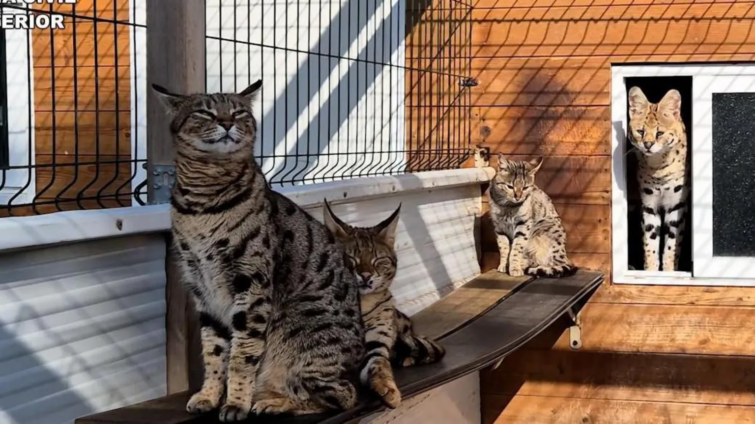
In total, 19 felines were found on the property and rescued by agents. They included a caracal, two servals and 16 hybrid felines.
The Civil Guard say the discovery was just "the tip of the iceberg of a plot" of a global criminal organisation involving breeders, transporters and vets.
"Most of the animals offered for sale came from countries such as Russia, Belarus, and Ukraine, to be smuggled into the European Union," the Civil Guard said.
The authorities said the couple's social media was "extremely active" as people from other countries contacted them to purchase these types of animals.
The animals were smuggled into the EU through Poland's border with Belarus and then distributed with false documents, they added.
Europe is a central hub for exotic wildlife trade and the illicit black market is on the rise, according to the International Fund for Animal Welfare (IFAW).
The couple also advertised other animals through social media, including hyenas, desert lynxes and pumas.
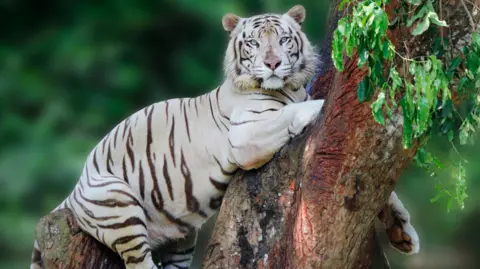
A clouded leopard - an animal native to the Himalayas - with a price tag of €60,000 (£52,000; $68,000) was also put up for sale online.
This raid was part of a wider operation which began last March. One other person is being investigated for selling various species of exotic animals on the internet.
The animals have been temporarily placed at the Son Servera Safari Zoo in Majorca. They will later be relocated to a rescue centre near Alicante.
The high demand for exotic cats is fuelled by social media because the felines can be seen as a sign of wealth or status, according the IFAW.
But these cats – which require a lot of space – are difficult to look after.
"They are very aggressive and can pose a danger to people or other animals" which leads to many people getting rid of them, the Spanish Civil Guard said.
Latest Stories
-
After more than 14 years at Atletico Madrid, what next for Simeone?
2 hours -
Conquering the World – Building on the foundations laid by Otto Addo
2 hours -
[Watch Live] Obrafour, Kwaw Kese, Tinny, Keche and others thrill fans at Gomoa Easter Carnival
2 hours -
Gomoa Easter Carnival: Experts charge indigenes to own festival to ensure sustainability
3 hours -
Gomoa Easter Carnival: Edem Agbana and Joy Prime fans shower festival with huge endorsements
4 hours -
Gov’t to overhaul free zones into manufacturing hubs for local production – Trade Minister
5 hours -
Ghana losing $2.5bn yearly from raw exports – Trade Minister reveals
6 hours -
Mahama unveils plans for Kwahu Airport, Convention Centre
6 hours -
World’s oldest leader, Paul Biya to get a deputy for first time in 43-year rule
6 hours -
Search for missing US airman continues as Trump threatens ‘hell’ if Iran does not reach deal
6 hours -
US says it has arrested relatives of late Iranian general Qasem Soleimani
6 hours -
La Liga: Real Madrid’s title hopes hang in the balance as Mallorca snatch stoppage-time winner
6 hours -
FA Cup: Haaland hat-trick powers Man City past Liverpool into semi-finals
6 hours -
FA Cup: Chelsea thrash Port Vale to reach Wembley semi-final
6 hours -
Gov’t to boost tourism in coastal communities through infrastructure, sanitation – Vice President
7 hours