

Audio By Carbonatix
The new coronavirus variant Omicron is spreading across the globe at an unprecedented rate, the World Health Organization (WHO) has warned.
Cases of the heavily mutated variant have been confirmed in 77 countries.
But at a press conference, WHO chief Tedros Adhanom Ghebreyesus said it was probably in many others that had yet to detect it.
Dr Tedros said he was concerned that not enough was being done to tackle the variant.
"Surely, we have learned by now that we underestimate this virus at our peril. Even if Omicron does cause less severe disease, the sheer number of cases could once again overwhelm unprepared health systems," he said.
The Omicron variant was first identified in South Africa in November, and the country has since seen a surge in infections. President Cyril Ramaphosa has tested positive for Covid-19 and is currently isolating with mild symptoms.
A number of countries have introduced travel bans affecting South Africa and its neighbours following the emergence of Omicron, but this has failed to stop it from spreading around the world.
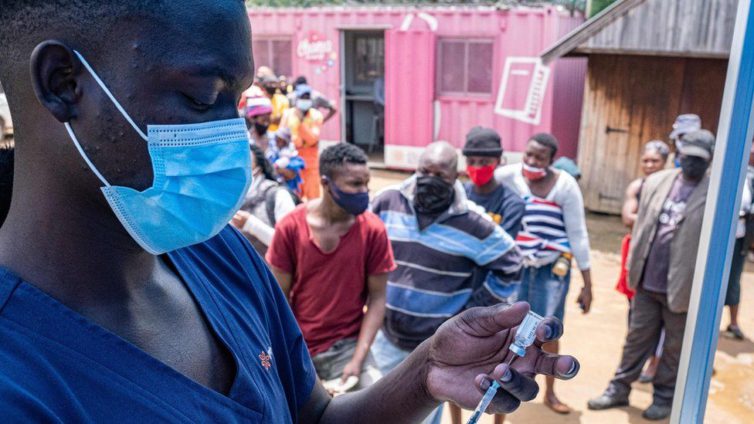
In the press conference on Tuesday, Dr Tedros reiterated concerns about vaccine inequity, as some countries accelerate rollouts of a booster shot in response to Omicron.
Recent studies of the Pfizer/BioNTech vaccine showed it produced far fewer neutralising antibodies against Omicron than against the original strain, but that this deficit could be reversed by a third, booster, jab.
Dr Tedros said boosters "could play an important role" in curbing the spread of Covid-19, but that it was "a question of prioritisation".
"The order matters. Giving boosters to groups at low risk of severe disease or death simply endangers the lives of those at high risk who are still waiting for their primary doses because of supply constraints," he said.
Supplies to the global vaccine-sharing programme Covax have increased in recent months.
However, world health officials fear a shortfall of tens of millions of doses - like the one which occurred in the middle of this year when India suspended its vaccine exports - could happen again.
In poorer countries, some vulnerable people are yet to receive a single dose.
Latest Stories
-
Israel carries out large wave of air strikes across Lebanon
34 seconds -
BBC upholds complaints over racial slur in Baftas broadcast
42 seconds -
Kukurantumi set to host 2025/26 Women’s FA Cup Final as Hasaacas Ladies face Army Ladies
1 minute -
Where the law stops: Torture, power, and the failure of prevention in Ghana
2 minutes -
Only 6% of imports insured locally despite mandatory policy – GSA raises concern
7 minutes -
IndomieFest Accra 2026 delivers Ghana’s premier family festival at Easter
13 minutes -
GIP Secures $20m boost from Norfund, Axis Pensions to deepen SME financing in Ghana
21 minutes -
Newlywed wife of US soldier freed by ICE after detention at military base
36 minutes -
GMet forecasts thunderstorms, gusty winds over southern Ghana
41 minutes -
John Kpikpi supports Taviefe youth with GH¢5000, calls for unity and new leadership
44 minutes -
John Kpikpi courts Taviefe youth, urges shift towards Progressive Alliance for Ghana
51 minutes -
Reconstruct, Don’t Refurbish: Terminal 2 and the high cost of policy misjudgement
59 minutes -
Starmer arrives in Saudi Arabia after US-Iran ceasefire deal
59 minutes -
Maxwell Kwame Odoom-Tsibu
1 hour -
Health NGOs warn of imminent family planning crisis over delayed UNFPA supplies at Tema Port
1 hour