

Audio By Carbonatix
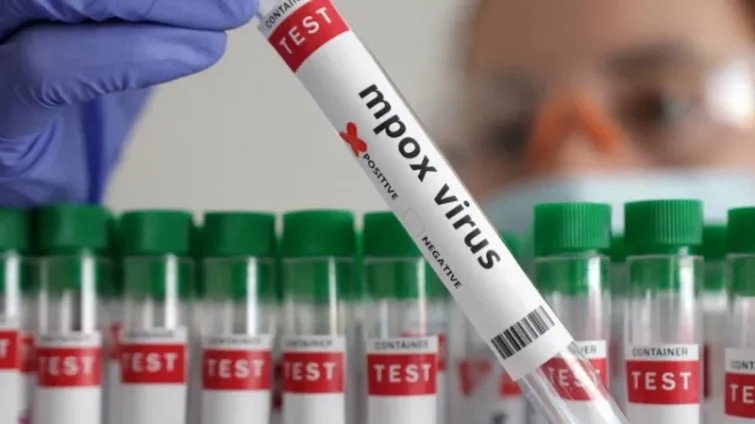
The World Health Organization (WHO) has approved the first diagnostic test for mpox where the results can be immediately known, saying it could prove pivotal in helping to stop the rising global cases of the deadly virus.
The new PCR test enables the detection of the mpox DNA taken from skin lesion swabs.
Currently, samples have to be sent to a laboratory for testing and the patient and medics have to wait days for the result.
Limited testing capacity and delays in confirming cases continue to be a challenge in Africa - worsening the spread of mpox that was previously known as monkeypox.
Of the more than 30,000 suspected cases reported in Africa this year, barely 40% had been confirmed through a test, the WHO said.
Yukiko Nakatani, the WHO's assistant director-general, described the new diagnostic test as "a significant milestone".
“Increasing access to quality-assured medical products is central to our efforts in assisting countries to contain the spread of the virus and protect their people, especially in underserved regions," she added.
The breakthrough comes as the Democratic Republic of the Congo, where the highest number of cases has been reported, prepares to begin an mpox vaccination programme on Saturday.
Mpox, which is a highly contagious disease, has killed at least 635 people in that country this year.
In August, the outbreak of the virus was declared a global public health emergency by the WHO for the second time in two years, following rising cases in DR Congo and its spread to neighbouring Burundi, Uganda and Rwanda.
Some Western countries have donated doses of mpox vaccines to combat the outbreak of the disease in Africa but reports say more are urgently needed.
Rwanda, which was the first to administer mpox vaccines in Africa last month, is set to receive 5,000 more doses on Friday, according to the Africa Centres for Disease Control and Prevention (Africa CDC).
In Nigeria, a vaccination drive against the virus is set to be rolled out next Tuesday, the Africa CDC said.
Frontline healthcare workers and close contacts of infected patients are set to be given priority in DR Congo, which has 200,000 vaccines donated by the European Commission, it said.
Latest Stories
-
Mohammed Polo vouches for Karim Zito to lead Black Stars
12 minutes -
Asthma Ghana donates over GH¢50,000 worth of aerochambers to Ho Teaching Hospital
12 minutes -
Inflation rises to 5.2% in September 2026 as prices in Services sector still high
19 minutes -
US death row inmate Christa Pike awake and speaking after failed execution, lawyers say
31 minutes -
California pair charged with abusing at least 14 surrogate-born children
32 minutes -
France halts use of stun grenades after boy’s hand blown off in student protests
32 minutes -
CIKoD trains Agriculture Extension Officers on agro-ecological farming in Upper East
47 minutes -
THE LAW 101: Trial in Absentia -the law exists, but where are the rules?
55 minutes -
Ghanaian football fan proposes major penalty rule change to IFAB
60 minutes -
Community 25 residents demand urgent action over prolonged water crisis
1 hour -
Nearly GH¢6m spent to fix Kpong-Tema transmission lines to improve water supply – GWL
1 hour -
Dr Olukoya-backed MFM rules Nigerian women’s basketball
1 hour -
THE LAW 101: Before you fly that drone
1 hour -
Wa West DCE, MP hand over and commission health, education, and hospitality projects
1 hour -
Drone ownership does not give unrestricted right to fly anywhere – Anyenini
1 hour