


Audio By Carbonatix
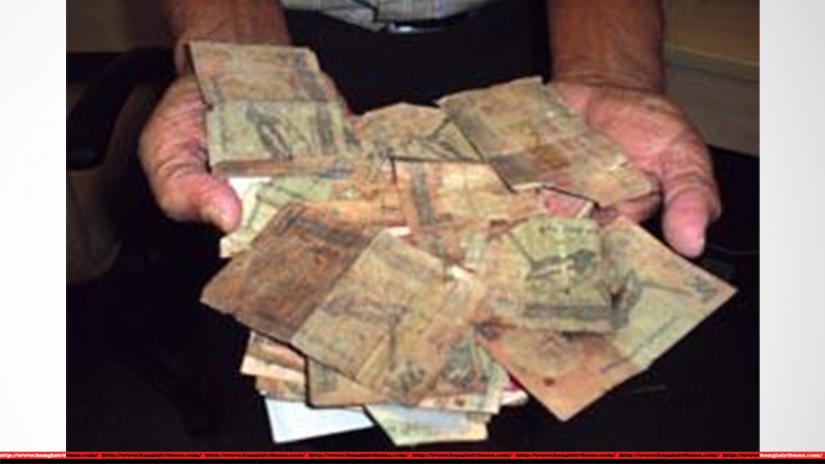
A study carried out by Researchers from the Department of Theoretical and Applied Biology at the Kwame Nkrumah University of Science and Technology (KNUST) has shown that a group of bacteria responsible for diseases ranging from boils to pneumonia, can be contracted through currency notes.
Due to this finding, members of the general public have been entreated to desist from counting the cedi notes with saliva.

“Microorganisms generally love moisture, thus, counting money with saliva is not a good practice’’ Lead Researcher, Dr. Linda Aurelia Ofori said.
She disclosed that members of the team were surprised to find out how quickly currency notes got dirty after being released into circulation. The study was therefore undertaken to ascertain the frequency of Methicillin-Resistant Staphylococcus Aureus (MRSA- an infection caused by bacteria that has become resistant to many antibiotics) on currency notes circulating in the Kumasi metropolis.
She revealed that 120 banknotes from 10 units were obtained, put in clusters and analysed at the laboratory.

“We tried putting the money in clusters. All monies from commercial drivers in one group, those serving raw meat and fish in one cluster, public toilets, etc. Each note in each cluster was treated as a unit, so that we don’t influence the type and number of bacteria we find on one, by another. And we used fresh currency notes from the Bank of Ghana as control,” she stated.
Six MRSA strains out of the 17-coagulase positive Staph were found on all the notes collected.
Staphylococcus aureus or “Staph” is a kind of bacteria commonly found on human skin and in the nose. Staph bacteria although usually harmless, can cause serious infections that can lead to death, especially in people with weakened immune systems.
Methicillin-Resistant Staphylococcus Aureus (MRSA) causes staph infection that is difficult to treat because of resistance to key antibiotics. Staph infection, including those caused by MRSA, can spread in hospitals, healthcare facilities, and especially every part of the community, and has therefore become a public health concern.
The full study, yet to be published, observed that these strains showed resistance to beta-lactam antibiotics such as cefoxitin. Lower denominations carried a higher number of bacteria.
According to Dr. Linda Aurelia Ofori, washing of hands, keeping clean and dry money, are some measures one can take to prevent such infections.
She also advised the Bank of Ghana to undertake steps to disinfect old and dirty notes before they are re-circulated.
Latest Stories
-
Church of Pentecost supports over 2,000 BECE candidates in Obuasi with career guidance seminar
32 minutes -
Brandon Asante and Coventry all but promoted to Premier League despite Sheffield Wednesday draw
54 minutes -
GPL 2025/26: Late Kwartemaa strike downs Hearts in Tema
1 hour -
Ghana Faces Sierra Leone Moment as Prosecutorial Powers come under strain
1 hour -
Don’t consume fish or seafood from Tema Shipyard until further notice – FDA warns
1 hour -
Why volunteering might be Africa’s most underrated career accelerator
1 hour -
ActionAid Ghana raises concern over gender gaps in Feed Ghana Programme
1 hour -
Windstorm wreaks havoc in Gushegu, displacing nearly 2,000 residents and damaging schools
1 hour -
Friends of Bridget Bonnie Marks her 35th birthday with donation to Kasseh Model Health Centre
2 hours -
From Ekumfi Kokodo to the Pulpit Stage: Essi Donkor’s gospel journey takes shape
2 hours -
Landfilling waste management creates no value, it’s an economic waste
3 hours -
Photos: Speaker Bagbin Commissions MPs constituency office under parliamentary decentralisation programme
3 hours -
Black Stars technical advisor Winfried Schäfer sacked as GFA shakes up backroom staff
3 hours -
Wenchi water project almost complete, critical to gov’t agenda – GWL MD
3 hours -
Anti-LGBTQ+ bill not part of government’s legislative agenda – Inusah Fuseini
3 hours