

Audio By Carbonatix
“When the champions of justice fall silent, who will speak for those who once spoke for us?”
It is a heartbreaking moment for Ghana, not just because the Chief Justice now stands suspended, but because the very groups that claim to champion women’s rights have abandoned her. Where are the protests? Where are the statements of solidarity?
We fight for market women but desert the third female Chief Justice? Is justice only for the poor and powerless? Where is the collective outrage that once filled the streets in response to lesser injustices? If she were a struggling kayayei, Accra would be ablaze.
But power knows no gender. The silence is deafening – and it speaks volumes about the selective application of justice in this country.
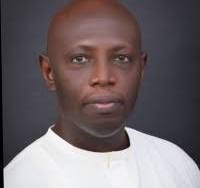
According to Professor Isaac Boadi Dean, Faculty of Accounting and Finance at UPSA and Executive Director of the Institute of Economic and Research Policy (IERPP), we have witnessed women’s advocacy groups rise with passion and fury for the marginalised, the abused, and the voiceless.
Yet, when a woman at the very pinnacle of judicial power faces scrutiny, those same groups are conspicuously absent. Is it because her case lacks the emotional pull of a victim’s tale?
Or is it that standing with her does not align with the preferred narrative of fighting systemic oppression?
Whatever the reason, the hypocrisy is glaring. The movement that once chanted "solidarity forever" now seems to whisper, "solidarity for some".
In July 2020, when 90-year-old Akua Denteh was brutally lynched in the Savannah Region over witchcraft accusations, women’s groups marched, petitioned, and compelled the state to act.
In 2021, when Major Ama Sarfo was publicly shamed by the military over allegations of an affair, feminists demanded accountability, questioning why the institution was swift to punish a woman yet slow to address systemic abuse.
In 2022, when a young rape victim in Assin Fosu took her own life after the police ignored her pleas, women’s advocacy groups erupted in fury, prompting a belated investigation.
These cases show the power of collective action – when women unite, they can shake the very foundations of injustice. But today, as Chief Justice Gertrude Torkornoo faces suspension, the silence is crushing. Where is that same energy? Where is that same demand for fairness?
Why the Silence for Chief Justice Torkornoo?
The reasons are as painful as they are revealing. Perhaps it is because she does not fit the image of a "victim" – she is educated, powerful, and part of the establishment.
Advocacy groups often thrive on clear-cut narratives of oppression, and a high-ranking judge under investigation does not elicit the same emotional response as a lynched grandmother or a publicly humiliated soldier.
Or perhaps it is fear – fear of political backlash, fear of alienating allies, fear of appearing to defend the establishment. But perhaps the most disheartening explanation is this: that solidarity has its limits.
That the movement, for all its noble intentions, feels more comfortable defending the powerless than standing with the powerful, even when that powerful figure is a woman who broke barriers to reach the summit. If justice is truly blind, why does it seem to avert its gaze when the accused is one of Ghana’s most distinguished women?
Questions That Demand Answers
Why is Chief Justice Torkornoo’s case different? Is it because her status makes her less relatable? Is it because her struggles are dismissed as "elite problems", unworthy of public empathy?
Or has women’s advocacy become so politicised that it can no longer defend a woman unless she conforms to a pre-approved narrative of victimhood?
The truth is painful: when the champions of justice fall silent, they betray the very principles they claim to uphold. If the movement cannot stand for all women, regardless of status, then what, in truth, is it fighting for?
A movement that only fights for the downtrodden but abandons the accomplished is not a movement – it is a performance. And Ghana’s women deserve better than performative justice.
The writer, Prof. Isaac Boadi, is the Dean, Faculty of Accounting and Finance, UPSA, and Executive Director, Institute of Economic and Research Policy, IERPP.
Latest Stories
-
Pope Leo to tour four African countries in first major overseas trip of 2026
1 hour -
Ghana’s cocoa buyers owe banks up to $750m, raising fresh liquidity risks
2 hours -
Ghana reaffirms commitment multilingual education at International Mother Language Day event in UK Parliament
2 hours -
Nvidia forecasts first-quarter sales above estimates
2 hours -
FDA orders removal of mixed drinks containing both alcohol and stimulants from market by March
3 hours -
Nothing new; you just renamed Bawumia’s G4R policy GANRAP – Gideon Boako to Finance Minister
3 hours -
John Jinapor commissions MBH Power Ghana Ltd.’s energy meter manufacturing unit
3 hours -
Ukraine refutes claims linking it to Burkina Faso attack
3 hours -
A quiet ride through Kumasi: How a climate journalist is rethinking urban transport
3 hours -
NSA releases postings for 6,867 nurses and midwives
4 hours -
Africa’s $250bn climate finance gap: Ghana hosts summit to shift ESG from reports to real investment
4 hours -
ECG outlines key factors driving higher electricity consumption
4 hours -
Accra’s power demand can consume Akosombo output – ECG
4 hours -
Award-winning photographer, Tolani Alli encourages creatives to build lasting impact
4 hours -
5G by 2027: Gov’t directive puts telecom regulator on the clock
4 hours