

Audio By Carbonatix
More than five million people live in informal settlements in Ghana. What impact is Covid-19 having on their lives? What does rebuilding the Ghanaian economy mean for them? What might be their aspirations? These are a few of the questions we must answer if we are interested in building, a much more equitable Ghana.
To live without adequate housing, without quality shelter, is to live in injustice, to live with structural violence. Before the onslaught of COVID-19, people living in informal settlements faced the multiple insecurities experienced by those who live with inadequate housing.
As the United Nations Human Settlements Programme (UNHABITAT) explains, a slum is an “urban area with a lack of basic services (sanitation, potable water, and electricity), substandard housing, overcrowding, unhealthy and hazardous locations, insecure tenure and social exclusion.”
Before COVID-19 it was already widely known that living in poor quality housing exposes the inhabitants to increased risk of infectious diseases such as cholera, pneumonia, tuberculosis, hepatitis, and malaria. The deadly implications have been consistently ignored by the ruling class, no matter which side of the duopoly controls Flagstaff House.
As we hope to survive the COVID-19 outbreak and plan to “rebuild” Ghana, it is critical that we think about solutions to the housing challenges faced generally across the country but especially acute for those who are compelled to live in informal settlements. Here are a few ideas.
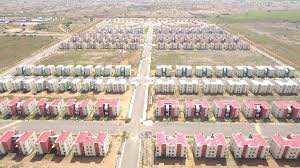
For many in Ghana, the term “affordable housing” is an oxymoron. The housing various governments have built and misnamed “affordable housing” are definitely not affordable. Take, for example, the Asokore Mampong Housing Project. For the cheapest option, a single bedroom unit, the recommended price is ¢99,000. Who can afford this?
Let’s imagine that potential homeowners are offered interest-free loans with a 20-year mortgage, to purchase this ¢99,000 house. This means that the homeowner would be required to pay ¢412.5 monthly (¢4,950 annually) for 20 years. According to the Ghana Living Standards Survey 7 (GLSS 7), the average monthly income is ¢972.00. If we agree that one should pay no more than 30% of their salary for housing, then the maximum monthly budget for housing would have to be capped at ¢324.00 monthly. However, the mortgage payment required is ¢412.5 monthly. In other words, someone earning the average monthly income would not be able to afford this house even when it is interest free and has a 20 year mortgage. Of course, generous conditions such as 20 year mortgages that are interest free do not exist. Evidently, many cannot afford the “affordable housing”. Key shifts are necessary.
First, we must reject “affordable housing.” It is prohibitive. More critically, “affordable housing” works to keep housing within exploitative capitalist relations. Housing remains a commodity which one can access dependent on your purchasing power. Low purchasing power means lower quality housing if any at all. But the enormous shortage of housing in Ghana, approximately 2 million, will not and cannot be solved by the “market”. For quality housing to be attainable and available to everyone in Ghana we need an approach to housing that does away with prioritizing profits.
Second, we need to embrace public housing. I refer to housing not owned by a private individual or company, but publicly owned and made available for individuals, especially those who are vulnerable. Such housing provides security – guaranteed quality shelter. This housing is outside of for-profit capitalist market relations. Rather, public housing indicates a way of providing housing oriented towards social good. Underpinning this practise is the belief that everyone should have a safe place to live, which provides the necessities for a quality life. For instance, housing should provide safe dwelling as well the necessities of water and sanitation. This idea is not novel; it has long been enshrined in the Universal Declaration of Human Rights.
Put succinctly, for quality housing to be attainable and available to everyone in Ghana we need an approach to housing that prioritizes safe shelter for people and the environment. By committing to housing for all, we enable a nation-wide shift to the emergence of a national ethic of care. Indeed, this can help (re)cultivate bonds of solidarity.
Solidarity with those living in informal settlements requires that we tackle the housing challenge in Ghana with social housing. There are multiple ways to do this. Cooperative housing is one model. Here the primary purpose is not to generate corporate or individual profit. Rather, cooperative housing seeks to create and maintain vibrant communities of solidarity. Importantly, not only does it ensure affordability, but the members collectively decide, one person - one vote, the direction the cooperative will take as it improves the quality life of its members and the wider society. The guiding vision is a more equitable Ghana where there is housing justice for all.
****
Chaka Uzondu (Ph.D.) is a Policy Analyst. His writings cover topics ranging from water, sanitation, and hygiene (WASH), health, housing, agroecology and political ecology.
Latest Stories
-
A source of excellence across generations – Vice President Opoku-Agyemang lauds Mfantsipim
51 minutes -
(Photos) Mfantsipim School launches historic 150th anniversary
1 hour -
Knights and Ladies of Marshall group backs Catholic Bishops’ stance on anti-LGBTQ+
2 hours -
Bright Simons writes: All the Filla in the Ibrahim Mahama/E&P – Gold Fields Saga
3 hours -
Monetise Idiocy In Ghana
3 hours -
The Ghanaian prophet and the mysterious death of his scottish wife Charmain Speirs
3 hours -
Nearly 400 sentenced in Nigeria for links to militant Islamists
4 hours -
Ghana’s recovery supported by gold strength despite global oil price pressures – Standard Bank Research
4 hours -
Methodist Church hails Mfantsipim@150; calls for “fresh consecration” to excellence
4 hours -
‘Excellence is our inheritance’ – Nana Sam Brew-Butler hails Mfantsipim’s 150-year reign in leadership
4 hours -
Kwaku Azar writes: A-G vs OSP
4 hours -
Mfantsipim–Adisadel rivalry built excellence, not division – Sam Jonah
5 hours -
Vice President launches Mfantsipim’s 150 years of shaping Ghana’s greatest mind
5 hours -
I assure Otumfuo, Mahama will join him to commission KNUST Teaching Hospital by end of this year – Haruna Iddrisu
6 hours -
Barcelona dominate derby to extend La Liga lead
6 hours