

Audio By Carbonatix
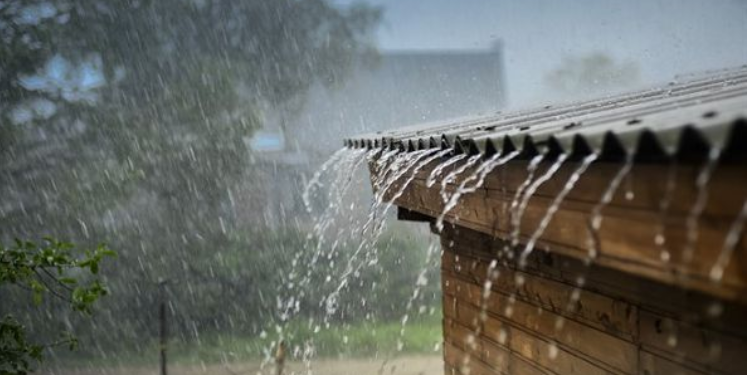
Children and adults are at risk of dangerous health effects from drinking roof runoffs.
That is the conclusion of a research by the scientists at the Department of Chemistry, Kwame Nkrumah University of Science and Technology.
With no potable water running through taps in many homes in Ghana, rainwater harvesting is an alternative source of water.
However, the roofing materials have been identified to affect the water quality.
The research published in the 2022 edition of the journal, Science of the Total Environment, sought to find certain substances and how they can impact consumers’ health.
“We wanted to assess heavy metals concentration, physicochemical and bacteriological parameters in roof runoffs and estimate the water quality index and health risk these metals pose to consumers,” lead scientist, Prof. Osei Akoto said.
For the study, rainwater was harvested from Aluzinc, Aluminum, Galvanized, and Asbestos roofing materials within the Ejisu municipality.
The scientists used rainwater collected directly from the sky as comparison.
They found heavy metals such as Cadmium, iron, chromium and some germs were above the WHO standard.
Cadmium in runoffs from asbestos roofing, for instance, was found to pose the biggest risk.
“All runoffs from the four roofing materials recorded Cd, Fe, Cr, turbidity, pH, E.coli, total and fecal coliform levels above WHO limit for drinking water.
“Cadmium recorded the highest non-cancer health risk to children and adults in all the roof runoffs,” he explained.
“The estimated water quality index for runoffs from the four roofing materials exceeded 100 indicating their unsuitability for drinking.
“Hazard quotients of 9.53 and 4.08 were estimated for a child and an adult respectively via oral exposure to Cd in runoffs from Asbestos roofing material,” he said.
The water collected directly from the sky was however much safer.
“There was a significant variation in pH, EC, Zn, Cd, Cr, Fe, E. coli, total and fecal coliform levels between control samples and roof runoffs,” he noted.
The researchers are therefore advising against drinking rainwater.
Latest Stories
-
‘We’ve become quite experienced in negativity’ – Liverpool’s Slot
3 hours -
Legendary manager Lucescu dies days after resigning
4 hours -
One dead as train travelling 99mph collides with lorry in France
4 hours -
Airlines cut flights and hike fares as fuel prices surge
4 hours -
Kane inspires Bayern to first-leg advantage over Real Madrid at Bernabéu
4 hours -
Wireless Festival cancelled after Kanye West blocked from coming to UK
5 hours -
Wa West MP commissions five boreholes for the benefit of his constituents
5 hours -
Havertz’s late strike hands Arsenal narrow first-leg advantage over Sporting
5 hours -
Damang mine award: Minority not against Ghanaian participation; we’re asking for fair process – Konadu
5 hours -
NPA to enforce stricter registration rules for petroleum tankers
5 hours -
Manhyia South MP laments decline in hospitality operations in his constituency
6 hours -
How a simple clean charcoal innovation could benefit Ghana’s climate future
6 hours -
NPA, COMAC launch Safety Week 2026 to promote risk management in petroleum sector
6 hours -
Stakeholder engagement resolves onion trade impasse
6 hours -
Gender Ministry holds staff durbar, welcomes new Chief Director
6 hours