

Audio By Carbonatix
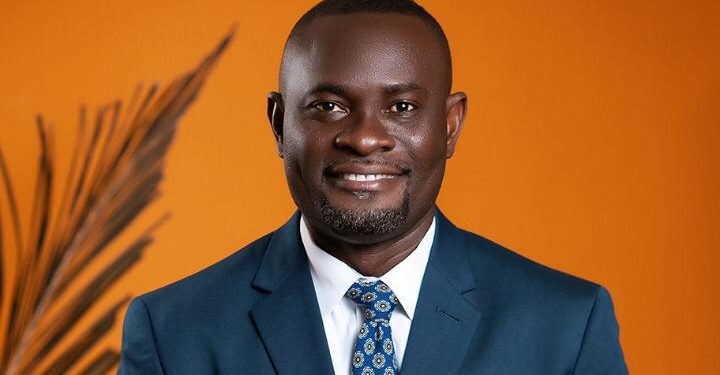
The Deputy Finance Minister, Dr John Kumah, has denied the assertion that payment of tithes and other religious obligations will be affected by the Electronic Transaction levy (E-levy).
Dr John Kumah on Friday said government is not taxing the tithes and offering of religious persons in the country.
"It is a complete lie and falsehood that E-levy will tax tithe and offerings. E-levy does not affect Church's tithe and offering or Zakat," he said.
Interacting with Benjamin Akakpo on JoyNews' AM show, the Deputy Minister argued that banks charge people who decide to pay their tithe using their services, however, the charges do not affect the money being sent.
"Assuming you issue the cheque for your tithe of GH¢2000, your bank is going to charge you for the services for issuing a cheque. Does it mean you are being charged for your tithe?
"Assuming I picked my car, bought fuel, drove to the bank and withdrew GH¢2000 to pay my tithe. The transportation to the bank and church is it part of the tithe I'm paying? So this is a complete propaganda to create unnecessary fear in people.
"If you decide to pay your tithe of GH¢2000, exactly GH¢2000 will go to the church."
Dr John Kumah, therefore, entreated the public to disregard claims that the levy would affect tithes as alleged by the Ningo-Prampram MP, Sam Nartey George.
"There is a difference between using Momo and telling us we are taxing your offering and tithe. They are two different things," Dr Kumah insisted.
According to Mr Sam George, should the e-levy law be implemented as it is now, payment of tithes and other religious obligations will be affected.
“An issue that has not been clarified is the tithe and offertories and the Zakat in the mosque. We know that we can now pay these online. Now, the exemptions that have been given has not been given to churches,” in spite of the suggestion that churches should go and register as merchants.
He stated that if churches register as merchants, there is no way payment to that platform will be exempted.
E-levy: The law says that tithe, offertory, and zakat are tax-exempt so how do I go and hold a merchant SIM and pay taxes for tithes, offertories, and zakat which are tax-exempt, these are the complications.
- @samgeorgegh [MP, Ningo-Prampram] #JoySMS pic.twitter.com/ptSFcvo9kA— Joy 99.7 FM (@Joy997FM) April 28, 2022
“A Merchant SIM must be held by a tax compliant person. Now the law says that tithes, offertories and Zakat are tax exempted. So how does a church hold a Merchant SIM and pay taxes for tithes, offertories and Zakat which are tax exempted?” he quizzed.
The MP made the assertions on the Super Morning Show on Thursday, April 28, 2022, ahead of the implementation of the Electronic Transaction Levy (E-levy) on May 1.
Latest Stories
-
Ghana to honour Christina Hammock Koch for historic Artemis II mission
32 minutes -
Supreme Court appointments require more than 15 years’ experience – Justice Adjei-Frimpong
49 minutes -
Fire destroys 3-bedroom house at Bogyawe
1 hour -
Why the Supreme Court is a “policy court” – Justice Richard Adjei-Frimpong breaks it down
1 hour -
Playback: The Law discussed Supreme Court @150
2 hours -
MTN Momo staff walk to promote wellness and fitness
3 hours -
Assafuah: Sedina Attionu’s return from Nevada will test government’s commitment to accountability
3 hours -
How GRA’s Modified Taxation Scheme is boosting revenue compliance & SMEs competitiveness
3 hours -
Stonebwoy Can Do It: A call to unite behind 2026 BHIM Fest
3 hours -
World Shea Expo returns to Tamale for 2026 edition
4 hours -
Prioritise cocoa sector with better prices, timely payments-Annoh-Dompreh urges NDC
4 hours -
Lands and Mines Watch Ghana endorses Heath Goldfields’ mining capacity
4 hours -
Gbintiri residents protest alleged diversion of 24-hour market project
5 hours -
Justin Bieber headlines Coachella with nostalgia-fuelled set
5 hours -
Ukraine and Russia accuse each other of hundreds of ceasefire violations
5 hours