

Audio By Carbonatix
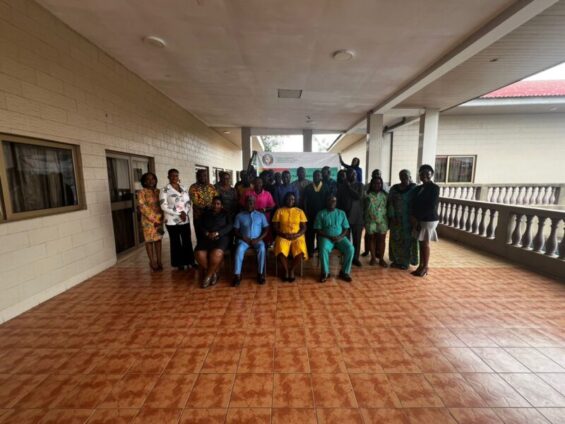
To safeguard democratic values and promote inclusivity, the Economic Community of West African States (ECOWAS) Commission has engaged Ghanaian journalists in countering misinformation and disinformation.
This initiative particularly emphasizes addressing the threat of gendered disinformation and online violence against women in public life, a growing concern that undermines democracy and silences female voices in the political arena.
Understanding Gendered Disinformation
Esther Tawiah, Executive Director of the Gender Centre for Empowering Development (GenCED), defines gendered disinformation as a form of misogynistic abuse targeting women. It involves false, manipulative, or misleading gender-based narratives strategically used by state and non-state actors. The objective? To deter women from participating in the public sphere, silence opposition, and erode democratic processes.
Gendered disinformation often uses sexist language, sexualized content, character assassination, and conspiracy theories to discredit women.
Tawiah highlights that such tactics are designed to discourage women and other marginalized groups from expressing their political views, effectively undermining democracy. By spreading misleading information, perpetrators limit access to impartial, fact-based knowledge, skewing public opinion and weakening democratic representation.
A Direct Threat to Democracy and Participation
The journalists were briefed on the detrimental effects of gendered disinformation. This malicious strategy targets women, especially those in public domains, by using stereotypes, hyper-sexualization, and political targeting. The perpetrators often operate on social media platforms, amplifying their attacks through coordinated campaigns using doctored images, false media articles, and hashtags.
This concerted effort has a profound impact on women’s engagement in politics and media. Victims of gendered disinformation often experience emotional distress, cyber-misogyny, and threats that cause them to self-censor or disengage from public discourse entirely. This, in turn, limits the diversity of voices in political discussions and weakens democracy.
Countering the Threat: The Role of Journalism
The ECOWAS Commission emphasized the critical role journalists play in countering disinformation and promoting participatory democracy. Journalists were encouraged to adopt a more accountable approach, using fact-checking, verification, and counter-narratives to challenge disinformation. Executive Director of GENCED, Esther Tawiah outlined strategies such as mocking stereotypes, exposing hate speech, and calling out gendered disinformation as effective tools for fighting back.
Furthermore, the media’s portrayal of women in politics was highlighted as a key area for reform. Media organizations were urged to implement policies that ban gendered tropes, refrain from sensationalizing women’s appearances, and focus more on substantive issues rather than “women’s issues” alone. By upholding positive values and ethics in social media use, journalists can help create an inclusive and respectful online environment, allowing women to participate without fear of harassment or discrimination.
Promoting Online Safety and Inclusivity
One of the initiative's core messages was the need to create a safer online space for women. The ECOWAS Commission called for national task forces on gendered disinformation and policy reforms in newsrooms to address this growing challenge.
Latest Stories
-
President Mahama is not sincere with Ghanaians on LGBTQ bill matter – Hassan Tampuli
4 minutes -
Gov’t to establish Prison Industrial Hub to equip inmates with income-generating skills – Prison Service boss
23 minutes -
Alhassan Tampuli donates cement, roofing sheets to support storm victims in Gushegu
23 minutes -
Alhassan Tampuli appeals for urgent support for storm victims in Gushegu
26 minutes -
The hypocrisy must stop; pass Anti-LGBTQ+ Bill now – Alhassan Tampuli to Mahama
30 minutes -
Imprisonment should be rehabilitative, not punitive – Ghana Prisons boss at UNGA
52 minutes -
Ga Adangbe traditional priests petition Mahama over McDan aviation licence revocation
1 hour -
Anti-LGBTQ Bill: NDC’s arrogance is worrying – Hassan Tampuli
1 hour -
Let’s give OSP time to mature, not to scrap it – Hassan Tampuli
1 hour -
Nigeria convicts 386 Islamist militants in mass trials
1 hour -
Djibouti president wins election with 97.8% of vote, state media says
1 hour -
We don’t have mandate to deduct tax from rent allowance of security services personnel – Interior Ministry clarifies
2 hours -
Ablakwa receives Presidential Special Envoy on Reparations to advance global agenda
2 hours -
Christina Koch becomes first woman to travel around the moon on Artemis II
2 hours -
Epstein survivors’ calls to meet King Charles and Queen harder to ignore as US visit approaches
2 hours