

Audio By Carbonatix
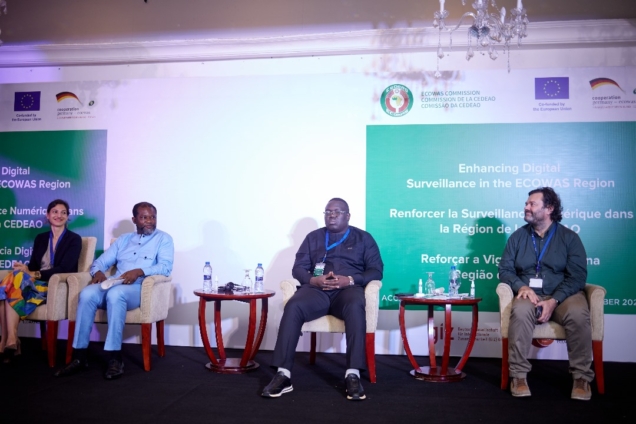
Imagine an ECOWAS region with an enhanced digital surveillance system where there is a coordinated approach to prevention, detection and response to infectious diseases. That is the agenda for the ongoing regional technical workshop. It will be a platform to forge a stronger and more universal digital surveillance system within the sub-region.
The workshop is being facilitated by the Regional Center for Surveillance and Disease Control (RCSDC) an arm of the West African Health Organization (WAHO). It is supported by the Regional Programme Support to Pandemic Prevention in the ECOWAS Region (RPPP) of Gesellschaft für International Zusammenarbeit (GIZ) GmbH on behalf of the German Federal Ministry for Economic Cooperation and Development (BMZ) and the European Union (EU).
Established at the 47th Session of the Authority of Heads of State and Government of ECOWAS, the RCSDC has made good inroads in establishing its presence in member countries and serving its mandate of supporting the strengthening of its health systems for epidemic prevention, detection, and control. Since its inception, the region has experienced over a dozen major disease outbreaks with the covid-19 pandemic being the most notable. A recurring lesson across all these events is the urgency to both harmonise and digitise the disease surveillance systems across the ECOWAS region and the continent at large.
The forum is used to explore the strategic use of available digital technologies to strengthen disease surveillance across the region, and RCSDC’s role in the promotion of emerging technologies, directing sound navigation of the technical and legal challenges around these tools to ensure their optimum benefit to public health, and data security.

The event brings together a spectrum of ECOWAS institutions and organizations as the Regional Animal Health Center (ECOWAS_RAHC), country representatives, Africa CDC, the Intergovernmental Authority on Development (IGAD) in Eastern Africa, and technical and financial partners such as the SORMAS Foundation, US CDC, WHO-AFRO region and WHO Hub for Pandemic and Epidemic Intelligence. The workshop is to be streamed for extensive reach and participation of stakeholders and the general public with interest in this subject.
African countries have traditionally relied on the Integrated Disease Surveillance and Response (IDSR) strategy, which now underscores the importance of digital approaches (e-surveillance) in its 3rd edition of the IDSR guidelines. Two main digitisation solutions are predominant across ECOWAS member states: DHIS2 and SORMAS. DHIS2 is a comprehensive Health Information System designed to enhance data accessibility and utilisation while SORMAS was developed in Nigeria in response to the 2014-2016 Ebola outbreak and has an e-surveillance tool deployed across Ghana and Nigeria.
At the regional level, WAHO has made progress in monitoring the reporting of public health emergencies in the ECOWAS Region, particularly COVID-19, using information generated from DHIS2 in the form of a disease dashboard. It captures, processes, visualises, and disseminates aggregated data to improve disease surveillance and detect outbreaks. Building on this experience and to fulfil its core mandate and full potential under transferred responsibility by the regional authority, RCSDC is exploring access to analytics data generated through the functionalities provided by SORMAS.
The surveillance digitalisation strategy offers an innovative solution to the multiple challenges besieging outbreak and response management in the region. Implementing this strategy can significantly improve the timeliness and completeness of disease reporting, enable early identification and verification of public health events, facilitate swift information sharing, and spur prompt public health action.
During the opening ceremony, Dr Ignatius Awinibuno, Chief Programme Officer (Director), recalled on behalf of the Honourable Minister of Health Ghana, that our world is increasingly interconnected, and yet, our challenges in public health surveillance and outbreak management remain daunting, and that surveillance digitalization is not just an option but a necessity, as we strive to keep pace with the evolving landscape of global health.
Dr Virgil Lokossou, acting Executive Director of the ECOWAS Regional Surveillance and Disease Control, on behalf of the president of the ECOWAS Commission and the Director General of WAHO declared that: “… the people of ECOWAS region look to us to safeguard their health, to protect their communities, and to act with urgency and empathy in the face of health crises.
"We must navigate the complexities of integrating diverse health information systems, ensure the interoperability of digital platforms, and build the capacity of our health workforce to utilize these tools effectively...We must also confront the ethical considerations of digital surveillance, balancing the need for data with the right to privacy.”

“Through the Regional Programme Support to Pandemic Prevention in the ECOWAS Region (RPPP), German Development Cooperation has worked closely with WAHO to improve the regional surveillance, preparedness and control architecture for infectious diseases. The programme has been a key proponent of digital surveillance and outbreak management, notably facilitating the successful deployment of the SORMAS tool in Nigeria and Ghana since its initial phase in 2016,” said Mrs Ramona, BMZ Representative.
“The EU's collaboration with WAHO includes a focus on the integration and interoperability of health data systems, ensuring the efficiency and effectiveness of our public health efforts. We are also committed to the governance and protection of health data, working alongside WAHO and ECOWAS Member States to develop comprehensive policies that guarantee the security and integrity of the data we collect and use,” said Timothy EU representative.
This is an engaging event, where at the end, it’s expected to discuss the development and implementation of a digital surveillance strategy for the ECOWAS region to strengthen early warning, detection and response to epidemics and health emergencies.
Latest Stories
-
Ghana should withdraw from 2027 AFCON – Kojo Addae Mensah
9 minutes -
Team Ghana departs Accra for Angola ahead of Karting Africa Trophy
16 minutes -
AIT President Prof Clement Dzidonu urges lifelong learning as AI reshapes work and education
18 minutes -
FWSC to meet striking teacher unions on Tuesday
20 minutes -
NPP won’t force candidates to step down – Miracles Aboagye
33 minutes -
Black Stars: Building in the sinking sands
35 minutes -
Low inflation on paper, high cost of living: How Presidents Mahama and Trump are facing stark economic reality
43 minutes -
NPP will negotiate with popular non-politicians to secure winnable candidates – Miracles Aboagye
47 minutes -
Only 5% of Ghanaians can afford housing without support – Gov’t
47 minutes -
Nigeria launches rescue after military plane crashes with 32 aboard
54 minutes -
GES digitalisation already exists; restore discontinued platforms – Adutwum spokesperson
54 minutes -
Police launch manhunt for 7 after deadly Bunkprugu violence
56 minutes -
GTEC directs UDS to immediately cease unauthorised mode of delivering accredited LLB programme
60 minutes -
We must address the role of boys in impregnating young girls, not just blame girls – Kobby Kyei
1 hour -
Mahama grants presidential pardon to 863 convicted persons
1 hour