

Audio By Carbonatix
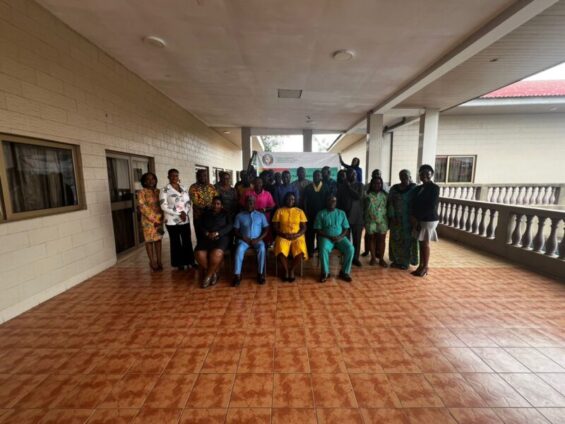
To safeguard democratic values and promote inclusivity, the Economic Community of West African States (ECOWAS) Commission has engaged Ghanaian journalists in countering misinformation and disinformation.
This initiative particularly emphasizes addressing the threat of gendered disinformation and online violence against women in public life, a growing concern that undermines democracy and silences female voices in the political arena.
Understanding Gendered Disinformation
Esther Tawiah, Executive Director of the Gender Centre for Empowering Development (GenCED), defines gendered disinformation as a form of misogynistic abuse targeting women. It involves false, manipulative, or misleading gender-based narratives strategically used by state and non-state actors. The objective? To deter women from participating in the public sphere, silence opposition, and erode democratic processes.
Gendered disinformation often uses sexist language, sexualized content, character assassination, and conspiracy theories to discredit women.
Tawiah highlights that such tactics are designed to discourage women and other marginalized groups from expressing their political views, effectively undermining democracy. By spreading misleading information, perpetrators limit access to impartial, fact-based knowledge, skewing public opinion and weakening democratic representation.
A Direct Threat to Democracy and Participation
The journalists were briefed on the detrimental effects of gendered disinformation. This malicious strategy targets women, especially those in public domains, by using stereotypes, hyper-sexualization, and political targeting. The perpetrators often operate on social media platforms, amplifying their attacks through coordinated campaigns using doctored images, false media articles, and hashtags.
This concerted effort has a profound impact on women’s engagement in politics and media. Victims of gendered disinformation often experience emotional distress, cyber-misogyny, and threats that cause them to self-censor or disengage from public discourse entirely. This, in turn, limits the diversity of voices in political discussions and weakens democracy.
Countering the Threat: The Role of Journalism
The ECOWAS Commission emphasized the critical role journalists play in countering disinformation and promoting participatory democracy. Journalists were encouraged to adopt a more accountable approach, using fact-checking, verification, and counter-narratives to challenge disinformation. Executive Director of GENCED, Esther Tawiah outlined strategies such as mocking stereotypes, exposing hate speech, and calling out gendered disinformation as effective tools for fighting back.
Furthermore, the media’s portrayal of women in politics was highlighted as a key area for reform. Media organizations were urged to implement policies that ban gendered tropes, refrain from sensationalizing women’s appearances, and focus more on substantive issues rather than “women’s issues” alone. By upholding positive values and ethics in social media use, journalists can help create an inclusive and respectful online environment, allowing women to participate without fear of harassment or discrimination.
Promoting Online Safety and Inclusivity
One of the initiative's core messages was the need to create a safer online space for women. The ECOWAS Commission called for national task forces on gendered disinformation and policy reforms in newsrooms to address this growing challenge.
Latest Stories
-
Ghana should withdraw from 2027 AFCON – Kojo Addae Mensah
9 minutes -
Team Ghana departs Accra for Angola ahead of Karting Africa Trophy
15 minutes -
AIT President Prof Clement Dzidonu urges lifelong learning as AI reshapes work and education
18 minutes -
FWSC to meet striking teacher unions on Tuesday
19 minutes -
NPP won’t force candidates to step down – Miracles Aboagye
33 minutes -
Black Stars: Building in the sinking sands
34 minutes -
Low inflation on paper, high cost of living: How Presidents Mahama and Trump are facing stark economic reality
42 minutes -
NPP will negotiate with popular non-politicians to secure winnable candidates – Miracles Aboagye
47 minutes -
Only 5% of Ghanaians can afford housing without support – Gov’t
47 minutes -
Nigeria launches rescue after military plane crashes with 32 aboard
54 minutes -
GES digitalisation already exists; restore discontinued platforms – Adutwum spokesperson
54 minutes -
Police launch manhunt for 7 after deadly Bunkprugu violence
56 minutes -
GTEC directs UDS to immediately cease unauthorised mode of delivering accredited LLB programme
60 minutes -
We must address the role of boys in impregnating young girls, not just blame girls – Kobby Kyei
1 hour -
Mahama grants presidential pardon to 863 convicted persons
1 hour