


Audio By Carbonatix
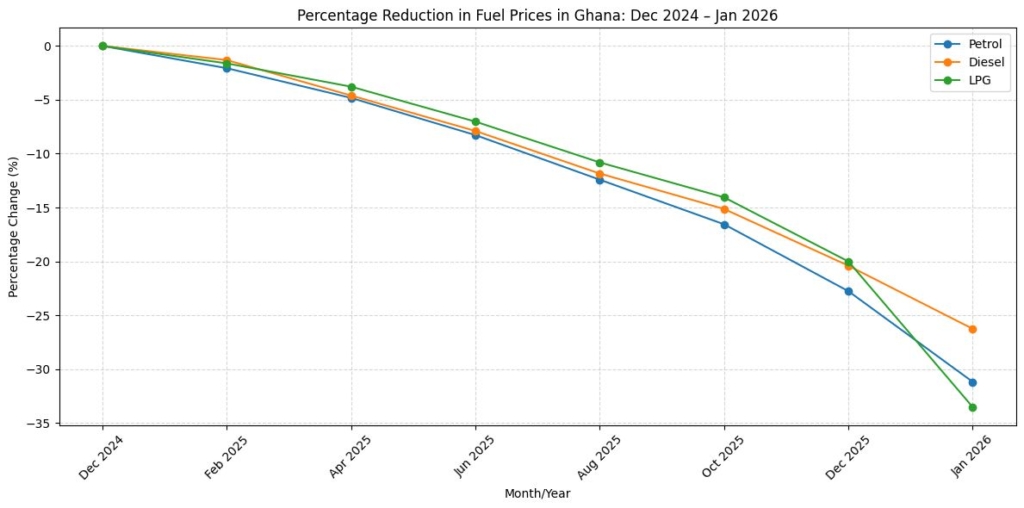
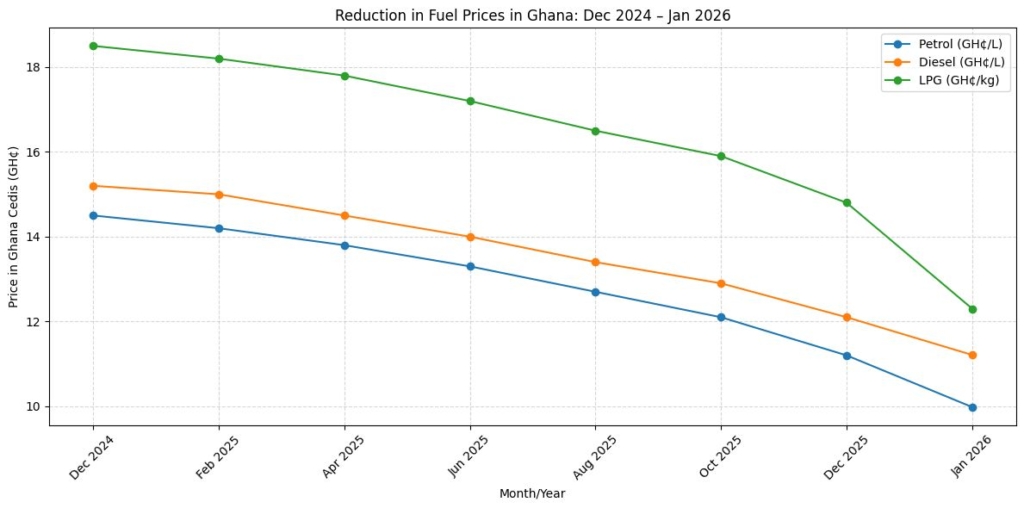
I’ve noticed yet again announcements by major Oil Marketing Companies (OMCs) for further fuel price reductions in the second pricing window of January 2026. Looking back to December 2024, petrol was averaging over GH¢14 per litre, diesel above GH¢15, and LPG near GH¢18–19 per kilogram. Today, petrol is approaching GH¢9.97–9.99 in some stations, with diesel and LPG also significantly lower, providing much-needed relief for ordinary Ghanaians.
Fuel prices impact households, transporters, businesses, and the prices of everyday goods. The reductions we are seeing are influenced by several factors: a stronger Ghana cedi against the US dollar, declining international refined petroleum product prices, and structured oversight and coordination along the value chain.
The National Petroleum Authority (NPA) is well-positioned to support this value chain in regulating prices, monitoring supply, and protecting consumers. I believe under Godwin Edudzi Tamakloe Esq., the NPA has effectively coordinated importers, distributors, Oil Marketing Companies, LPG marketers, and strategic storage operators to maintain market stability. Initiatives such as the Unified Petroleum Pricing Fund (UPPF) Scheme, monitoring of fuel stocks and supply chains, issuing clear pricing frameworks and floors, enforcing compliance, and ensuring consistent pricing across regions have been key to achieving these reductions. Ghana currently maintains sufficient reserves, over 200 million litres of petrol and 150 million litres of diesel, enough to sustain domestic needs for more than two months, shielding the country from global shocks.
Through its data-driven approach, the NPA has made pricing predictable, transparent, and fair, boosting public confidence and allowing businesses to plan effectively. By keeping fuel costs down, the government, through the NPA, indirectly eases transport and logistics expenses, moderates prices of goods and services, and increases disposable income for households and small businesses.
I commend the NPA for its effective role in coordinating the petroleum value chain and ensuring these tangible benefits for ordinary Ghanaians. I also encourage other state companies to leverage the enabling environment created by the government and the Finance Minister through prudent macroeconomic policies to drive similar positive outcomes that improve the everyday lives of citizens.
As an Energy and Finance Analyst observing the market, it’s clear that effective regulation, oversight, and coordinated action along the value chain can deliver real relief and sustainable benefits for the public.
Latest Stories
-
We can tackle multiple priorities – Sam George defends Anti-LGBTQ Bill push
33 minutes -
Statement: Ghana Chamber of Mines’ Response to Claims in Joe Jackson’s “Ananse Stories about the Economy of Ghana”
34 minutes -
GES opens 2026 teacher recruitment for licensed B.Ed graduates
36 minutes -
Ghana must value skilled trades, build resilient learners — Ibn Chambas
45 minutes -
Ghana must rethink education around relevance, resilience and responsibility — Ibn Chambas
48 minutes -
Prince Harry faces defamation lawsuit from charity he co-founded
49 minutes -
South Korea deploys thermal cameras to track escaped zoo wolf
51 minutes -
Calls for royal meeting with Epstein survivors grow ahead of US visit
54 minutes -
Ibn Chambas advocates blend of technology and human values in education
56 minutes -
UMA improves healthcare access in Asutifi North with GH₵700k ‘Kim Taylor Legacy’ Walkway
1 hour -
Scholarships Authority and Fanaka University offer sponsorship for procurement and supply chain studies
1 hour -
Bisa Kdei drops new single ‘Go N Look’ featuring Medikal
1 hour -
Benin facing rising terrorism in north as French military presence faces growing criticism
1 hour -
UEW Public Lecture Series 2026: Education debate ‘about the soul of Ghana’s future’ — Dr Ibn Chambas
1 hour -
EU fingerprint and photo travel rules come into force from today
2 hours