

Audio By Carbonatix
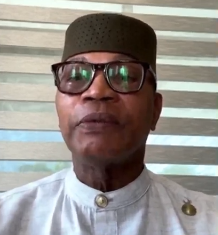
The African Union High Representative for Silencing the Guns, Dr Mohammed Ibn Chambas, has called for urgent and decisive action to end electoral violence in Ghana and across Africa, warning that peaceful elections are essential for long-term stability on the continent.
Speaking on JoyNews' News Desk, Dr Ibn Chambas stressed that election-related violence remains one of the major drivers of civil strife across Africa.
“A significant share of civil strife and crises across Africa stems from election-related violence, not always, but most of the time,” he stated.
Dr Ibn Chambas referenced his recent pre-election mission to Abidjan, where he accompanied former Nigerian President Goodluck Jonathan as part of the West African Elders Forum. He noted that Ghana was frequently praised by Ivorian political leaders and civil society groups as a model of peaceful democratic practice.
“In our meetings with Ivorian political parties and civil society, Ghana was repeatedly held up as a shining example,” he said. “They asked, ‘Why can’t Côte d’Ivoire be like Ghana, where elections take place peacefully, without violence?’”
However, he expressed deep concern over the recent violence during the Ablekuma North parliamentary re-run, which left six people injured and disrupted the vote.
“To hear about such violence in Ghana, a nation admired across the continent, is deeply alarming,” he cautioned. “We must stamp out electoral violence and confront it head-on.”
While gun-related election violence is still relatively rare in Ghana, Dr Ibn Chambas recalled the Ayawaso West Wuogon by-election and past disturbances in northern Ghana as warning signs of a dangerous trend.
“This cannot continue. Frankly, this problem is mostly confined to the two major political parties, the NDC and NPP. Smaller parties rarely engage in such violent acts,” he said candidly.
Dr Ibn Chambas urged immediate dialogue between the NPP and NDC, and called for the empowerment of institutions like the National Peace Council and the National Commission for Civic Education (NCCE).
“These bodies must engage especially the youth wings of political parties,” he stressed. “They need comprehensive training in the culture of peace, learning that elections are about mobilising supporters to vote, not about harassing or attacking opponents.”
He concluded with a passionate appeal for stronger election monitoring and early intervention to prevent violence before it erupts.
“Elections must never spiral into violence and confrontation. This has happened before, but decisive action was never taken. This must change, starting now,” he declared.
Latest Stories
-
Former MMDCEs petition President Mahama over unpaid benefits
1 minute -
Plan International Ghana launches 9.4 million CAD support for women’s rights groups
21 minutes -
KsTU adjudged best technical university, 4th best university in Ghana in 2026 QS sub-Saharan Africa rankings
25 minutes -
Ghana considers extradition option in intimate image leak case – Gender Minister
44 minutes -
Bawumia launches NPP rebuild, announces new policy unit ahead of 2028
45 minutes -
We’re strengthening cross-border and cybersecurity collaboration to combat online abuse – Gender Minister
47 minutes -
Obama clarifies views on aliens after saying ‘they’re real’ on podcast
52 minutes -
Russia killed opposition leader Alexei Navalny using dart frog toxin, UK says
55 minutes -
OMCs commence fuel price increases: GOIL sells petrol at GH¢10.24 as diesel rises to GH¢12.83
57 minutes -
Modern, Vertical, Visionary: PUNA officially launched in Accra
1 hour -
Bishop Joel Duncan-Williams pays courtesy call on Central Regional Minister during evangelical visit to UCC
1 hour -
Mother of Alexei Navalny says poison finding confirms he was murdered
1 hour -
Gov’t approves cabinet directives following review of over 8,000 land leases nationwide
1 hour -
In an uncertain trade landscape, cooperation still delivers
1 hour -
7 Ghanaian traders killed in Titao terrorist attack buried in Burkina Faso
2 hours