

Audio By Carbonatix
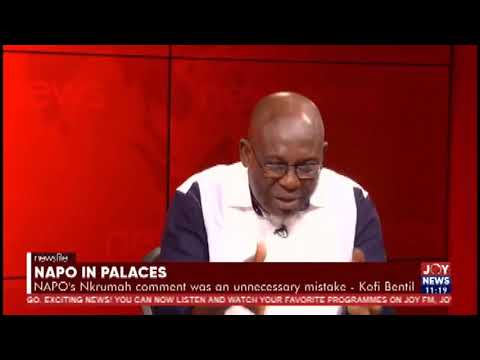
The Vice President of IMANI Africa, Kofi Bentil, has stated that electoral violence is deeply ingrained in Ghana’s political culture, stressing the urgent need for the country to confront this issue head-on to put an end to it.
Speaking at Joy FM’s Newsfile programme on Saturday, December 14, Mr Bentil highlighted that the roots of political violence in Ghana can be traced back to the time of Ghana's late president, Dr Kwame Nkrumah.
He explained how the overthrow of Nkrumah led to the demonization and destruction of his legacy, a pattern that continued through to the era of the late Jerry John Rawlings.
Mr Bentil emphasized that this issue is not a recent phenomenon; it has become a deeply embedded part of Ghana's political culture. “It’s in our culture, and we must understand it,” he said.
He noted that this violence is not limited to any single political party but has affected both the New Patriotic Party (NPP) and the National Democratic Congress (NDC).
According to him, even in today’s democratic era, political violence continues to persist, and this must be reversed.
He expressed his satisfaction that two prominent political figures had recently made the right statements regarding the issue. However, he pointed out that the tone and political posture of some leaders still leave much to be desired. “What we are observing politically is not something we fully agree with,” he stated.
To effectively combat this menace, Mr Bentil called on law enforcement agencies to take stronger action against perpetrators of electoral violence.
He argued that, due to the cultural nature of the problem, it is necessary to take decisive steps to break this cycle. He further stressed that political parties must offer their full support to efforts aimed at curbing electoral violence.
“These are basic crimes,” he said, urging that they should be addressed in a manner that sets an example for society. “If we do not make a determined effort to tackle this issue, we will never be able to break this culture,” he warned.
Reflecting on the broader political landscape, Mr Bentil lamented that many politicians come to power for brief eight-year terms, only to serve their own interests. “We, the citizens, are left to fend for ourselves in the aftermath,” he said, expressing his dismay at the current state of affairs.
Latest Stories
-
Mahama’s proposed airline looks to South America, Caribbean as Ghana confronts mounting drug trafficking cases
6 minutes -
5% progress on Suame Interchange Phase One inadequate – Roads Minister tasks contractor to speed up work
8 minutes -
Photos: Vice President joins GAAS Awards to celebrate outstanding women leaders
9 minutes -
OSP vs Ken Ofori-Atta, SML and others: Court gives OSP four more weeks to serve Ofori-Atta with summons
11 minutes -
High Commission sends caution to Ghanaians in South Africa ahead of planned protests
14 minutes -
Okai Mintah outlines vision for NDC Youth Wing as he engages MMDCEs
19 minutes -
Mahama Ayariga leads renewed push for stronger local governance through partnerships
23 minutes -
NDC youth organiser aspirant Okai Mintah consults MMDCEs ahead of elections
24 minutes -
PHOTOS: Ayikuma Methodist Basic School wins National Juniors Challenge
26 minutes -
Silence has entered our homes : Salomey Awiti Bafoh and the chilling effect of free expression in Ghana
27 minutes -
UG Pro-VC calls for stronger research funding to curb brain drain
29 minutes -
Woman in critical condition after shooting at funeral grounds in Yeji
31 minutes -
Breast Cancer awareness must lead to action – Deputy Health Minister
34 minutes -
UK identified as leading destination for Ghana’s illicit cannabis exports – Report
36 minutes -
Drug money allegedly finances Ghana’s political parties and real estate – Global Organised Crime Index
41 minutes