

Audio By Carbonatix
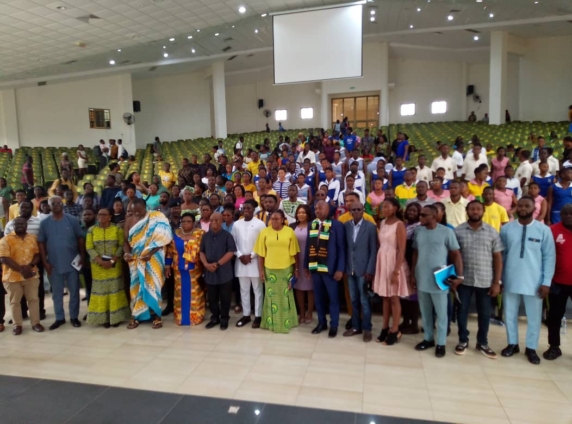
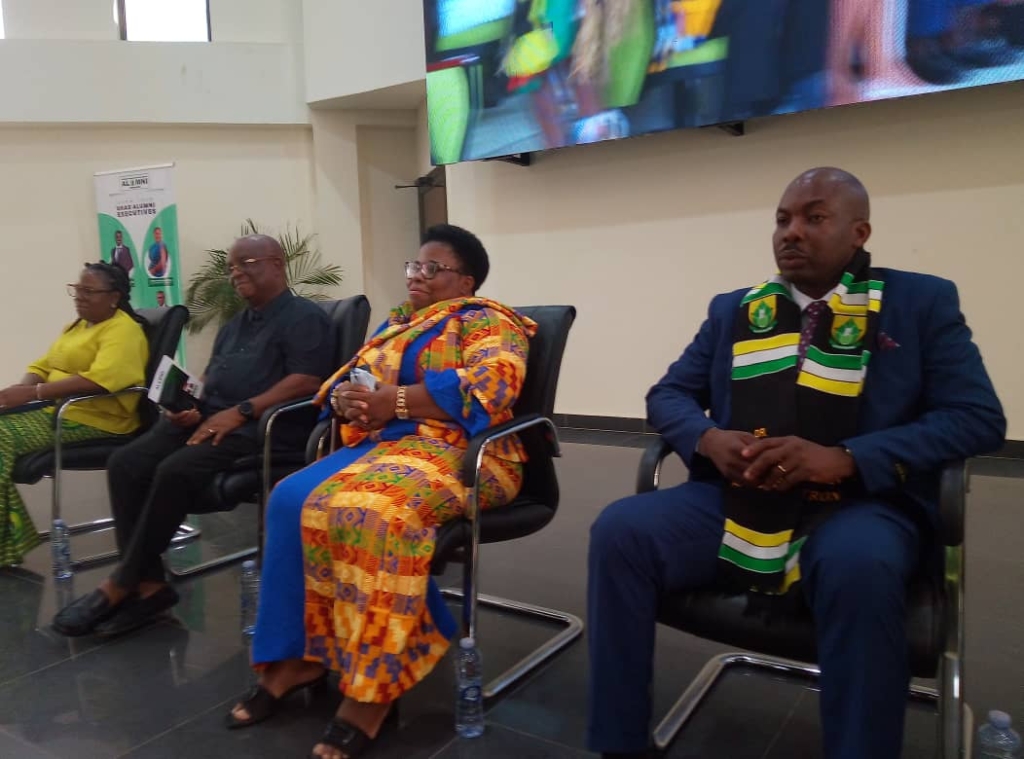
The alumni of the University of Health and Allied Sciences (UHAS) hosted a landmark public lecture delivered by Dr Elikplim Kwabla Apetor Gbor, Chief Executive Officer of the Independent Power Generators, Ghana.
The lecture, titled “Reliable Electricity and Sustainable Technology for Quality Health in Ghana,” brought together esteemed guests including the Vice Chancellor, UHAS management, the Volta Regional Minister, alumni, traditional leaders of the Asogli State, and other distinguished attendees.
Opening Address and Context
Dr Apetorgbor opened his address by emphasizing the critical relationship between reliable electricity and healthcare delivery, noting that a dependable power supply is not merely an operational requirement but a matter of life and death in Ghana’s health sector. “Imagine the life-saving devices that rely on a constant flow of electricity—ventilators, incubators, dialysis machines. Electricity is the unseen lifeline supporting every aspect of healthcare,” he stressed.
The Broader Impact of Electricity on Health
Drawing on global perspectives, Dr Apetorgbor referenced data from the World Health Organization (WHO), highlighting that approximately 1 billion people worldwide, mostly in poor and rural communities, rely on healthcare facilities without reliable electricity. In Sub-Saharan Africa, half of the hospitals struggle with inconsistent power supply, jeopardizing essential medical procedures and patient safety.
Dr Apetorgbor’s Reflections on Ghana’s Electricity Challenges
Reflecting on Ghana’s progress and ongoing challenges, Dr. Apetor Gbor lamented that despite significant improvements in electricity access—from 15-20% in the early 1990s to 88.85% in 2023—reliability remains a major hurdle. He pointed out the economic losses Ghana faced during the power crises, including an estimated $680 million in 2014 alone, highlighting that the nation’s progress is hindered not by access alone but by the quality and consistency of electricity supply.
Human Stories of Impact
Dr Apetorgbor underscored the human cost of power shortages with poignant examples. In March 2024, a mother lost her three-day-old baby at Tema General Hospital, a tragedy attributed to a power outage.
Similarly, he said, surgeries were cancelled at Korle Bu Teaching Hospital in April due to electricity failures, and in August, prolonged outages at Chereponi District Hospital resulted in the loss of two lives. “These stories are not just statistics; they are a call to action,” he said.
Policy Recommendations for Sustainable Solutions
Dr Apetorgbor laid out a comprehensive roadmap for prioritizing sustainable and reliable electricity in healthcare, proposing seven key strategies:
Investment in Renewable Energy Infrastructure: Encouraging the use of solar, wind, and mini-hydro plants to power healthcare facilities.
Public-Private Partnerships (PPPs): Collaborating with Independent Power Producers (IPPs) to boost energy infrastructure and reliability.
Grid Modernization and Resilience: Upgrading the electricity grid with smart technologies to improve stability, particularly in remote areas.
Capacity Building and Training: Equipping healthcare professionals with skills to manage energy efficiently and respond effectively during outages.
Regulatory and Policy Frameworks: Implementing clear standards and emergency protocols to ensure uninterrupted power supply in healthcare settings.
Community Engagement: Involving local communities and stakeholders in energy planning and implementation to foster sustainable solutions.
Monitoring and Evaluation: Establishing mechanisms to track the effectiveness of energy interventions and their impact on healthcare delivery.
A Call to Action for Ghana’s Energy and Health Sectors
Dr Apetorgbor concluded with a rallying call, urging all stakeholders to recognize that reliable electricity is not just a technological need but a moral imperative that underpins health equity and resilience. “Let us commit to addressing these energy challenges with the urgency and dedication they demand,” he declared, inspiring the audience to consider their roles in driving change.
This public lecture not only underscored the dire need for reliable power in Ghana’s healthcare system but also set a forward-looking agenda for achieving Sustainable Development Goals (SDGs) 3 and 7—Good Health and Well-being, and Affordable and Clean Energy, respectively. The event ended with a renewed sense of purpose among attendees, determined to turn the tide in Ghana’s power sector for the betterment of health outcomes nationwide.
Latest Stories
-
Ghana’s US envoy links job creation to ending youth deportations
1 minute -
Blair and Rubio among names on Gaza ‘Board of Peace’
1 hour -
Minister calls for inter-ministerial force to fix Accra’s rush-hour transit crises
2 hours -
Sarkodie’s Rapperholic UK edition sells out Royal Albert Hall
2 hours -
Academic exodus: Ghanaian PhD students in UK forced to withdraw as Scholarship Secretariat fails to pay fees
3 hours -
Antoine Semenyo’s £65m Manchester City switch sparks discussions in UK Parliament
3 hours -
Transport crises, Prof. Frimpong-Boateng v NPP and LGBTQI issues take centre stage on Joy Prime’s ‘Prime Insight’
4 hours -
Ghana Navy busts major fuel smuggling syndicate along Volta coast
4 hours -
Karaga MP donates 4,000 gallons of fuel to boost livelihoods in New Year outreach
5 hours -
GIPC CEO engages European Parliament delegation on Ghana’s investment reforms
5 hours -
Oppong Nkrumah, 5 others didn’t accept campaign support from Bryan Acheampong – Pius Hadzide backtracks
6 hours -
BoG rejects market speculation, emphasises data-driven policies
6 hours -
BoG targets consolidation, discipline in 2026 policy direction
7 hours -
GJA-Ashanti commends EPA’s continuous engagement with journalists who were involved in accident
7 hours -
Wenchi needs development, help us – Chiefs to Aseidu Nketia
7 hours