

Audio By Carbonatix
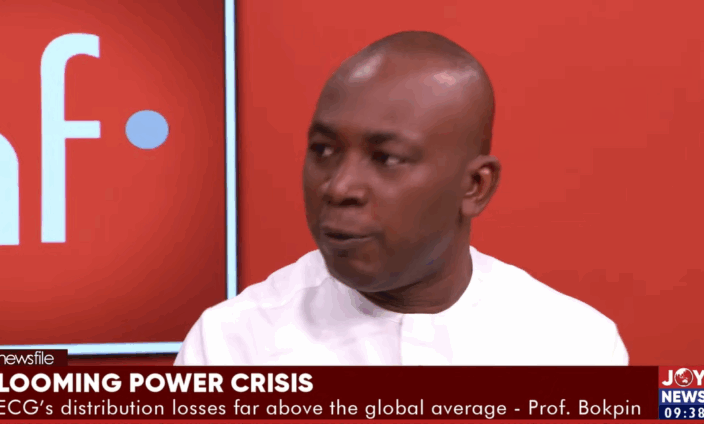
Economist Prof Godfred Bokpin highlighted critical challenges facing the energy sector.
Speaking on Newsfile, he called for urgent structural reforms and private sector participation.
The lecturer stressed the unsustainable nature of current electricity distribution, pointing to significant collection losses of approximately 15% - well above the global average.
He argued that many government ministries, departments, and sensitive installations are not paying electricity bills, further straining the system.
According to him, "You cannot pass on all those losses to the ultimate consumer."
"Then again, you want to look at collection losses. Collection losses, we are, we are looking at close to 15% again, that's above the world average. It's not sustainable. Apart from that, you also want to look at the tariff gaps in terms of the pricing formula and all of that. If you put all of these things then, apart from that, you also see that there are ministries, department agencies. And you heard the minister saying that it's about time ministry, department agencies take responsibility for their energy consumption," he said on JoyNews on May 17.
The economist advocated for private sector involvement in electricity distribution, suggesting that the Electricity Company of Ghana (ECG) could remain government-owned while inviting private sector expertise to improve efficiency and reduce losses.
"We should support government in private sector participation in downstream distribution," Prof Bokpin stated.
He stressed that this approach differs from completely selling ECG, instead proposing a model where the government remains the sole shareholder while bringing in private sector capital and management skills.
Prof Bokpin also highlighted the challenges of implementing such reforms, acknowledging potential staff resistance and the complex political landscape.
He called on Ghanaians to support these reforms, noting that power outages affect everyone regardless of political affiliation.
The proposed reforms are part of an IMF-supported program aimed at restructuring Ghana's energy sector and improving its economic sustainability.
Latest Stories
-
Prudential Life settles GH¢100,000 medical bills under its PRUCares Valentine Experience Initiative
3 hours -
Wa West Picnic: Peter Lanchene Toobu champions peace, health and unity in landmark celebration
3 hours -
Dr Mensah Market flooded after downpour in Kumasi
4 hours -
Armed men reportedly storm Adjen Kotoku Onion Market amid tensions
4 hours -
Tecco Mensah writes: Why football fans must look beyond statistics
5 hours -
Police recover stolen Honda CR-V in Kumasi within 48 hours
6 hours -
Apetorku Gbodzi 2026 Festival opens in Dagbamete with development focus
6 hours -
President Mahama arrives in Lyon to co-chair One Health Summit
6 hours -
Beverly View Plus Hotel draws crowds amid coastal Easter rush in Volta
6 hours -
Maiden Zongo Festival held in Wa amid calls to tackle drug abuse among the youth
7 hours -
FDA warns of fake HIV test kits on Ghanaian market
7 hours -
Africa urged to build resilient health systems as donor support tightens
7 hours -
Easter gesture: Ablakwa settles medical bills for 85 North Tongu constituents
9 hours -
Africa must harness its population strength—Titus-Glover
9 hours -
Visa-free access doesn’t mean unlimited stay – Lom Ahlijah
9 hours