

Audio By Carbonatix
The Ethiopian government has said that 2,000 people have been charged in connection with the killing of Oromia singer Hachalu Hundessa and the violence that followed.
Attorney general, Gedion Timothewos, said those charged include politicians and clarified that none of them were held for their political activities.
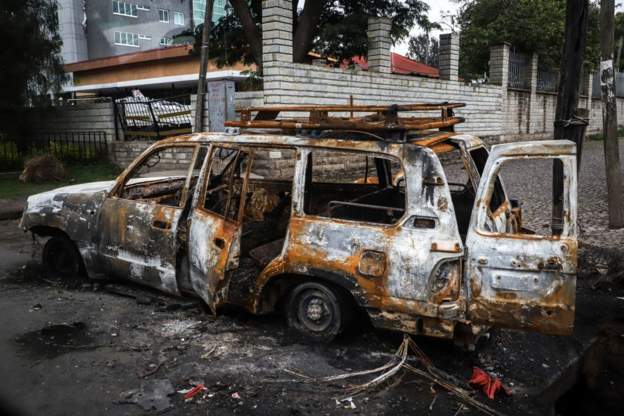
More than 160 people died during the violence that started after the assassination of Hachalu.
Mr Gedion said many others were injured and property worth billions destroyed.
He said the various cases were being heard in different jurisdictions as the violence was widespread.
The popular musician and activist Hachalu was assassinated on 29 June sparking unrest.
His songs focused on the rights of the country's Oromo people, Ethiopia's largest ethnic group, and became anthems in a wave of protests that led to the downfall of the previous prime minister in 2018.
Latest Stories
-
Joy FM was birthed over a bowl of fufu’ – Tommy Annan-Forson shares interesting story
5 minutes -
World Athletics to introduce standalone World Marathon Championships from 2030
10 minutes -
Africa’s voice in global journalism grows as funding, AI and misinformation shape newsrooms
12 minutes -
First Atlantic Bank holds Annual General Meeting, reports strong growth and bold 2026 outlook
14 minutes -
Ghanaian-founded fintech WeWire secures Canadian PSP license to bridge African, global payments
17 minutes -
Uganda confirms 2027 AFCON dates
25 minutes -
40 convicted in Northern Region crime crackdown
25 minutes -
‘We’re days away from parts of the world experiencing actual shortages:’ Eric Nuttall on energy
35 minutes -
‘I’m Obroni in every country’ – Coco Blasian on music, survival and making Accra home
36 minutes -
IMANI wants NIC to probe possible conflicts of interest in reinsurance arrangements
48 minutes -
First Atlantic Bank strengthens balance sheet as net interest income surges 67%
52 minutes -
Choplife Gaming donates to Korle Bu Radiotherapy unit for Women’s Week 2026
54 minutes -
Would President Mahama have reduced cocoa prices if this were an election year ? – Annoh Dompreh asks
57 minutes -
Passion, not survival, should drive career choice – Dr Kofi Annan
57 minutes -
Climate change, pollution and overfishing push White Volta fishermen to the brink
57 minutes