

Audio By Carbonatix
The European Union (EU) has launched a GH₵31 million Forest Restoration Grant Scheme to support four major forest restoration projects across Ghana’s Ahafo, Bono East, Upper East, and Western Regions.
The initiative, which forms part of the EU Sustainable Forest and Cocoa Programme, was officially launched at the Forestry Research Institute of Ghana (FORIG) in Kumasi.
Speaking at the launch, Head of Infrastructure and Sustainable Development at the Delegation of the European Union to Ghana, Paulina Różycka, reaffirmed the EU’s dedication to Ghana’s forest sustainability agenda.
“The EU is committed to supporting Ghana’s vision for sustainable forest management and restoration. This grant scheme demonstrates our dedication to inclusive development, local empowerment, and climate resilience,” she said.
The GH₵31 million funding supports four grantees, Proforest, World Vision, Nature and Development Foundation, and Goshen Global Vision, along with their local partners. Collectively, these projects will restore 5,000 hectares of degraded forest and strengthen the livelihoods of 20,000 farmers and rural residents in the High Forest and Savanna ecological zones.
The project's focus is on agroforestry, natural regeneration, tree planting, and integrated landscape management, while prioritizing the empowerment of women and youth. The initiatives will also link forest restoration to livelihoods through beekeeping, eco-enterprises, and community savings schemes.
Ms. Różycka noted that forest restoration is both a national and global priority, calling it a “nature-based solution” that enhances biodiversity, climate resilience, and sustainable development.
She also commended Ghana’s progress in sustainable forest governance, highlighting the introduction of FLEGT licensing for timber export as evidence of Ghana’s commitment to forest law enforcement and better governance.
The Programme Manager for the EU Sustainable Forest and Cocoa Programme at the European Forest Institute (EFI), Tim Dawson, emphasized EFI’s role in ensuring sustainability and knowledge exchange.
“EFI is honoured to implement this important grant scheme and to work alongside Ghanaian institutions, local organisations, and communities. We aim to deliver lasting impact for Ghana’s forests, people, and future generations,” he said.
EFI will work closely with Ghanaian research bodies, civil society, and local authorities to ensure that the projects deliver lasting environmental and socio-economic benefits.
Deputy Director of the Forestry Research Institute of Ghana (FORIG), Lucy Amissah, underscored the critical role of stakeholder engagement in achieving the project’s success.
“Stakeholder engagement is extremely important. You need to enter the community and have consultation meetings with different stakeholders; district assemblies, forestry commissions, and local groups to discuss environmental challenges and the importance of forest restoration,” she explained.
She further stressed the need to involve farmers in decision-making regarding the choice of tree species to plant, emphasizing that such engagement fosters community ownership and ensures project success.
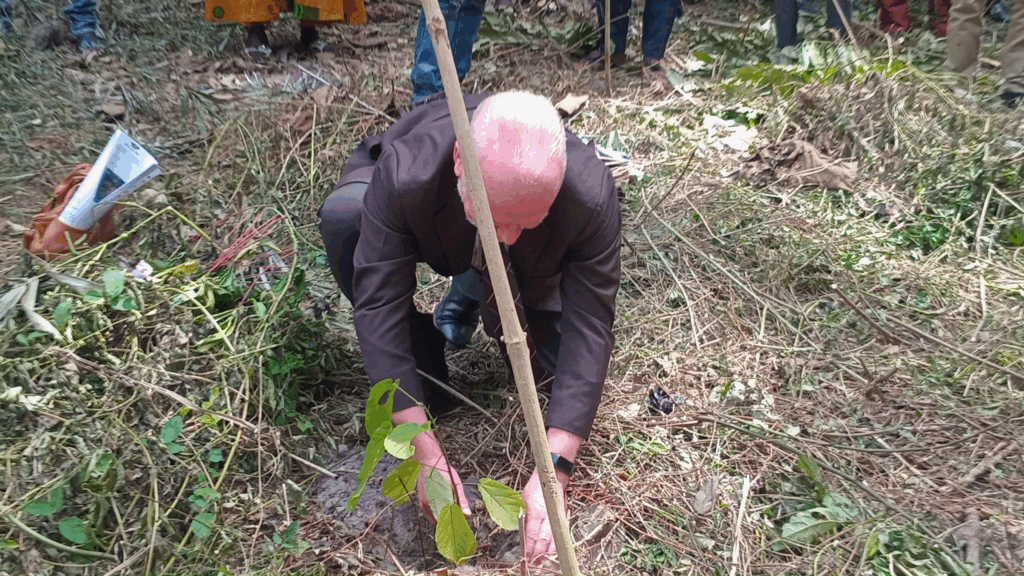
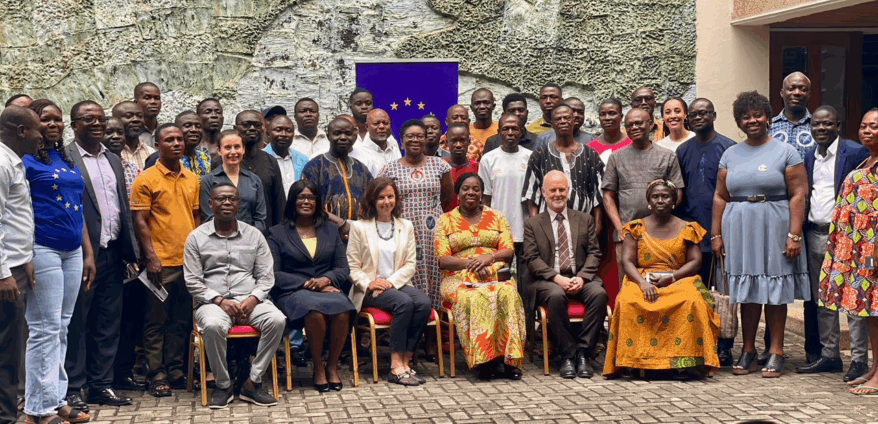
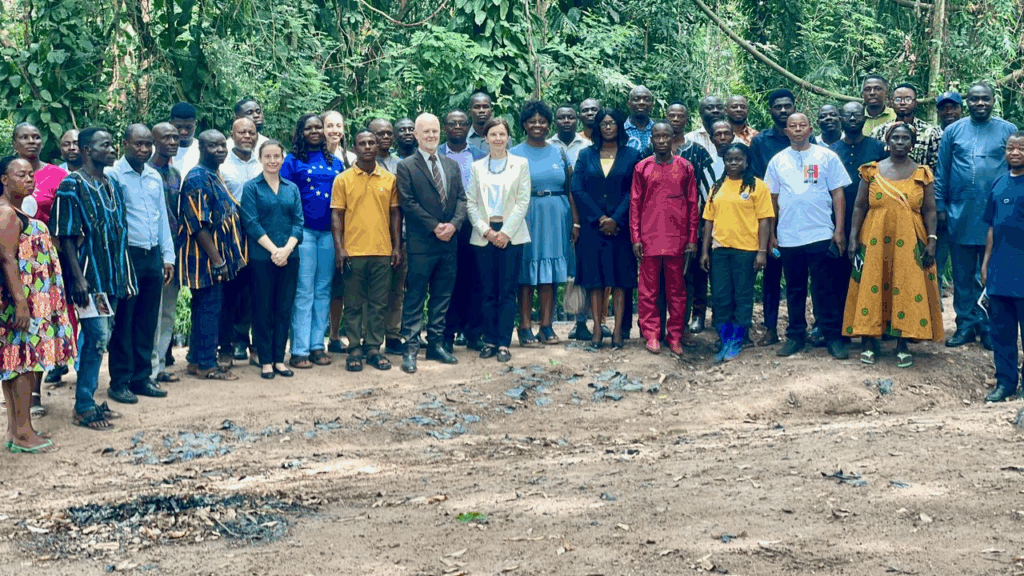
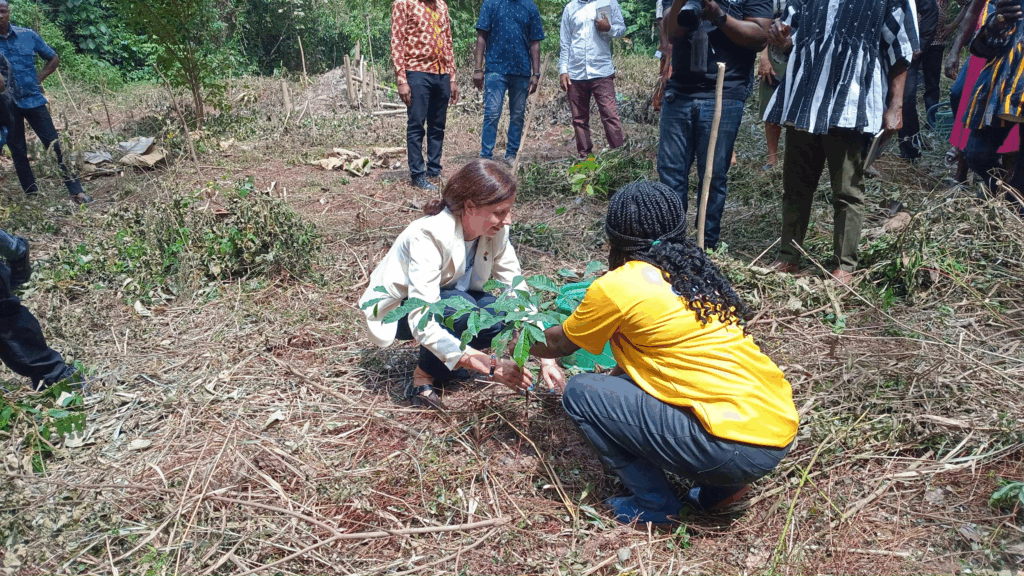
The event brought together representatives from the Ministry of Lands and Natural Resources, the Forestry Commission, FORIG, grantees, and partners. The launch also featured a tree-planting ceremony and training sessions for grantees on restoration of best practices, gender inclusivity, and monitoring and reporting.
Ghana’s forests, vital for biodiversity, climate stability, water security, and livelihoods, continue to face pressures from agricultural expansion, illegal mining, logging, and wildfires.
Through this grant scheme, the EU aims to strengthen Ghana’s policy frameworks, including the Forest and Wildlife Policy, Landscape Restoration Strategy, and the “Tree for Life” campaign to address these threats and promote sustainable forest management.
With implementation underway, the projects are expected to make tangible progress by 2027, symbolizing the EU’s broader commitment to environmental stewardship, local empowerment, and Ghana’s sustainable future.
Latest Stories
-
Freddie Blay accuses government of politically motivated demolitions targeting his family
5 minutes -
Ghana targets rice self-sufficiency by 2028 as government secures $18.8m AfDB grant
9 minutes -
Israelis mark three years since October 7 as Palestinians mourn Gaza’s destruction
12 minutes -
Support constitutional amendment to fix voting day on Tuesday – Asiedu Nketiah urges SDA Church
12 minutes -
‘It’s a systemic problem’ – All Black PRO dismisses Kurt’s resignation calls
17 minutes -
Vance says Iran must cut enrichment to end war
19 minutes -
Mahama orders sanctions for officials who fail to enforce building safety rules
20 minutes -
Court grants bail to banker accused of stealing GH¢1 million
24 minutes -
We have a winning team for 2028 – NPP Atwima Nwabiagya South Secretary
26 minutes -
Bono East Minister cracks whip on contractors over delayed 24-Hour Economy Market projects
28 minutes -
Zelensky condemns ‘vile’ large-scale Russian attacks that killed 15
32 minutes -
Trump to speak to Putin about plague lab worker’s death in Russia
32 minutes -
GHIPO makes case for local plant breeders to protect developed varieties for food sovereignty and reinvestment
34 minutes -
Ghana’s bamboo bikes entrepreneur gets a seat at World Economic Forum
35 minutes -
After years under trees, Akatsi children get a permanent school
36 minutes