

Audio By Carbonatix
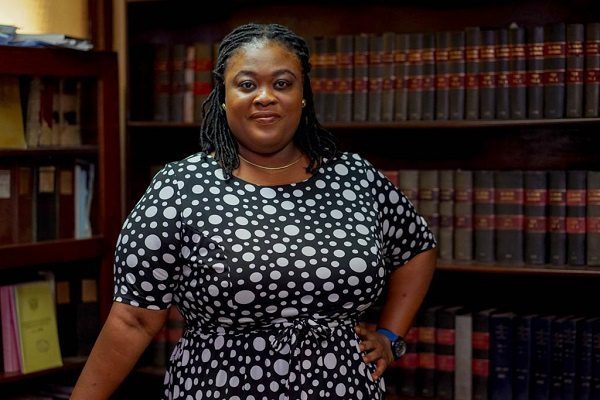
The Deputy Auditor-General and Minister of Justice, Diana Asonaba Dapaah has attributed the cause of judgment debts in the country to poor implementation processes and failure to abide by A-G’s advice.
In her view, the opinion of the principal legal advisor to the state before contracts are signed is either ignored or sidestepped by government agencies.
“The A-G’s office is sometimes not involved in the negotiations and discussions leading to the execution of some agreements. In some instances, I am afraid to say, the opinion of the office is not sought prior to the execution of agreements, irrespective of the reservations raised by the office,” Ms. Dapaah added.
Speaking at a roundtable on Friday, Ms. Dapaah observed that issues that took the state to a court or arbitral tribunal were the abrogation of contractual agreements or breaches.
This, she stressed is because some government agencies and ministries involve her outfit in contractual agreements, hence, defending the state becomes difficult.
“Defending the public purse in a situation where there is little or no information or support coming from the institution or ministry involved also poses a great challenge, and we at the office of the A-G do not exist as a state machinery with a magical wand to wipe away contractual breaches or judgement debt after they have occurred.
“We may have our very rare shortcomings in meeting some procedural obligations in international arbitration proceedings which, more often than not, boil down to the fact that we are handicapped,” Ms. Dapaah said.
The deputy A-G, therefore, said there was the need to deal with judgement debts devoid of politics in order to protect the public purse for accelerated development.
The Coordinator of the Third World Network-Africa, Dr. Yao Graham, and a senior partner at AB and David law firm, Mr David Ofosu-Dorte, said there was the need to build the expertise of government officials in the entire agreement preparation process.
Dr. Graham said government contracts should have clauses that limited damages in cases of default or breach of contract or litigation.
Mr. Ofosu-Dorte, on the other hand, advocated the inclusion of private sector consultants in the preparation of agreements.
On his part, the Executive Director of CDD-Ghana, Professor Henry Kwasi Prempeh, urged the government not to sign deals in crises period, since that could yield minimal benefits.
He further advised Parliament to actively get involved in processes leading to the signing of contracts and international agreements, adding: “Parliament comes in a little too late.”
Prof. Prempeh further proposed the drafting of Ghana’s own agreement model to guide officials in the signing of contracts.
Latest Stories
-
President Mahama is not sincere with Ghanaians on LGBTQ bill matter – Hassan Tampuli
10 minutes -
Gov’t to establish Prison Industrial Hub to equip inmates with income-generating skills – Prison Service boss
29 minutes -
Alhassan Tampuli donates cement, roofing sheets to support storm victims in Gushegu
29 minutes -
Alhassan Tampuli appeals for urgent support for storm victims in Gushegu
32 minutes -
The hypocrisy must stop; pass Anti-LGBTQ+ Bill now – Alhassan Tampuli to Mahama
36 minutes -
Imprisonment should be rehabilitative, not punitive – Ghana Prisons boss at UNGA
58 minutes -
Ga Adangbe traditional priests petition Mahama over McDan aviation licence revocation
1 hour -
Anti-LGBTQ Bill: NDC’s arrogance is worrying – Hassan Tampuli
1 hour -
Let’s give OSP time to mature, not to scrap it – Hassan Tampuli
1 hour -
Nigeria convicts 386 Islamist militants in mass trials
1 hour -
Djibouti president wins election with 97.8% of vote, state media says
2 hours -
We don’t have mandate to deduct tax from rent allowance of security services personnel – Interior Ministry clarifies
2 hours -
Ablakwa receives Presidential Special Envoy on Reparations to advance global agenda
2 hours -
Christina Koch becomes first woman to travel around the moon on Artemis II
2 hours -
Epstein survivors’ calls to meet King Charles and Queen harder to ignore as US visit approaches
2 hours