

Audio By Carbonatix
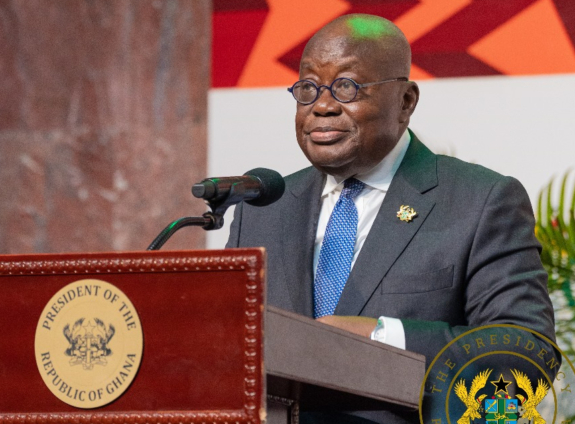
President Nana Akufo-Addo is advocating a coordinated effort by global leaders to decisively tackle violent extremism in all its forms.
He cautioned that "our failure to do so, leaves the entire world in danger of a spillover effect of terrorism and violent extremism,”
It was therefore imperative for a global coalition of democracies, a coalition of the willing and determined to banish the specter of those threats, he said.
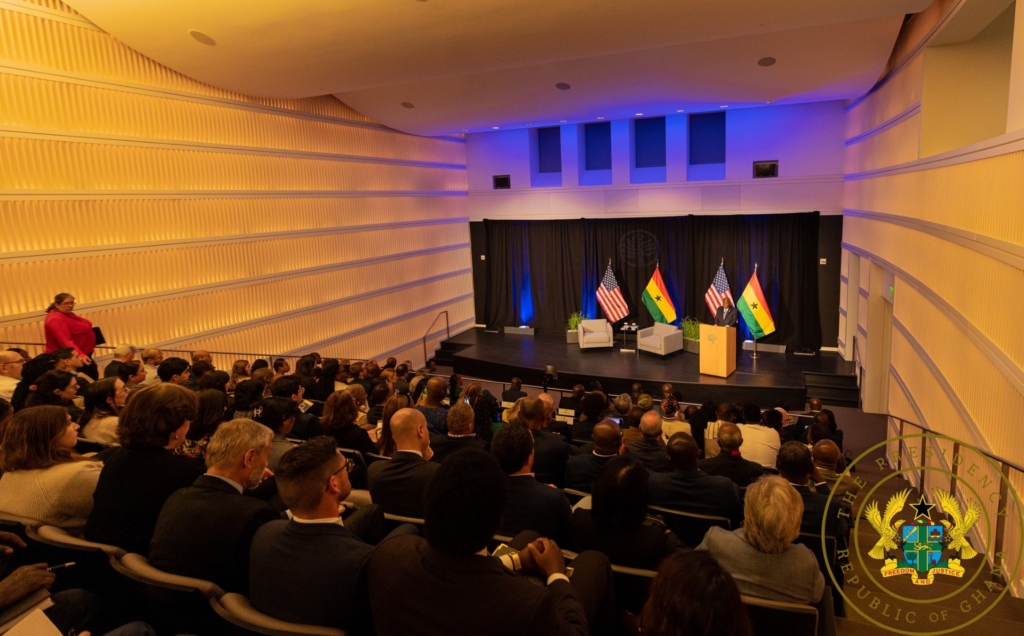
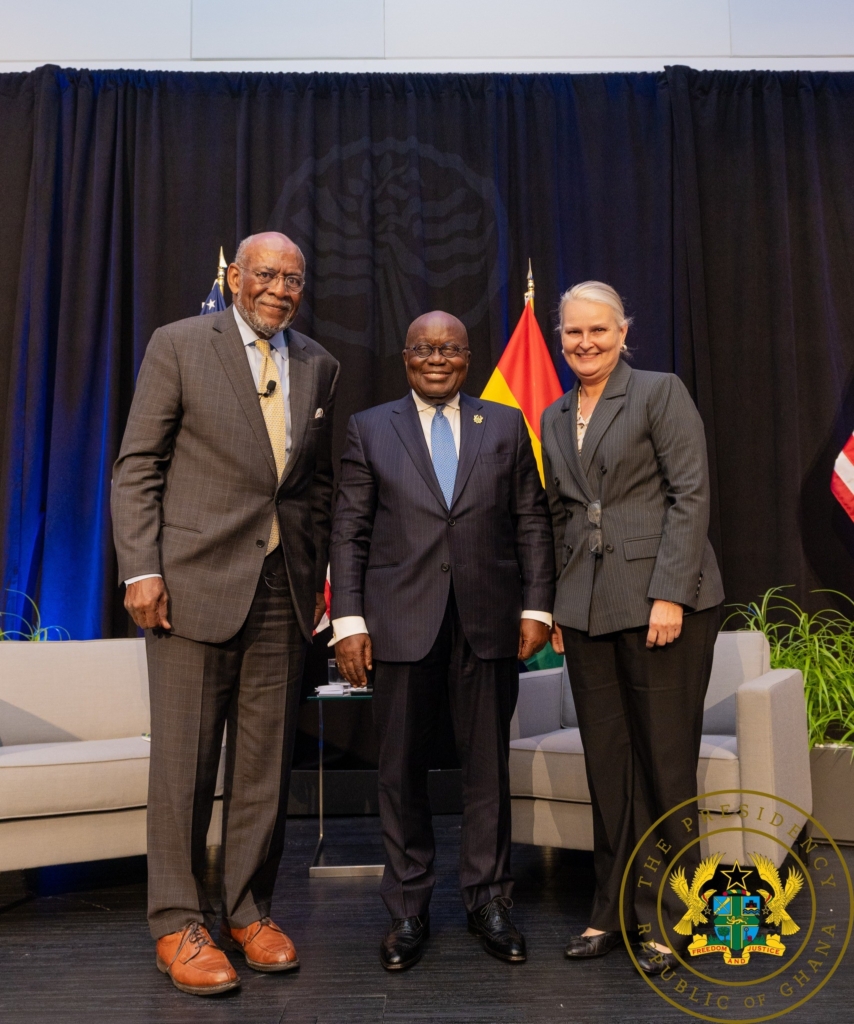
President Nana Akufo-Addo was speaking on “Democracy and Security in West Africa”, at the United States Institute of Peace’s (USIP) Programme on Governance and Peace, in Washington D.C.
In recent years, terrorism has increased alarmingly across the sub-region, resulting in significant fatalities and internal displacement of persons.
The most affected areas include the Lake Chad Basin and Sahel countries, with nearly every country affected by terrorism.
“Even more concerning is the fact that these terrorist groups are evolving by the day, as they scramble to control more territories and natural resources, especially in peripheral communities where the lack of effective State presence and control creates conditions for penetration and, ultimately, radicalisation,” the President lamented.
That development, he said, remained one of the greatest threats to democracy.
The proliferation and sophistication of terrorist networks in Africa demanded a global coordinated and sustained fight, he appealed.
“We must pool our resources together to confront a common enemy.
“The resources dedicated to counter-terrorism must match the resources available to the terrorist groups. The menace caused by terrorism is such that we must share the burden of the fight to be able to incapacitate the terrorists,” the President advised.
He was of the conviction that with the right amount of support to ECOWAS, the terrorists “can be chased out of West Africa and the Sahel too”.
“Foreign troops would not have to be involved. West African troops can do the job. The Accra Initiative is a good example of indigenous self-help.”
A concept note by USIP, spelling out the reason for the Institute’s engagement with the President, said Ghana was one of the most enduring democratic nations in the sub-region.
It is a regional leader and critical member of the West African regional bloc, ECOWAS.
Consequently, the United States and its partners are seeking ways to best support the country and other longstanding democracies in the region to promote and sustain democracy as a governance model.
This comes amid a wave of extra-constitutional movements and growing political instability in the sub-region.
Countries, including Mali, Guinea, Burkina Faso and Niger, have all seen their constitutional rule subverted by military interventions in recent times.
Latest Stories
-
Finance Ministry defends Publican AI rollout amid stakeholder concerns
23 seconds -
Police arrest 5 in Asankrangwa robbery; cash and guns retrieved
1 minute -
Why I joined NPP – Jeneral Ntatia
2 minutes -
Three UDS students remanded over alleged armed robbery
6 minutes -
Kudus Mohammed at risk of missing World Cup 2026 after fresh injury blow
9 minutes -
Minority urges cocoa farmers to resist pressure from galamseyers
9 minutes -
President Mahama applauds astronaut Christina Koch’s Ghana ties in Artemis II mission
11 minutes -
Ex-wife of Richard Nii Armah Quaye moves to Court of Appeal
13 minutes -
Insecurity: US orders non-emergency staff to leave embassy in Nigeria
13 minutes -
ASFC 2026: Ghana U15 girls set up Burkina Faso final after win over Zambia
17 minutes -
The passport question: Why Ghana must let its best abroad come home to serve
29 minutes -
We will be losing twice if these commodities expire at the port – CSOs Coordinator warns
36 minutes -
Setting up national champions to fail: the case of Ibrahim Mahama and E&P
37 minutes -
Rwanda’s capital embraces urban farming as development squeezes rare land
39 minutes -
Argentina passes bill loosening protection of its glaciers
39 minutes