

Audio By Carbonatix
The Electricity Company of Ghana (ECG) and Ghana Water Limited are under intense pressure after three business associations launched a scathing attack.
Three associations, including the Food and Beverages Association (FBA) and Ghana Union of Traders Association (GUTA) and Ghana Plastic Manufacturers' Association, described the companies as "leaking baskets" plagued by waste and inefficiency and are demanding immediate reforms under the government's reset agenda.
The associations are petitioning the President to launch an Executive Reform Agenda committee within 30 days to tackle challenges such as technical and commercial losses, revenue collection, and other operational shortcomings.
They want the committee’s work anchored to key performance indicators enforced by a presidential task force.
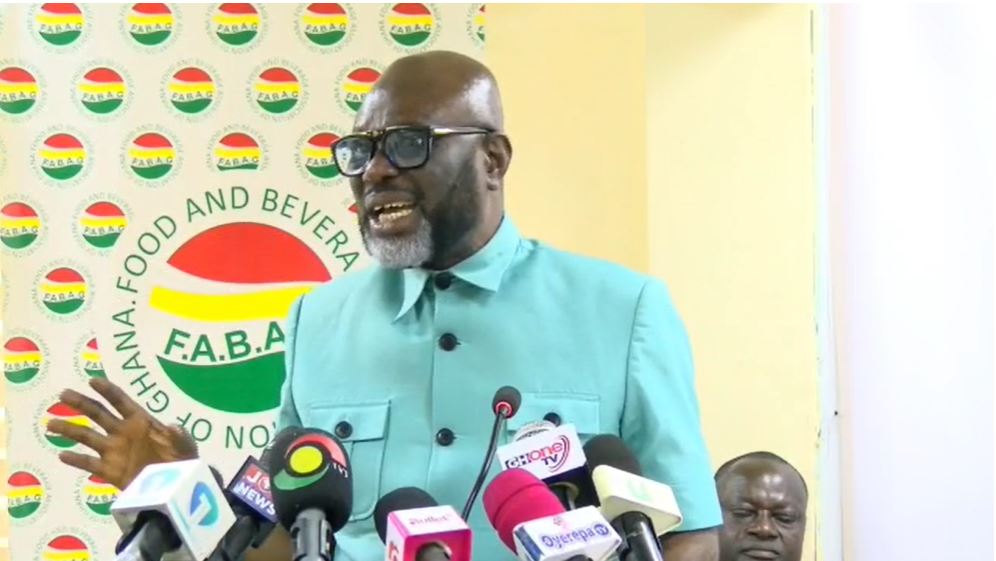
President of the Food and Beverages Association, John Awuni,urged the President to “Let the reset agenda that his excellency sold to Ghanaians and which we bought kick start at the ECG and the Ghana Water Company respectively."
“The Auditor-General’s reports over the years, together with data from the Energy Commission of Ghana, reveal that ECG in particular is bleeding money through inefficiency, corruption, and waste. We therefore, ladies and gentlemen of the press, call on His Excellency the President — and hereby petition him — to launch an executive reform agenda anchored on measurable key performance indicators, to be enforced by a Presidential Task Force,” he added.
The group also slammed the companies’ proposed tariff increases of 225% for ECG and 280% for Ghana Water, saying it is unreasonable for monopolistic utility companies to be incurring losses year after year.
Mr Awuni said members are not willing to pay higher tariffs to companies “riddled with waste and corruption.”
“We are hereby warning that approving new tariff hikes for utilities, especially the ECG and the Ghana water company, without deep reforms, would be a profound injustice to the businesses and households of Ghana,” he warned.
President of GUTA, Joseph Obeng, noted that Ghanaian traders struggle to export goods because of the country’s high utility rates and warned that the government’s 24-Hour Economy initiative could fail if the utility situation is not addressed.
According to him, the earlier these issues are dissected, the better for the economy and its industrialization.
“We don’t have to continue to increase and increase while businesses suffer. It does not make us competitive,” he lamented
Latest Stories
-
Netherlands Fire Chief in Ghana to support fire safety reforms and market fire prevention efforts
4 hours -
Mason goes on remand for stealing
4 hours -
Gov’t cuts fuel taxes, deploys buses to curb impact of rising fuel prices
4 hours -
Interior Minister calls for intelligence-driven strategy as Ghana strengthens counter-terrorism efforts
4 hours -
Adenta Circuit Court remands Pastor William Gyimah over viral threats against Vice President
5 hours -
“We’ve implemented changes to prevent a repeat of the AFCON final” – CAF President Motsepe
5 hours -
Gov’t orders deployment of Metro Mass buses to cushion commuters amid fuel price hike
6 hours -
Key Indian state polls begin in test for Modi’s party
6 hours -
Playback: Gomoa Easter Carnival in photos
6 hours -
Gov’t orders removal of fuel taxes to ease pump price hikes
6 hours -
“Whatever the decision of CAS, we will respect it” – CAF President Motsepe after AFCON final meetings in Morocco
7 hours -
Emma Ankrah: When waiting becomes part of treatment – Reflections on hospital care
7 hours -
Ghana urges travellers to prepare for new EU border system roll-out
7 hours -
Mahama enforces fuel coupon ban for ministers as cabinet moves to slash fuel taxes
7 hours -
Task force probes strange fish deaths in Tema
7 hours