

Audio By Carbonatix
The Food and Drugs Authority (FDA) has issued a stern warning to those involved in food adulteration as it embarks on a massive campaign to clear the markets of adulterated food products.
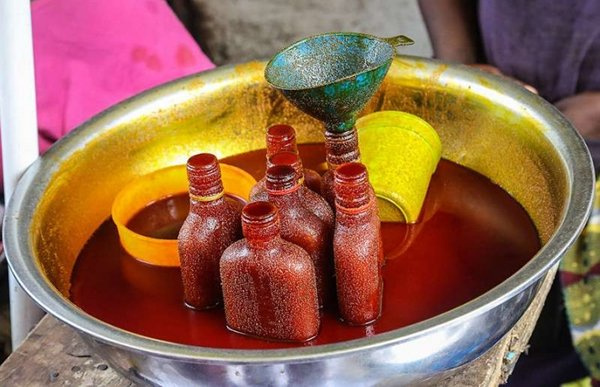
The crackdown comes in response to recent discoveries of Sudan 4 dye—a cancer-causing textile dye—being illegally mixed into palm oil.
Deputy CEO of the FDA's food division, Rodrick Daddey-Agyei confirmed that four individuals have already been arrested for their involvement in this illicit practice.
Speaking to JoyNews, Mr Daddey-Agyei stated that the FDA is committed to eradicating food adulteration.
“Arrests were done, and then people at the market, especially Anyaa and Nima, we got some of the vendors who had it in them. I can say we made over four arrests. Perpetrators who think they will still want to add the dye for whatever reason should know that their days are numbered, and we will get them.
“Dr Delese Darko, the Chief Executive is very resolute on this. We are still very hard, and we are after that. And it's not even just palm oil. It is for food adulteration. Anybody out there who thinks that they want to put something in the food, for example, as you are talking to me when you fry your yam at home, it looks white. Doesn’t it? Why does the one that is being sold by the roadside look yellow? So the issue of adulteration is a big one. Anybody who sees anything, should tell the nearest FDA office, and let the Environmental Health Office also know because we work with them. We have the food safety policy.”
The FDA also reported a notable decrease in the presence of Sudan dyes in palm oil, with contamination levels dropping from 98% to 6%.
“The level has gone down. It's now 94% free of the dye. We are not completely happy. About 6% still needs to be worked on, but it makes a big difference to show that some years ago, it was 98% contaminated, and due to the work the Food and Drugs Authority has done, the dye is now 6%”.
We've taken some people to the police station, and with the education that we have done, we are happy to let people know that when we took samples from a major market, actually 444 samples were taken, and 94% passed the purity test and that's good,” he said.
Latest Stories
-
We can tackle multiple priorities – Sam George defends Anti-LGBTQ Bill push
24 minutes -
Statement: Ghana Chamber of Mines’ Response to Claims in Joe Jackson’s “Ananse Stories about the Economy of Ghana”
26 minutes -
GES opens 2026 teacher recruitment for licensed B.Ed graduates
28 minutes -
Ghana must value skilled trades, build resilient learners — Ibn Chambas
36 minutes -
Ghana must rethink education around relevance, resilience and responsibility — Ibn Chambas
39 minutes -
Prince Harry faces defamation lawsuit from charity he co-founded
41 minutes -
South Korea deploys thermal cameras to track escaped zoo wolf
42 minutes -
Calls for royal meeting with Epstein survivors grow ahead of US visit
46 minutes -
Ibn Chambas advocates blend of technology and human values in education
47 minutes -
UMA improves healthcare access in Asutifi North with GH₵700k ‘Kim Taylor Legacy’ Walkway
52 minutes -
Scholarships Authority and Fanaka University offer sponsorship for procurement and supply chain studies
55 minutes -
Bisa Kdei drops new single ‘Go N Look’ featuring Medikal
1 hour -
Benin facing rising terrorism in north as French military presence faces growing criticism
1 hour -
UEW Public Lecture Series 2026: Education debate ‘about the soul of Ghana’s future’ — Dr Ibn Chambas
1 hour -
EU fingerprint and photo travel rules come into force from today
2 hours