

Audio By Carbonatix
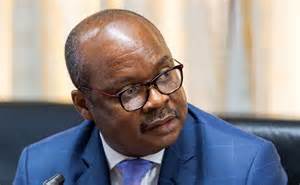
The fiscal costs in terms of stimulus package deployed to moderate the adverse socioeconomic consequences on the households and businesses in the country is estimated at over GH¢11.2 billion, the Governor of the Bank of Ghana, Dr. Ernest Addison has revealed.
However, the inclusion of the financial sector and the energy sector costs raised the estimate of the financial burden from the three sources to GH¢24 billion.
Speaking on the topic: “Pandemic, The Economy and Outlook at the University of Ghana Alumni lecture, Dr. Addison said difficult decisions will have to be taken to reorganize public finances and expenditure priorities while exploring more sustainable revenue sources.
The programme of interventions to revitalize businesses and cushion households will have to be defined to scale and there should be no expectation that these should become permanent obligations of government, he stressed.
“The wide fiscal gap raises important financing issues, and its financing should not be by recourse to central bank funds as this will weaken the central bank’s ability to serve as the anchor of monetary and exchange rate stability.
"Let me conclude by reiterating that, the global economy is not out of the woods yet and neither is the Ghanaian economy”, he emphasized.
Continuing, the Governor said “the pandemic [covid-19] and its socio-economic impact would be felt long after we have reached herd-immunity and started seeing the full benefits of the success in the vaccines. Which means as public policy makers, we will still be faced with tough decisions that require a response function asymptotic to Pareto principles. The critical decisions that we take will be judged by posterity.”
Ghana’s debt
Ghana’s public debt reached 71 percent of the estimated Gross Domestic Product at the end of September 2020, fairly above the maximum early warning sustainability threshold of 70% for the Market Access Countries (MACs).
Dr. Addison said the country’s debt service indicators and gross financing needs have breached the sustainability thresholds.
The non-resident holdings of the public debt, although declined, is still high at 59.9% of GDP, above the threshold of 45% for the MAC.
Public gross financing needs are also above the 10% MAC threshold on the back of increased fiscal obligations, suggesting constrained fiscal space for growth spending.
He added that although external financing requirement as a share of GDP has declined and within acceptable thresholds, efforts need to be put in place to increase buffer levels to help meet future external obligations.
Latest Stories
-
Julius Debrah, ‘man to beat’ as NDC’s James Agbey dismisses Musah Dankwah’s polls
2 seconds -
GPRTU in Savannah Region to protest alleged eviction in Damongo
29 minutes -
Re: Reinsurance does not replace process — A response to the SIGA–SIC defence
44 minutes -
Gender Ministry supports Harriet Amuzu in ongoing abuse case
57 minutes -
AG joins plaintiff to scrap OSP ?: We should be mindful of the mischief in this – Bobby Banson
1 hour -
Samson Lardy Anyenini questions willingness of Attorneys-General to prosecute political colleagues
1 hour -
It is only fair the OSP is heard in Supreme Court case – Bobby Banson
1 hour -
Asiedu Nketia resumes Ashanti tour, second leg kicks off on Sunday
1 hour -
NLA denies salary cut claims, threatens legal action over reports
1 hour -
BoG Governor honoured for stabilising cedi, improve inflation
1 hour -
Kyebi Easter Homecoming 2026: A resounding success!
2 hours -
RNAQ divorce ruling: What the noise is hiding
2 hours -
Trade Minister applauds GUTA as a pillar of economic growth; Prez Mahama honoured
2 hours -
President’s brother’s takeover of Damang Mines is ‘untidy’ – Alhassan Tampuli
3 hours -
It’s not true that gov’t decided not to renew the lease for Gold Fields – Bobby Banson
3 hours