

Audio By Carbonatix
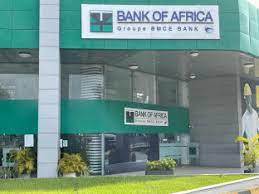
Ratings agency, Fitch, has affirmed Bank of Africa's (BOA) Long-Term Foreign- and Local-Currency Issuer Default Ratings (IDRs) at 'BB' with Stable Outlooks.
Fitch also affirmed BOA's Viability Rating (VR) at 'bb-' and National Long-Term Rating at 'AA-(mar)' with a Stable Outlook.
According to Fitch, BOA's IDRs are driven by potential support from the Moroccan authorities, as reflected in the bank's Government Support Rating (GSR) of 'bb'.
The Stable Outlook mirrors that of the sovereign rating. BOA's VR considers its solid franchise in Morocco and its pan-African presence, which brings diversification benefits to the business model but also exposes it to less developed markets and more volatile operating conditions. BOA's stronger performance and fairly strong funding and liquidity are balanced by weak capital and asset quality.
Government Support Rating:
BOA's GSR of 'bb' considers the bank's systemic importance as the third-largest Moroccan bank - but also the limitations of the sovereign's financial flexibility.
Fitch therefore views BOA as a domestic systemically important bank (D-SIB) in Morocco based on its 14% market share of loans and deposits.
Moderate Risk Profile
Fitch said BOA’srisk profile has improved with a greater harmonisation in risk controls across the group, a cautious approach to growth in recent years in a drive to preserve capital, as well as several rounds of capital increases, including rights issues.
The bank's loan book is less concentrated than the peer average; the largest 20 exposures were 14.5% of total gross loans end-half-year 2023.
Asset-Quality Weaknesses
Fitch again said BOA's Stage 3 loans ratio (end-1H23: 9.9%) is higher than at other major Moroccan banks, which is partially driven by higher impairments at its African subsidiaries.
Stage 2 loans are high at 8.1% of gross loans, although roughly in line with the peer average of 9%. Reserve coverage of Stage 3 loans by total allowances (85%) is reasonable.
Healthy Profitability
Again,BOA's operating profit improved to 2.0% of risk-weighted assets (RWAs) in first-half of 2023 (2022: 1.6%) owing to strong fees and commissions income as well as net interest income, and is broadly in line with the sector average. BOA's cost efficiency has improved but remains weaker than peers' primarily due to its foreign operations. In 9M23, net income was up 17% year-o-year, primarily due to a solid 18% growth in net fees and commissions and 10% growth in net interest income
Latest Stories
-
The Ghanaian prophet and the mysterious death of his scottish wife Charmain Speirs
40 minutes -
Nearly 400 sentenced in Nigeria for links to militant Islamists
1 hour -
Ghana’s recovery supported by gold strength despite global oil price pressures – Standard Bank Research
1 hour -
‘Excellence is our inheritance’ – Nana Sam Brew-Butler hails Mfantsipim’s 150-year reign in leadership
2 hours -
Kwaku Azar writes: A-G vs OSP
2 hours -
Mfantsipim–Adisadel rivalry built excellence, not division – Sam Jonah
2 hours -
Vice President launches Mfantsipim’s 150 years of shaping Ghana’s greatest mind
2 hours -
I assure Otumfuo, Mahama will join him to commission KNUST Teaching Hospital by end of this year – Haruna Iddrisu
3 hours -
Barcelona dominate derby to extend La Liga lead
3 hours -
Gov’t to roll out free special education for persons with disabilities from July 1 – Education Minister
3 hours -
Importers and Exporters Association declares full support for Publican AI port system
4 hours -
“We used it to test our officiating officials’ readiness” – Bawah Fuseini after CAA Athletics event
4 hours -
Volleyball emerges as Ghana’s fastest rising sport
4 hours -
National Sports Fund needs strong leadership from the top – Administrator David Wuaku
4 hours -
JoySports Exclusive: Steve McLaren in talks with GFA after expressing interest in Black Stars job
4 hours