

Audio By Carbonatix
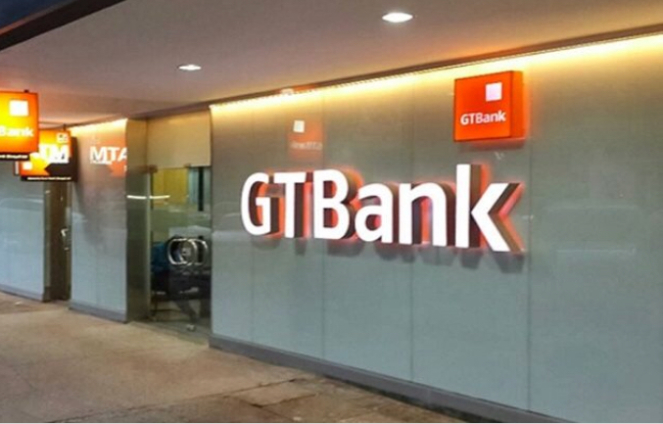
Ratings agency, Fitch Ratings has affirmed Guaranty Trust Bank (Ghana) Limited's (GTB Ghana) Long-Term Issuer Default Rating (IDR) at 'B-' with a Stable Outlook.
The bank's Viability Rating (VR) has also been affirmed at 'ccc'.
According to the UK-based firm, GTB Ghana's Long-Term IDR is driven by potential support from its Nigeria-based parent Guaranty Trust Bank Limited (GTB; B-/Stable), as expressed by its Shareholder Support Rating (SSR) of 'b-'.
The Stable Outlook reflects that on GTB's Long-Term IDR. GTB Ghana's Long-Term IDR is at the same level as Ghana's Country Ceiling of 'B-', which captures Fitch's view of transfer and convertibility (T&C) risk within Ghana.
“GTB Ghana's VR of 'ccc' reflects our view that failure remains a real possibility due to high exposure to the Ghanaian sovereign ('RD') through securities. This is despite losses incurred in the sovereign domestic debt restructuring, forthcoming external debt restructuring and impending loan-quality issues being tolerable due to large capital buffers. The VR is one notch below the implied VR of 'ccc+' due to the following constraint: Operating Environment/Sovereign Rating”.
Shareholder Support Rating of 'b-'
Fitch believes GTB has a high propensity to provide support, if required, despite the sovereign default, to preserve its Ghanaian operations due to the attractiveness and contribution of the Ghanaian market to its pan-African strategy, and the reputational implications of a subsidiary default.
However, GTB's ability to provide support is limited by its own creditworthiness. Fitch does not believe the authorities will introduce controls that impede banks in servicing their external debt.
Sovereign Default
Fitch saidGhana's domestic debt-exchange programme (DDEP), which involved exchanging cedi government bonds for new bonds with significantly lower coupons and longer tenors, concluded in February 2023, inflicting large net present value losses on participating bondholders. Ghana recently restructured other domestic debt instruments and is restructuring its external debt.
Problem Loans to Rise
It said macroeconomic conditions will burden borrowers' debt-repayment capacity and lead to increased problem loans.
However, loan-quality risks are diminished by GTB Ghana's small loan book (half-year 2023: 18% of total assets), with broader asset quality being more closely aligned with the sovereign's creditworthiness.
DDEP Pressures Profitability:
It pointed out that operating returns on risk-weighted assets decreased to 5.5% in 2022 (2021: 15.9%) as a result of large impairment charges stemming from the DDEP.
Fitch considers profitability to have been supported by a low discount rate to determine the fair value of the new bonds.
Latest Stories
-
Church of Pentecost supports over 2,000 BECE candidates in Obuasi with career guidance seminar
38 minutes -
Brandon Asante and Coventry all but promoted to Premier League despite Sheffield Wednesday draw
60 minutes -
GPL 2025/26: Late Kwartemaa strike downs Hearts in Tema
1 hour -
Ghana Faces Sierra Leone Moment as Prosecutorial Powers come under strain
1 hour -
Don’t consume fish or seafood from Tema Shipyard until further notice – FDA warns
1 hour -
Why volunteering might be Africa’s most underrated career accelerator
1 hour -
ActionAid Ghana raises concern over gender gaps in Feed Ghana Programme
1 hour -
Windstorm wreaks havoc in Gushegu, displacing nearly 2,000 residents and damaging schools
2 hours -
Friends of Bridget Bonnie Marks her 35th birthday with donation to Kasseh Model Health Centre
2 hours -
From Ekumfi Kokodo to the Pulpit Stage: Essi Donkor’s gospel journey takes shape
3 hours -
Landfilling waste management creates no value, it’s an economic waste
3 hours -
Photos: Speaker Bagbin Commissions MPs constituency office under parliamentary decentralisation programme
3 hours -
Black Stars technical advisor Winfried Schäfer sacked as GFA shakes up backroom staff
3 hours -
Wenchi water project almost complete, critical to gov’t agenda – GWL MD
3 hours -
Anti-LGBTQ+ bill not part of government’s legislative agenda – Inusah Fuseini
3 hours