

Audio By Carbonatix
Representatives from governments and collaborating organizations within the Climate and Clean Air Coalition (CCAC), convened by the United Nations Environment Programme (UNEP), have rolled out a range of holistic initiatives focused on confronting the interlinked issues of climate change, pollution, and biodiversity loss.
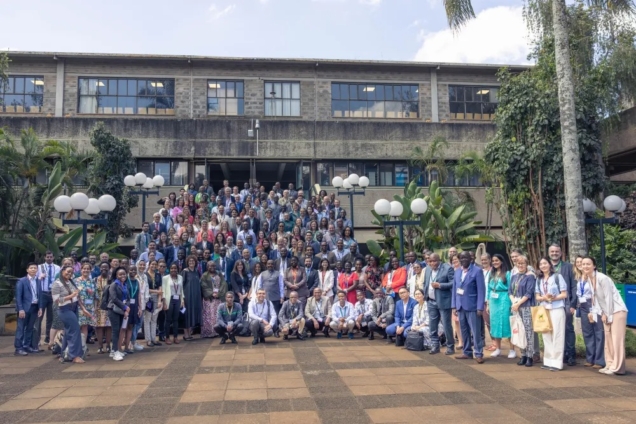
At the annual Ministerial Meeting on Climate & Clean Air convened by the CCAC in Nairobi, Kenya, preceding the sixth session of the UN Environment Assembly (UNEA-6), participating countries and partners unveiled a new Clean Air Flagship initiative.
This initiative is designed to bolster regional collaboration, engage the private sector, prioritize data-driven policy actions, secure funding, advance scientific research, and advocate for environmental preservation.
Representatives from public, private, and non-profit sectors gathered to discuss strategies for amplifying the implementation of country commitments aimed at reducing emissions, particularly through initiatives like the Global Methane Pledge and the Kigali Amendment. The focus was on driving transformative actions across various sectors.
The conference also examined progress made in scaling up financing and implementing effective policies to reduce emissions of short-lived climate pollutants (SLCPs) such as methane, black carbon, and hydrofluorocarbons (HFCs). These pollutants are recognized as the fastest and most cost-effective means to mitigate near-term warming and improve air quality.
The UN Environment Programme (UNEP) and the CCAC jointly unveiled a new report titled "Used Heavy Duty Vehicles (HDVs) and the Environment." The report highlights a significant increase of over 30% in CO2 emissions associated with heavy-duty vehicles since 2000. It offers a roadmap for reducing emissions in this sector through standardization, monitoring, and the adoption of greener freight strategies.

Inger Andersen, UNEP’s Executive Director, emphasized the urgency of addressing super pollutants and urged countries to integrate them into their Nationally Determined Contributions (NDCs) as they are being updated. She highlighted the importance of finalizing Methane Roadmaps and finding innovative financing mechanisms to support action.
“Just as you need a superhero to defeat a supervillain, we need super solutions to face down super pollutants. And we need you to mastermind these solutions.”
Recognizing the critical role of cities in combating pollution and climate change, Andersen noted their limited access to financing. She highlighted the CCAC's efforts to facilitate discussions on multi-level governance, including partnerships with the C40 Cities network.
Partners also welcomed the establishment of a CCAC Technology and Economic Assessment Panel aimed at bridging the gap between technologies and finance. The panel will focus on assessing the costs of measures, exploring viable business models, and addressing barriers to scaling up climate finance.
Ibrahim Auma, the County Minister of Green Nairobi, contends that nations are still distant from attaining the objective of clean air, clean water, and a healthy planet. He emphasizes the importance of transforming formulated plans into tangible actions and establishing robust institutions. Without effective implementation, he warns that the planet will continue to be endangered, air pollution will persist, and water sources will remain unsuitable for consumption.

“Without that, the planet remains in peril, our air dirty, and our water undrinkable.”
Peter Dery, CCAC Co-Chair and Director of the Environment Division at Ghana's Ministry of Environment, Science, Technology, and Innovation, commended the Climate and Clean Air Coalition for embodying the principles of multilateralism and robust partnership.
He highlighted Ghana's role as a founding member, leading by example through the integration of short-lived climate pollutants and other air pollutants into its official National Greenhouse Gas Inventory submitted to the UNFCCC.
Elizabeth Wathuti, a Kenyan environmentalist and founder of the Green Generation Initiative, emphasized the critical importance of clean air and a stable climate. She described the act of breathing as the essence of life but lamented that it has become hazardous for many around the world due to pollution and climate-induced adversities.
Wathuti underscored that the commitment to clean air and a stable climate is not merely an environmental cause but a fundamental fight for the right to life.
Latest Stories
-
Mobile Money Fintech LTD, UMB train hairdressers and beauticians
2 hours -
Asylum votes show people want help, says Kemi Badenoch
3 hours -
Badenoch welcomes expanded grooming gangs inquiry
3 hours -
GACL MD sues Samuel Buabeng over alleged Facebook defamation
3 hours -
Christa Pike in critical condition after surviving two lethal injections, lawyer says
4 hours -
Kemi Badenoch backs face covering ban at protest
4 hours -
Man City not ‘above the rules’, says No 10 after backlash to Burnham remarks
4 hours -
Real Madrid submit ‘substantial’ dossier in Barca payments case
4 hours -
Messi completes purchase of second Spanish club
4 hours -
Government must engage horticulturists on tomato crisis – GhIH
4 hours -
King Promise’s ‘Can’t Tame Us’ becomes official Chelsea anthem
4 hours -
Afenyo-Markin demands Baffour Awuah’s release from EOCO’s custody, end to alleged political intimidation
4 hours -
Rapper Rick Ross arrested on domestic violence charges
5 hours -
Minority demands security review of Ghana-Colombia visa waiver and port deals
5 hours -
Pursue drug kingpins, not persecute political opponents – Afenyo-Markin tells EOCO
5 hours