


Audio By Carbonatix
Sunday was the hottest day in recorded history, according to preliminary data from a climate tracking agency monitoring temperatures since the mid-1900s.
It’s the second consecutive year average global temperatures have crashed through shocking climate records and will not be the last, as planet-warming fossil fuel pollution drives temperatures to shocking new highs.
July 21 clocked in at 17.09 degrees Celsius, or 62.76 Fahrenheit, and was the hottest day on Earth since at least 1940, according to the preliminary data from the European Union’s Copernicus Climate Change Service.
Global average temperatures typically peak during the Northern Hemisphere summer, between late June and early August.
Sunday’s record came as many countries endure prolonged and brutal heat waves. Around a hundred cities across the US are experiencing their hottest start to summer on record, and swaths of southern Europe have been grappling with triple-digit temperatures.
Despite being based on data from the mid-20th century, the temperature records represent the warmest period the planet has seen in at least 100,000 years, scientists have found from many millennia of climate data extracted from ice cores and coral reefs.
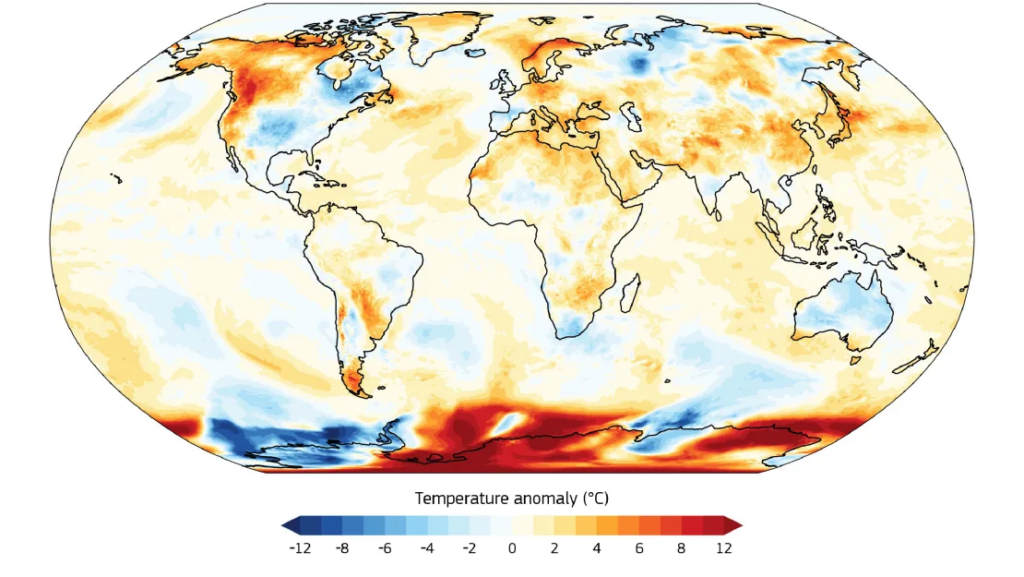
Global climate records are typically broken by tiny fractions of a degree, as was the case with this one: Sunday’s temperature was just 0.01 degrees Celsius above 2023’s record.
C3S/ECMWF
What’s jarring is the warmest global temperatures were significantly cooler by about 0.3 degrees before 2023.
“We are now in truly uncharted territory and as the climate keeps warming, we are bound to see new records being broken in future months and years,” said Carlo Buontempo, director of Copernicus.
These recent records are “truly staggering,” Buontempo said.

“We are now in truly uncharted territory and as the climate keeps warming, we are bound to see new records being broken in future months and years.”
Global temperatures fluctuate based on natural factors: seasons, large-scale climate patterns and solar activity — and on unnatural factors: the pollution from human activity, including the burning of fossil fuels, which is chiefly driving the planet’s temperature steadily upward.
Scientists pegged last year’s record to the coincidence of El Niño, a natural climate pattern in the Pacific ocean with a warming effect, and fossil fuel pollution, which is trapping heat in the Earth’s atmosphere.
This year’s record comes as El Niño is disappearing and transitioning to its cool La Niña phase, underscoring the significant influence of the human-caused climate crisis.
The sudden rise in global temperatures is linked to abnormal heat in large parts of Antarctica, according to the Copernicus analysis. The rapid warming of this vast, icy continent is a trend that is alarming scientists given the region’s ability to drive catastrophic sea level rise.
Latest Stories
-
Mobile Money Fintech LTD, UMB train hairdressers and beauticians
1 hour -
Asylum votes show people want help, says Kemi Badenoch
2 hours -
Badenoch welcomes expanded grooming gangs inquiry
2 hours -
GACL MD sues Samuel Buabeng over alleged Facebook defamation
2 hours -
Christa Pike in critical condition after surviving two lethal injections, lawyer says
2 hours -
Kemi Badenoch backs face covering ban at protest
3 hours -
Man City not ‘above the rules’, says No 10 after backlash to Burnham remarks
3 hours -
Real Madrid submit ‘substantial’ dossier in Barca payments case
3 hours -
Messi completes purchase of second Spanish club
3 hours -
Government must engage horticulturists on tomato crisis – GhIH
3 hours -
King Promise’s ‘Can’t Tame Us’ becomes official Chelsea anthem
3 hours -
Afenyo-Markin demands Baffour Awuah’s release from EOCO’s custody, end to alleged political intimidation
3 hours -
Rapper Rick Ross arrested on domestic violence charges
3 hours -
Minority demands security review of Ghana-Colombia visa waiver and port deals
4 hours -
Pursue drug kingpins, not persecute political opponents – Afenyo-Markin tells EOCO
4 hours