


Audio By Carbonatix
The Ghana Institute of Horticulturists (GhIH) has called on the government to formally engage horticultural professionals as part of efforts to address the persistent challenges confronting Ghana’s tomato sector.
The Institute President, Dr Mohammed Mujitaba Dawuda, said that despite horticulture's critical role in Ghana’s food system and the Institute’s efforts to help address the country’s tomato challenges, the government has yet to give the Institute the attention it needs or formally engage it.
He made the call at the opening of the 26th Annual General Meeting and Scientific Conference of the Ghana Institute of Horticulturists in Sunyani.
The three-day conference, held from October 1 to 3, 2026, focuses on the theme: “Building a Resilient Tomato Value Chain in Ghana: Need for Stronger Stakeholder Engagement.”
Dr Dawuda said the theme reflects the Institute’s commitment to finding lasting solutions to challenges affecting tomato production and marketing in Ghana.
These challenges, he noted, include soil fertility, seed and variety selection, root-knot nematodes, pests and diseases, high temperatures, irrigation challenges and post-harvest losses.
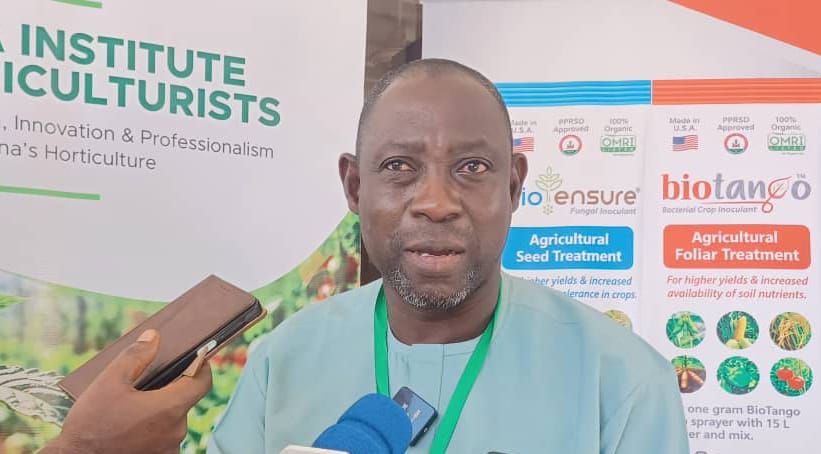
He also cited the recurring problem of tomato glut and scarcity as a major challenge affecting the sector.
“The tomato challenge has been common knowledge in Ghana for decades,” Dr Dawuda said, adding that the recent incident in Burkina Faso involving Ghanaian tomato traders had further heightened national attention to the issue.
On Saturday, February 14, 2026, a truck carrying tomato traders from Ghana was caught in a terrorist attack in Titao, Burkina Faso.
Dr Dawuda, who is also a Senior Lecturer in the Department of Horticulture at the University of Development Studies (UDS), said the Institute had, over the years, undertaken research, training and stakeholder engagements aimed at contributing to the development of horticulture and addressing challenges in the tomato sector.
“Unfortunately, government, as a stakeholder in the horticulture industry, is yet to give us the needed attention and yet to have formal engagement with us as an institute,” he stated.
Dr Dawuda, however, reaffirmed the Institute’s commitment to its vision and mission and urged researchers, farmers, agricultural officers, traders, students, NGOs, farmer-based organisations and other stakeholders to actively participate in discussions aimed at developing practical solutions.
The Special Guest of the conference and Vice-Chancellor of the University of Energy and Natural Resources (UENR), Prof Elvis Asare Bediako, called for stronger collaboration among institutions and actors in the tomato sector.
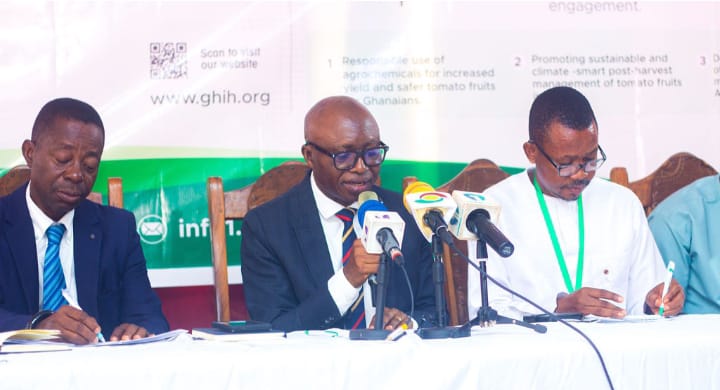
He said Ghana must move beyond merely talking about collaboration.q
“We need to move beyond talking about collaboration to institutionalising collaboration,” Prof Bediako said.
According to him, the problems confronting the tomato sector are interconnected and therefore require interconnected solutions.
He explained that a disease outbreak can reduce yields, poor-quality planting material can undermine production, climate variability can affect productivity and quality, while poor post-harvest handling can lead to significant losses.
Weak market linkages and inadequate processing capacity, he added, also place additional pressure on farmers and the fresh produce market.
Prof Bediako proposed that the tomato sector should increasingly be viewed not simply as a value chain but as a value network, because farmers, researchers, processors, financiers, government and other actors continuously exchange information, knowledge, technology, finance, risks and opportunities.
“The strength of the tomato sector depends on the strength of the relationships among its actors,” he said.
The 26th Annual General Meeting and Scientific Conference of the Ghana Institute of Horticulturists is expected to bring together researchers, farmers, government representatives, agricultural officers, development partners, private-sector actors, and other stakeholders to deliberate on the challenges facing Ghana’s tomato sector.
The organisers are expected to develop a communique from the conference discussions for presentation to relevant stakeholders.
Latest Stories
-
Asylum votes show people want help, says Kemi Badenoch
33 seconds -
Badenoch welcomes expanded grooming gangs inquiry
10 minutes -
Kemi Badenoch backs face covering ban at protest
13 minutes -
Man City not ‘above the rules’, says No 10 after backlash to Burnham remarks
29 minutes -
Real Madrid submit ‘substantial’ dossier in Barca payments case
31 minutes -
Messi completes purchase of second Spanish club
39 minutes -
Government must engage horticulturists on tomato crisis – GhIH
42 minutes -
King Promise’s ‘Can’t Tame Us’ becomes official Chelsea anthem
47 minutes -
Afenyo-Markin demands Baffour Awuah’s release from EOCO’s custody, end to alleged political intimidation
51 minutes -
Rapper Rick Ross arrested on domestic violence charges
1 hour -
Minority demands security review of Ghana-Colombia visa waiver and port deals
1 hour -
Pursue drug kingpins, not persecute political opponents – Afenyo-Markin tells EOCO
1 hour -
‘I am disappointed’ – Yaw Ampofo Ankrah breaks silence after NSA suspension
1 hour -
UK in talks with EU partners to release strategic fuel reserves if needed, BBC understands
2 hours -
I don’t think EOCO has legitimate basis to investigate SIC transaction – Atta Akyea
2 hours