

Audio By Carbonatix
The Executive Director of the Peasant Farmers Association of Ghana (PFAG), Bismark Owusu Nortey, has attributed Ghana’s recurring tomato shortages and seasonal gluts to deep structural weaknesses within the country’s agricultural system.
Speaking in an interview on Joy FM’s Midday News on Monday, 23 February, Mr Nortey described the situation as multifaceted, stressing that Ghana’s inability to produce tomatoes consistently throughout the year is not due to farmers’ lack of effort, but to systemic constraints.
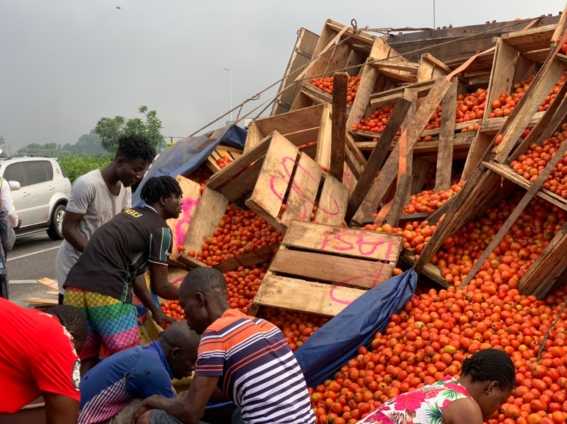
According to him, Ghana depends heavily on a short production window during the rainy season, when farmers cultivate large volumes of tomatoes. However, this period is often characterised by glut because of inadequate storage facilities.
“As a country, we rely on a short period where we go into a lot of production. During that period, we experience glut because we do not have adequate storage facilities,” he explained.
He noted that the situation reverses sharply during the long dry season, when farming activities reduce significantly due to limited irrigation infrastructure. During this lean period, traders are compelled to import tomatoes from neighbouring countries, particularly Burkina Faso, to meet domestic demand.
Mr Nortey further identified the high cost and limited availability of improved seed varieties as another major barrier to increased production. He said many smallholder farmers cannot afford quality seeds, affecting yields and consistency.
Storage challenges, he added, continue to fuel the cycle of waste and scarcity. During bumper harvests, the lack of cold storage facilities leads to substantial post-harvest losses. Yet in the lean season, there are no reserves to stabilise supply and prices.
“We do not have adequate systems where we can store tomatoes in cold stores and push them out during the lean season,” he stated.
He emphasised that without strategic investment in storage, irrigation and affordable inputs, Ghana will continue to oscillate between excess and scarcity, undermining food security and farmer incomes.
Latest Stories
-
Shell to sell its Nigeria gas business to Vaaris Energy
28 minutes -
Judge extends White House access for CNN, MS NOW, Politico amid legal fight
36 minutes -
EU expands migration cooperation with eastern Libya through new funding
44 minutes -
Actress Selma Blair faces charges for kicking nurse and officer after plane incident
53 minutes -
Private political loyalties deserve scrutiny too in EC appointments – Osae-Kwapong
1 hour -
EC safeguards must check partisan bias among commissioners – Osae-Kwapong
1 hour -
Oil prices climb as traders weigh Saudi supply risk, Russian diesel flow
2 hours -
Zimbabwean author denies using AI to write award-winning story
2 hours -
Bank of America hit with $1.2bn fine for money laundering failings
2 hours -
Robot seized by German police after allegedly groping teenage girl
2 hours -
Subject EC appointment to ‘Akufo-Addo test’ – Kwapong
2 hours -
English football’s independent regulator would quit over Man City interference
3 hours -
Anthropic seeks rehearing of case over Pentagon’s security risk branding
3 hours -
Torrential rains in Libya’s Tripoli kill two
3 hours -
Guinea-Bissau says it has not approved hepatitis B vaccine trial in newborns
3 hours