

Audio By Carbonatix
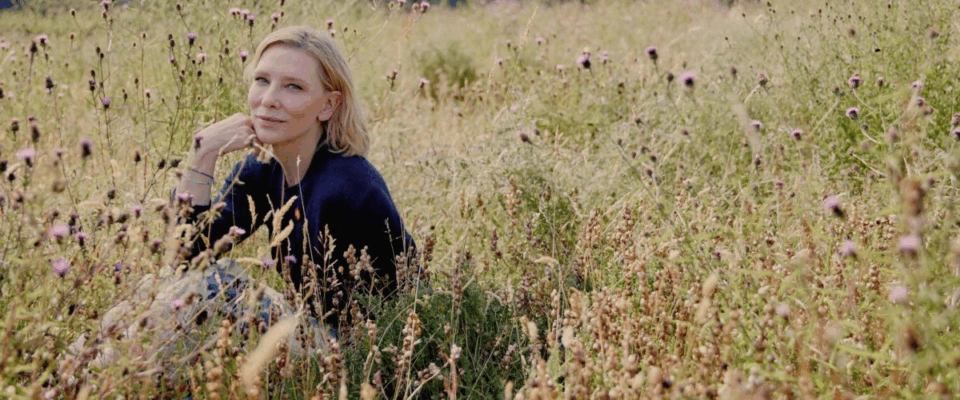
She's a Hollywood A-lister, with a mantelpiece groaning under the weight of awards. But Cate Blanchett has taken an unexpected diversion from her day job to immerse herself in the world of the humble seed.
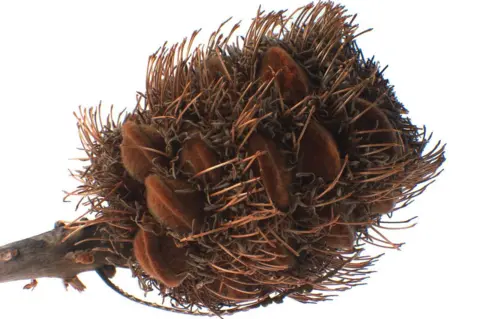
Her eyes light up as she enthuses about the banksia species from her native Australia.
"It's quite a brutal-looking seed pod that only releases its seed in extremely high temperatures," she tells us.
"It does look like a cross between a mallet and a toilet brush. So they're not always pretty, but what comes out of them is so spectacular."
We meet her at Kew's Millennium Seed Bank (MSB) at Wakehurst Botanic Garden in Sussex. She lives locally and teamed up with the project as it celebrates its 25th anniversary.
"Really, I stumbled upon Wakehurst. I was just in awe of the landscape, and I always feel regenerated by being in the natural world," she says.
"And then I discovered the seed bank, and I literally had my mind blown by the work that goes on here… and I thought, anything I can do to be connected to it - I found it so inspiring."
The MSB is home to more than 2.5 billion seeds collected from 40,000 wild plant species around the world.
The seeds, which come in every shape, size and colour, are carefully processed, dried and then stored in freezers at a chilly -20 °C.
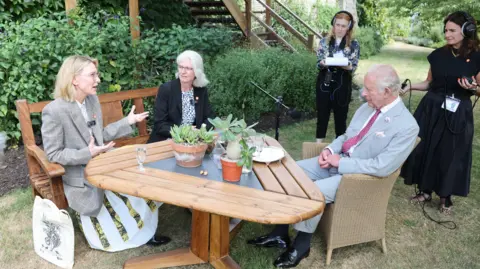
The conservation project was opened by The King - then the Prince of Wales - in 2000. He's taken part in a special episode of a Kew podcast about the project called Unearthed: The Need For Seeds with Cate Blanchett.
In the recording he talks about his concerns that many plant species are being lost.
"I know how absolutely critical it all is, and the destruction of rainforests, the extinction of endless species, which have very likely remarkable properties," he tells the podcast.
When the seed bank first opened, it was seen as a doomsday vault - a back-up store of seeds to safeguard wild plants from extinction.
But 25 years on, the collection is being used for a different purpose: to restore environments that are under threat.
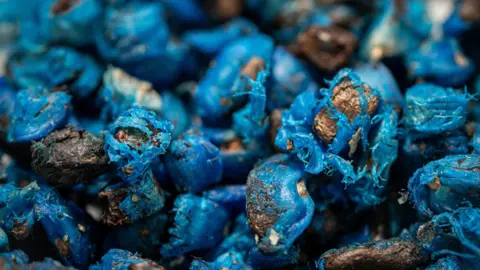
"We want those seeds to be back out in the landscape," explained Dr Elinor Breman from the MSB, who's been showing Cate Blanchett the team's work.
"We're just providing a safe space for them until we can get them back out into a habitat where they can thrive and survive."
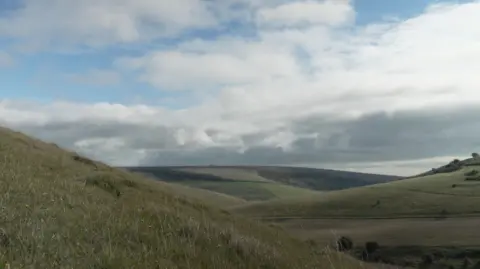
This includes projects like one taking place on the South Downs. A special mix of seeds from the MSB are being sown to help restore the rare chalk grasslands there.
And this restoration work is being repeated around the world.
"We've been to every kind of habitat, from sea level to about 5,000m, and from pole to pole - literally," explained Dr Breman.
"And we're involved in restoring tropical forest, dry deciduous forest, grassland, steppe - you name it - we're trying to help people put those plants back in place."
The seed bank also helped to restore plants after intense wildfires swept across Australia in 2019. Cate Blanchett says this meant a lot to her.
"There are almost 9,000 species of Australian plant that are stored [at the MSB]. And we know that bushfires are getting increasingly more intense. And it's sad to say - but knowing that insurance policy exists, is of great solace to me."
Working as an ambassador for Wakehurst has meant that the actor has had a chance to get hands on with the seeds.
"Have I got dirt under my fingernails? Well, I'm trying to turn my brown thumbs green," she laughs.
"You know, living in Sussex, you can't not but become a passionate gardener. So I've had a lot of questions about how one stores seeds as a lay person, and I've learned a lot about that. My seed management has definitely, definitely improved."
And after spending so much time with the researchers at the MSB, is she at all tempted to swap the film set for the lab?
"I wish I had the skill - maybe I could play a scientist," she laughs.
Cate Blanchett describes the seed bank as the UK's best-kept secret - and believes that over the next 25 years its work will continue to grow in importance.
"You often think, where are the good news stories? And we're actually sitting inside one," she tells us.
"You come here, you visit the seed bank, you walk through such a biodiverse landscape, and you leave uplifted. You know change is possible and it's happening."
Latest Stories
-
I will give marriage a second chance – Juliet Ibrahim
3 hours -
King Charles reflects on ‘pressures of conflict’ in Commonwealth message
4 hours -
Rapper-politician Balendra Shah unseats Nepal’s ex-PM as he heads for victory
4 hours -
Mayor Sadiq Khan invites embattled AI firm Anthropic to expand in London
4 hours -
T-bills auction: Investor interest remains high; interest rates fall to 4.8%
5 hours -
Iran names Khamenei’s hardline son Mojtaba as new supreme leader
5 hours -
US-Iran conflict: Supply chain impacts will be felt globally
5 hours -
Interest rates declined by 23% since January 2025, but market pressures likely to resurface – Report
5 hours -
Explosion at US embassy in Oslo may have been terrorism, Norway police say
5 hours -
Zoomlion MD Doris Adjei honoured with Ghana Women of Excellence Gold Award for Environmental Sustainability
5 hours -
President Mahama bans foreign travel for boards of SOEs and public institutions over rising costs
6 hours -
Withdraw Ghanaian peacekeepers from Lebanon now – LACPSA-Ghana
6 hours -
Give to Gain: strengthening African media through women’s leadership
6 hours -
Chief of Staff urges genuine interpersonal relationships for national unity
6 hours -
Ghana High Commission in London opens Export Trade House
7 hours