

Audio By Carbonatix
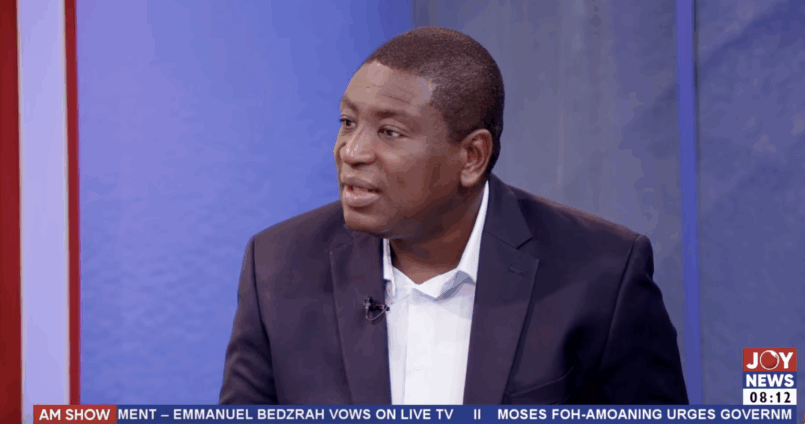
Executive Director of the Institute for Energy Policies and Research (INSTEPR), Kwadwo Poku, has accused the Bank of Ghana (BoG) of artificially maintaining the cedi’s exchange rate to create the impression of currency stability and temporarily lower fuel prices.
Speaking on JoyNews’ AM Show, Mr Poku argued that the recent reduction in petroleum product prices is not the result of improved market fundamentals but rather a deliberate intervention by the central bank and the Ministry of Finance.
“It has never been the case where the Bank of Ghana is doing the semantics they are doing to forcefully keep the dollar at a certain price when in reality we know they are using a lot of resources to do that,” he said.
The latest petroleum pricing window, which takes effect from November 1, is expected to see petrol prices fall by about 5.2% and diesel by between 6% and 8%, according to a report by the Chamber of Oil Marketing Companies (COoMAC).
Mr. Poku, however, believes the drop is temporary. He warned that maintaining the exchange rate below its realistic market value — around GH¢12.40 to GH¢12.50 per dollar — is unsustainable and could worsen the country’s fiscal deficit.
“For me, the cost of what the Bank of Ghana and the Ministry of Finance are incurring is huge because already we have a $21 billion hole in the budget due to this currency situation,” he explained.
He noted that pegging the cedi artificially low also affects government revenue collection, especially at the ports, since import duties are computed based on foreign exchange values.
According to him, the Ghana Revenue Authority (GRA) has been struggling to meet its revenue targets as a result of the government’s approach to managing the exchange rate.
“Since the FX value has been made low, it’s also affecting GRA’s receivables from the ports,” he said.
Mr. Poku further cautioned that with winter approaching, international fuel prices could rise again, putting more pressure on the cedi and potentially reversing the current price gains at the pump.
The energy analyst urged the government to adopt a more transparent approach to managing the exchange rate and fuel pricing system to avoid future fiscal shocks.
Latest Stories
-
Old Tafo MP rolls out street lights project to boost security and night-time economy
3 minutes -
Telecel Ghana CEO urges urgent education reform and stronger industry-academia partnership at UEW Public Lecture
12 minutes -
Nigerian army general and several soldiers killed in assault on military base in northeast
14 minutes -
Dagbamete chief urges completion of road project, expansion of vocational training
21 minutes -
Urgently cancel Truedare AI Customs deal over cost concerns – Joseph Cudjoe to Mahama
27 minutes -
Poor safety habits to blame for recurring boat fatalities — GMA boss, Kamal-Deen Ali
33 minutes -
Owabi 75% blocked, Barekese loses 40% capacity as siltation, plastics threaten water supply crisis
42 minutes -
Ashanti RCC seeks to clear unauthorised garages under new car mall initiative
45 minutes -
DPS International steals spotlight at Ghana Interschool Festival Part 2
46 minutes -
Republic Bank Ghana PLC leverages Kwahu Business Forum deliberations
46 minutes -
Ghana and Artemis II: Hospitality, Love, and Conquest
48 minutes -
AMA enforces planning rules, demolishes wall built on public right of way
51 minutes -
GFA urged to move for Welbeck, Nketiah amid injury concerns
1 hour -
KGL to honour 2025 Corporate Income Tax obligations with GHC150m April payment
1 hour -
KiDi, Kuami Eugene, Adina, others billed for Okyeame Kwame’s 50th birthday celebration
2 hours