

Audio By Carbonatix
More children are dying from Galamsey-related incidents in mining areas. So why is the government trumpeting free education so much in the upcoming elections when many children in these mining communities may not live long enough to benefit from it?
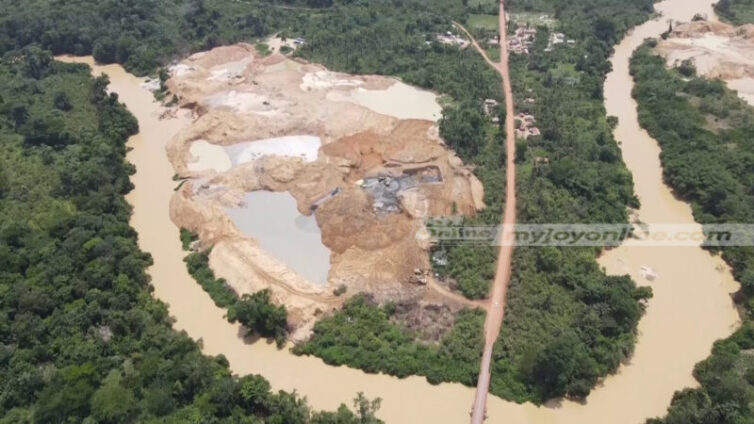
In Ghana, the issue of illegal mining, popularly known as “Galamsey”, has reached alarming proportions. Today, rivers such as Bonsa, Pra, and Ankobra have been heavily polluted as a result of illegal mining. Not only does Ghana risk importing water by 2030, it also risks the safety of its children who are exposed to hazardous chemicals used in mining.
According to the Pediatric Society of Ghana, not only are the adverse effects of illegal mining linked to child morbidity and mortality, but also lead to delayed language acquisition, poor speech development, and overall poor quality of life.
“Exposure to chemicals such as lead, mercury, arsenic and other heavy metals from inappropriate disposal of wastes and the “Galamsey” menace is contributing to deaths among children as well as cognitive deficits which affects their school performance and suspected to cause congenital malformations.”
As illegal mining continues to devastate our water bodies, labor unions and several youth groups are urging the government to declare a state of emergency. Yet, instead of addressing this critical issue, the government is focused on promoting free senior high school education in its campaigns. This initiative feels hollow in light of the high child mortality rates in galamsey-affected areas. How can education be a priority when so many children may not live long enough to benefit from it?
This contradiction raises serious questions about the government's priorities. While free education is essential for long-term development, it must be accompanied by immediate and effective measures to ensure the safety and well-being of children in these communities. Addressing the root causes of illegal mining, including poverty, lack of economic opportunities, and inadequate enforcement of mining regulations, is critical.
To make the promise of education a reality for children in mining areas, the government must immediately ban all activities of illegal mining and implement a robust strategy to regulate mining in Ghana. This situation has become very tragic. It’s very horrific! And I’d actually advise those who are involved – regardless of their role – to stop.
-
Elizabeth Dansoa Osei
Graduate Student, University of Oxford.
Latest Stories
-
I assure Otumfuo, Mahama will join him to commission KNUST Teaching Hospital by end of this year – Haruna Iddrisu
11 minutes -
Gov’t to roll out free special education for persons with disabilities from July 1 – Education Minister
33 minutes -
“We used it to test our officiating officials’ readiness” – Bawah Fuseini after CAA Athletics event
60 minutes -
Volleyball emerges as Ghana’s fastest rising sport
1 hour -
National Sports Fund needs strong leadership from the top – Administrator David Wuaku
1 hour -
JoySports Exclusive: Steve McLaren in talks with GFA after expressing interest in Black Stars job
2 hours -
Fire guts auto parts warehouse at Bubuashie, one fire officer injured
2 hours -
I owe my victory to coach Ofori Asare – Allotey after winning WBA Africa Gold Super Flyweight belt
2 hours -
Church of Pentecost supports over 2,000 BECE candidates in Obuasi with career guidance seminar
3 hours -
Brandon Asante and Coventry all but promoted to Premier League despite Sheffield Wednesday draw
4 hours -
GPL 2025/26: Late Kwartemaa strike downs Hearts in Tema
4 hours -
Ghana Faces Sierra Leone Moment as Prosecutorial Powers come under strain
4 hours -
Don’t consume fish or seafood from Tema Shipyard until further notice – FDA warns
4 hours -
Why volunteering might be Africa’s most underrated career accelerator
4 hours -
ActionAid Ghana raises concern over gender gaps in Feed Ghana Programme
4 hours