

Audio By Carbonatix
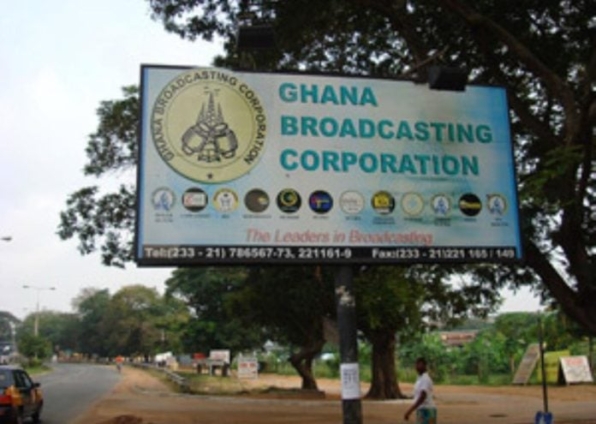
The Ghana Broadcasting Corporation (GBC) has accused the government of depriving it of a critical revenue stream, alleging that it has been losing up to $5 million annually due to the state's use of its broadcast infrastructure without compensation.
The revelation came during a visit by the Parliamentary Committee on Communication and Information, where GBC leadership laid bare the financial implications of its role in Ghana’s national Digital Terrestrial Television (DTT) platform.
According to GBC’s Director-General, Prof. Amin Alhassan, the state broadcaster's extensive network of masts across the country forms the very backbone of the DTT platform, which facilitates the digital transmission for all television channels in Ghana.
Despite being the "landlord" of this essential infrastructure, Prof. Alhassan lamented that GBC has not received a single dollar for its use.
“GBC owns the masts on which the national DTT is rolled out for all TV channels to operate. We do not earn anything from it,” he told the parliamentary committee.
He added that the missed revenue opportunity was substantial, estimating the losses to be between $5 million to $7 million US dollars annually.
"The national DTT plan is sitting on the Ghana Broadcasting Corporation’s assets. And as landlords, we should be benefiting from that," he stated.
Prof. Alhassan explained that the issue dates back several years, but the current management has brought it to light after a thorough review.
“It happened many years ago, and most of us were not here to even speak about it. But I have done my research and I’ve figured it out, and management has discussed it. We should have been benefiting because you can’t take assets of GBC and roll out a DTT plan for nothing, and we don’t get anything,” he asserted.
The state broadcaster’s financial woes are no secret, with reports often highlighting challenges related to underfunding and outdated equipment.
The DTT platform was implemented to help Ghana meet international standards by migrating from analogue to digital broadcasting, a process that concluded in 2017.
However, while the project has benefited numerous private media houses, GBC’s foundational role has gone uncompensated.
The Director-General also expressed concern over the future, as the government considers utilizing GBC’s masts for the rollout of the much-anticipated 5G network.
Prof. Alhassan stressed that should these plans move forward, GBC expects adequate compensation.
The Corporation's demand comes at a time when Ghana's digital economy is projected to grow to $30 billion by 2030, with a major part of that growth linked to the deployment of high-speed networks like 5G.
GBC's financial demand is a plea for fair treatment and a call for the government to recognize the value of its assets, which have been crucial to the nation's digital migration and continue to be vital for future technological advancements.
Latest Stories
-
Edmond Boateng takes up secretary role at Honorary Consular Corps of Ghana
1 hour -
Gambia appoints British barrister to prosecute gruesome Jammeh-era crimes
1 hour -
Girl group Flo on entering into their ‘bombastic, confident, strong’ era
2 hours -
Germany suspends military approval for long stays abroad for men under 45
2 hours -
Liverpool face uphill Champions League task after PSG thrashing in Paris
2 hours -
‘Ketamine Queen’ sentenced to 15 years in Matthew Perry overdose death
2 hours -
Nigeria begins mass trial of 500 terrorism suspects
2 hours -
Atletico Madrid stun 10-man Barcelona to seize Champions League semi-final advantage
3 hours -
Black Stars coach to be announced by next week – Sports Minister
3 hours -
Chiefs, queen mothers and principal elders of Odau group denounce ‘rebellious Etweresohene’, pledges allegiance to Okyenhene
3 hours -
KNUST library dress code sparks online backlash over strict rules
3 hours -
Cultural Diplomacy in Action: Ghanaian youth leaders present symbolic smock to U.S. Chargé d’Affaires
3 hours -
Ghana Card payment activation under review – NIA breaks silence on financial integration
3 hours -
Ofori-Atta’s ICE release on bail positive; he poses no risk – Amanda Clinton
3 hours -
Ken Ofori-Atta’s passport seized after bail, set to reappear in US Court on April 27
4 hours