

Audio By Carbonatix
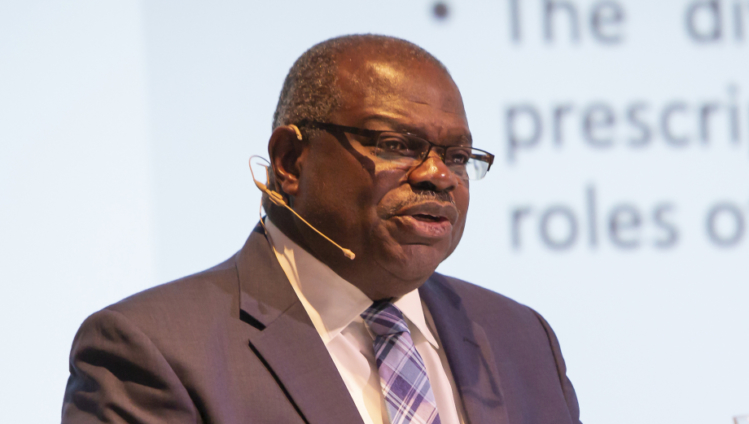
Secretary-General of the African Research Universities Alliance (ARUA), Prof Ernest Aryeetey, has suggested that Ghana’s education system must be restructured to make it more effective and competitive on the global level.
This, according to him, can be achieved by making the Ghana Education Service (GES) only a regulator of schools and not a full manager of the institutions.
He said the current practice, where the GES is given full control of public schools in the country, has largely been a disservice to the state, as the educational outcomes keep waning across many second cycle institutions.
The former University of Ghana Vice-Chancellor contended that it is high time the boards of secondary schools are fully involved in the day-to-day management of the schools for a “much better quality education to support more rapid national development.”
“In doing that, it means that the board of a school should be the one that decides what teachers they want. It should be the board of the school that decides how many teachers they need. It should be the board that decides how many students would be admitted into a school; it should be the board that decides how many houses we need and so on.
“Quite recently, I was at the board meeting at the Achimota School and I was horrified at the list of things that needed to be provided in order for the term to run properly. It was also obvious to me that there was no way the Ghana Education Service was going to provide even a half of the things required to run these schools,” he argued.
Delivering an address at the 10th Leadership Dialogue Series by the Centre for Social Justice, on April 28, Prof Aryeetey observed that currently, many decisions taken by the school boards go through the GES for ratification before they can be implemented.
“But it is important the school board is not held hostage by the Education Service; whether by the district director or the regional director…it doesn’t help anybody and that is why the schools can’t do what they are supposed to do.”
“So, let the school Management run the schools, supervised by their boards. Let the headmaster or the headmistress run the school; not the district director of education, not the regional director of education but the school head with a good Management team,” he advocated.
Boards rendered useless
According to him, the implementation of the Free SHS policy has rendered boards in public second cycle institutions useless.
He noted that this has become one of the major setbacks of the programme, a situation he reckoned, is worsening the quality of secondary education in the country.
According to him, the Ghana Education Service (GES) and the Education Ministry have become the only decision-making bodies, without significant input from any particular school board.
“The system of governance at public schools does not provide enough incentive for the schools to want to excel…there is no public secondary school in Ghana where the school boards run the school. The school boards don’t run the school.
“They don’t take any important decisions. All the important decisions are taken by the Ministry of Education and the Ghana Education Service,” he noted.
Latest Stories
-
Food Buffer Stock seeks stronger liquidity buffer despite record profit
2 minutes -
LPG investments key to achieving 50% access target by 2030 – Energy Minister
3 minutes -
Jinapor: New LPG terminal strengthens Ghana’s energy security
6 minutes -
Agbodza directs road agencies to fast-track design approvals to prevent project delays
9 minutes -
Housing Minister urges stakeholders to prioritise quality education in Banda District
15 minutes -
Government redeems pledge to complete abandoned projects – Kofi Buah
20 minutes -
Sam George calls for Black Stars disbandment, GFA dissolution after Gambia defeat
22 minutes -
Bunkpurugu MP urges action to curb network disruptions in Northern Ghana
23 minutes -
Education Minister calls for evidence-based response to learning crisis in West Africa
30 minutes -
NPA reaffirms regulatory support as Puma Energy deepens investment in LPG and CRM
32 minutes -
Ketu South NDC clears 73 aspirants for constituency elections
35 minutes -
We are with all flood victims – Hohoe MP
41 minutes -
Asharami Ghana commends NPA CEO Edudzi Tameklo for support towards LPG vessel arrival
47 minutes -
Finance Minister engages AGI, leaders ahead of 2027 Budget
53 minutes -
Enforce surcharges, modernise audits to curb GH¢100bn losses – Audit Service urged
1 hour