

Audio By Carbonatix
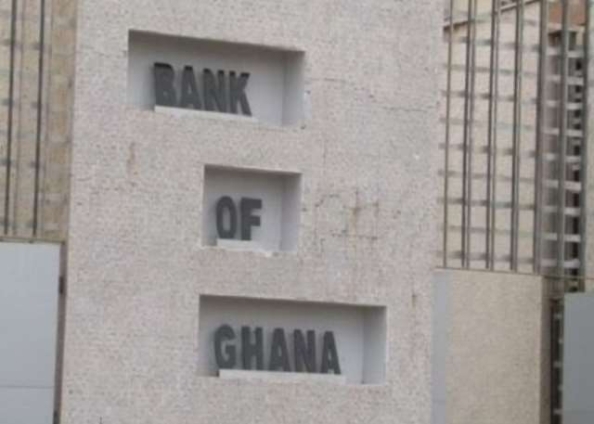
The Bank of Ghana has disclosed a total loss of GHS¢.14 billion under the now-discontinued Gold for Oil (G4O) Programme.
In a formal response to a request for information filed by NPP member and energy analyst Kwadwo Poku under Article 21(1)(f) of the 1992 Constitution and Section 18 of the Right to Information Act, 2019 (Act 989).
The Bank’s official reply, dated July 2025, outlined financial details covering the 2023 and 2024 fiscal years, and confirmed that GH¢320 million was lost in 2023 and a further GH¢1.82 billion in 2024.
Losses Attributed to Exchange Rates and Global Oil Prices
The Bank attributed the losses to two major components: gold transactions and petroleum trading.
- Gold Transactions: Losses totalled approximately GH¢1.80 billion, primarily due to exchange rate differentials between the local gold market and the Bank’s internal exchange rate.
- Petroleum Trading: The remaining GH¢340 million loss stemmed from large fuel stockpiles acquired ahead of a sharp decline in global oil prices.
Initial Benefits of the G4O Programme
Despite the financial losses, the Bank defended the G4O initiative, citing its positive impact during the first year of implementation (2023). It noted that the programme helped reduce demand for US dollars from Bulk Oil Distributors (BDCs), alleviating pressure on the interbank foreign exchange market.
According to the Bank, the programme helped prevent an estimated $1.66 billion in additional FX demand, which would have been required to deliver 56 cargoes totalling over 1.84 million metric tonnes of petroleum products by December 2024.
Also, the initiative spurred competition in the fuel supply market. Prior to G4O, petroleum premiums ranged between $150–$170 per metric tonne. These figures dropped to between $50–$80 due to the programme, resulting in lower ex-pump fuel prices.
The Bank also highlighted that the removal of forward exchange rate pricing under the G4O programme helped stabilise domestic fuel prices.
Exit from Programme in Line with IMF Recommendations
The Bank of Ghana announced that it is exiting the Gold for Oil programme, which it described as a short-term intervention to cushion the economy against soaring petroleum prices. The exit, it stated, is in line with the International Monetary Fund’s (IMF) position.
Going forward, according to the Bank, it will refocus on its core mandate, with renewed emphasis on the Domestic Gold Purchase Programme to build foreign reserves organically.
Additionally, the Bank confirmed that a new operational framework will be introduced to shorten the cash cycle and transfer the trading and financing of fuel to the Bulk Oil Storage and Transportation Company (BOST) and its financial partners.
Latest Stories
-
President Mahama ends Resetting Ghana tour of Ahafo Region
2 hours -
African negotiators seek delivery of climate commitments at COP31
2 hours -
BoG develops AI rules for financial sector
2 hours -
‘Big Push’: Government assures contractors of prompt payments
2 hours -
Court fines miner for breaking into gold buying shop
2 hours -
Tarkwa court jails labourer for three years over GH¢123,000 theft
3 hours -
GAEC must retain nuclear scientists for Ghana’s nuclear ambitions – Minister
3 hours -
Man reportedly mistaken for game and shot by hunter dead in forest
3 hours -
19-year-old mason jailed 15 years for defiling seven-year-old pupil
3 hours -
Ghana’s banking sector assets rise 20.47% to GH¢500.2bn – BoG Governor
3 hours -
22 injured as Sprinter bus overturns at Sege after tyre burst
4 hours -
UN housing expert urges Ghana to strengthen Rent Control Department amid housing affordability concerns
4 hours -
Delta-BCI partnership reaches 166,000 people with breast cancer education
4 hours -
Power restoration fault suspected in Kumasi Central Market fire
9 hours -
The 7-foot giant of Ngleshie Amanfro: Seven-foot Ghanaian Ephraim Saawa dreams of joining the national basketball team
10 hours