

Audio By Carbonatix
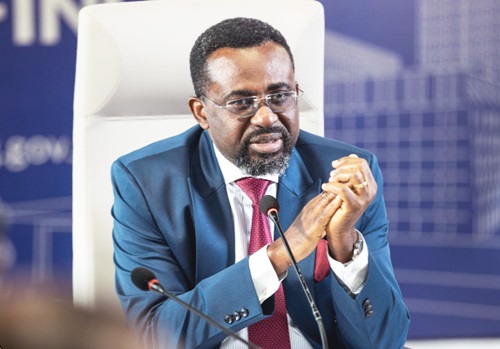
The Bank of Ghana Governor, Dr. Johnson Asiama, has expressed confidence that the country has built the required reserves to help withstand oil price shocks.
The Governor stated that “we believe that our resilience now is far better than a year ago and we are hopeful things can be managed going forward, based on current data”.
Dr Asiama disclosed this in an interview with Bloomberg in London.
The Governor also assured that “they [BoG] do not see things getting out of hand, based on the work that we have done by building the necessary reserves to help withstand the shocks”.
He was also of the view that these assurances are based on the fact that the current crises will be short-term and will not drag.
“What is happening now is actually based on our current projections, and we are not that worried,” the Governor added.
Asked about what will happen if the current shocks should drag, Dr. Asiama said “if it should continue, then the outlook could be impacted”.
Ghana’s Reserve Build-Up and Inflation Rate Spike
Ghana’s international reserves have witnessed a significant increase, reaching over US$14 billion in May 2026.
However, there are fears that the recent sustained depreciation of the Ghana cedi could pushed pressure on the reserves.
But the Bank of Ghana is of the view that embarking on a dollar accumulation programme will see a build-up of more reserves in the coming weeks.
In its June 2026 FX intermediation notice to banks, the central bank said its actions will be guided by its newly approved foreign exchange operations framework.
This was after it increased its forex intermediation to US$1.2 billion in June 2026, compared with US$1.0 billion in May 2026.
The framework also supports foreign exchange intermediation under the Domestic Gold Purchase Programme.
Inflation
Inflation went up in May 2026 to 3.7 %, influenced by the rising prices of foodstuffs and some external developments.
A recent internal model by the central bank sighted by Joy Business suggested that the Bank of Ghana is concerned about inflation surging above 10 % by the end of this year, due to the rising crude prices.
There are also concerns about the impact of rising crude oil prices on petroleum products, the pass-through effect on transport fares, and the quarterly utility tariff review, all of which could add further pressure to inflation in the coming months.
The development could force the Monetary Policy Committee to increase its policy rate at the next meeting.
Latest Stories
-
Journalists look back on a decade of breast cancer reporting in Ghana
15 minutes -
President Mahama ends Resetting Ghana tour of Ahafo Region
2 hours -
African negotiators seek delivery of climate commitments at COP31
2 hours -
BoG develops AI rules for financial sector
2 hours -
‘Big Push’: Government assures contractors of prompt payments
2 hours -
Court fines miner for breaking into gold buying shop
2 hours -
Tarkwa court jails labourer for three years over GH¢123,000 theft
3 hours -
GAEC must retain nuclear scientists for Ghana’s nuclear ambitions – Minister
4 hours -
Man reportedly mistaken for game and shot by hunter dead in forest
4 hours -
19-year-old mason jailed 15 years for defiling seven-year-old pupil
4 hours -
Ghana’s banking sector assets rise 20.47% to GH¢500.2bn – BoG Governor
4 hours -
22 injured as Sprinter bus overturns at Sege after tyre burst
4 hours -
UN housing expert urges Ghana to strengthen Rent Control Department amid housing affordability concerns
4 hours -
Delta-BCI partnership reaches 166,000 people with breast cancer education
4 hours -
Power restoration fault suspected in Kumasi Central Market fire
10 hours