

Audio By Carbonatix
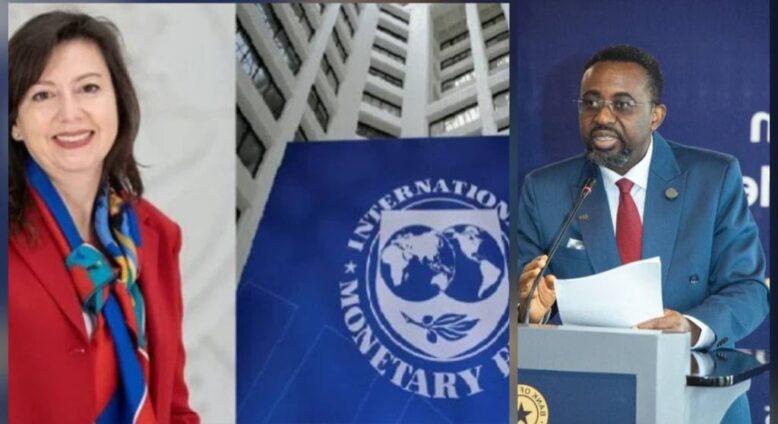
The International Monetary Fund's recommendation that the Bank of Ghana reassess its Domestic Gold Purchase Programme because of its impact on the central bank's balance sheet deserves careful consideration. The IMF's concerns about transparency, governance and the programme's quasi-fiscal costs are legitimate. It estimates the programme generated a quasi-fiscal loss of about US$214 million, arising from trading activities, fees and exchange-rate movements, and has called for those costs to be recognized transparently.
However, evaluating the programme primarily through its accounting costs risks overlooking a more fundamental question: did the economic benefits outweigh the financial costs?
The Domestic Gold Purchase Programme was never conceived as a profit-making venture. It was designed as a monetary and reserve management instrument to strengthen Ghana's foreign exchange buffers, support the cedi, improve external resilience and reinforce macroeconomic stability at a time when the country was emerging from its worst economic crisis in a generation.
By the IMF's own assessment, Ghana consistently exceeded its Net International Reserve targets under the Extended Credit Facility programme, with the Fund acknowledging that this outperformance was "notably due to the large-scale deployment of the Domestic Gold Purchase Programme." The programme also supported the rebuilding of official reserves even as the Bank of Ghana continued to intervene in the foreign exchange market to stabilize the cedi.
The results are evident. Gross international reserves, which stood at US$3.66 billion, equivalent to 1.6 months of import cover, at the start of the IMF programme, are projected to rise to US$10.73 billion, covering 3.7 months of imports, reflecting one of the strongest reserve recoveries in Ghana's recent history.
At the same time, the Bank of Ghana's gold holdings increased to 19.2 metric tonnes by February 2026, while government has since expanded its reserve accumulation strategy with the long-term objective of building reserves equivalent to 15 months of import cover by 2028.
The programme contributed to a remarkable increase in Ghana's gold-related foreign exchange inflows, from approximately US$1.7 billion in 2023 to US$12.7 billion in 2025, significantly improving the country's reserve position and supporting exchange rate stability.
While the Bank of Ghana may have incurred financial costs in purchasing gold, those costs should be compared against the substantial economic benefits generated for the country.
A stable exchange rate delivers benefits that extend well beyond the central bank's balance sheet. It reduces imported inflation, lowers the cost of fuel, medicines, machinery, and industrial inputs, preserves household purchasing power, improves investor confidence, and creates a more predictable environment for business and long-term investment.
Equally important, exchange rate stability is essential for maintaining Ghana's public debt at manageable levels. A significant portion of the country's debt is denominated in foreign currencies. Sharp depreciation of the cedi automatically increases the cedi value of external debt, raises debt-servicing obligations, widens fiscal deficits, and places additional pressure on government finances.
By helping to moderate exchange rate volatility, the Domestic Gold Purchase Programme may have prevented substantial increases in the domestic cost of servicing external debt. These avoided fiscal costs should be recognized as part of the programme's economic return. In effect, the programme may have protected both the sovereign balance sheet and taxpayers from the far greater costs associated with a rapidly depreciating currency.
Similarly, inflation imposes a hidden tax on households and businesses. If the programme contributed to lower inflation through exchange rate stability, then it helped preserve real incomes, protect savings, reduce business operating costs, and support economic growth. These benefits cannot be measured solely through the Bank of Ghana's profit and loss statement.
Central banks around the world frequently undertake policy interventions that may reduce their accounting profits in the short term but generate much larger long-term economic benefits. Their mandate is to preserve price stability, financial stability, and confidence in the national currency—not to maximize earnings.
For this reason, the Domestic Gold Purchase Programme should be evaluated using a comprehensive national cost-benefit framework. Such an assessment should include:
- The financial cost incurred by the Bank of Ghana.
- The reduction in inflation attributable to exchange rate stability.
- The savings from lower import costs.
- The reduction in exchange rate volatility.
- The avoided increase in the cedi value and servicing cost of Ghana's external debt.
- The improvement in investor confidence and economic activity.
- The broader social and economic benefits arising from macroeconomic stability.
Judging the Domestic Gold Purchase Programme solely by its impact on the Bank of Ghana's profit and loss account risks overlooking its broader contribution to the economy, the more relevant question is whether the programme generated greater national value by strengthening the cedi, containing inflation, improving external resilience, protecting the sustainability of public debt, and reinforcing Ghana's macroeconomic stability.
The IMF's evaluation would therefore be more balanced if it considered both the direct financial costs to the central bank and the substantial economic and fiscal benefits delivered to the nation. In macroeconomic policy, the true measure of success is not the profitability of the central bank, but the stability, resilience, and long-term prosperity of the economy it is mandated to safeguard.
Latest Stories
-
Schizophrenia-related disorders lead mental health cases recorded in Ghana
13 minutes -
Dutch authorities enlist Ghana in hunt for fugitive drug lord Bolle Jos
37 minutes -
Ghana housing finance conference adopts communiqué to improve affordable housing access
5 hours -
Special Initiatives Minister urges Wa Technical Institute to enrol more girls as EU-backed solar training lab opens
5 hours -
In the matter of my first year at the Bar
6 hours -
ActionAid Ghana calls for an end to child marriage, greater investment in girls’ rights
6 hours -
Newsfile to tackle World Cup visa scandal, beach demolitions, education strikes, BRICS bid
6 hours -
UK-Ghana Trade & Investment Summit: Trade Resource Centre to help businesses maximise UK-Ghana trade opportunities
6 hours -
Embassy of Denmark celebrates World Maritime Day
7 hours -
Linking LEAP to productive inclusion could cut extreme poverty by 2030 – UNICEF
8 hours -
Trade Ministry backs use of creative arts to rehabilitate prison inmates
8 hours -
Negotiations with government to continue despite strike suspension – GNAT
8 hours -
‘Ghana cannot afford to waste public resources; every cedi has a job’ – Ato Forson
8 hours -
Ghana expects economic boost as World Assemblies of God Congress brings 10,000 delegates to Accra
8 hours -
Joy in Nayilifong as Farouk Aliu Mahama donates 100kVA transformer to improve power supply
8 hours