

Audio By Carbonatix
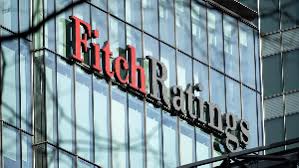
Attijariwafa Bank’s (AWB) acquisition of a 55.2% stake in Société Générale’s Ghana’s subsidiary is likely to be ratings neutral for the bank (AWB; BB+/Stable/bb+), Fitch Ratings has said.
According to the UK-based firm, Société Générale Ghana had assets of less than US$1 billion, or around 1.0% of AWB’s total assets and 11% of its total equity, at end-2025, and its small size compared to AWB means the acquisition is unlikely to materially increase AWB’s exposure to the rest of Africa or pressure its capital ratios.
“We also expect Societe Generale Ghana to contribute only modestly to AWB’s assets and net income (3% of AWB’s net income in 2025) over the medium term as domestic growth in Morocco should be broadly in line with the growth of AWB’s other African operations”.
It continued that the acquisition will not significantly increase AWB’s exposure to the rest of Africa, although it expects it may slightly diversify AWB’s earnings base due to Ghanaian banks’ healthy profitability metrics.
It pointed out that the sector’s pre-tax return on equity and return on assets were 22% and 4.3%, respectively, in eight months of 2026. Exposure to the region fell to 24% of consolidated assets at end of June 2026 (end-2023: 26%).
“While this remains high, granular country exposures mitigate risks at group level”, it noted.
“We expect continued growth in Morocco to support the relative weighting of domestic operations; Moroccan assets grew by about 4% in half-year 2026, broadly in line with growth in the rest of Africa”, Fitch Ratings added.
Transaction to have no Effect on AWB’s Capital
Fitch continued that the transaction should also have no material effect on AWB’s regulatory capital ratios, given Societe General’s modest size and AWB’s strong earnings generation.
AWB’s internal capital generation is underpinned by its healthy return on equity (half-year 2026: 17.5%, annualised).
“We expect its common equity Tier 1 ratio (end-2025: 10.2%) to remain at 10%-11% in the near term”, it alluded.
AWB also retains capital flexibility and could strengthen its capital position, if necessary, through dividend adjustments or additional core capital from shareholders.
It said AWB’s exposure to Ghanaian cedi volatility and any resulting impact on its regulatory capital ratios should be very limited, given the subsidiary’s small size.
Ghana’s Banking Environment Healthy
Fitch said the Ghanaian banking environment continued to improve following the Domestic Debt Exchange Programme in 2023.
It added that the transaction took place as the operating environment for Ghanaian banks improves, concluding, the macroeconomic conditions are stabilising following volatility associated with the 2024 sovereign debt restructuring.
Latest Stories
-
Don’t deal with unlicensed loan firms – BoG cautions public against 20 loan apps
16 minutes -
Photos: IGP Yohuno decorates 22 newly promoted DCOPs
18 minutes -
We didn’t deliberately delay negotiations with teacher unions – FWSC
18 minutes -
‘Go back to the drawing board’ – Polo urges Black Stars to find solutions
20 minutes -
Kaerbo For Africa hands over three-classroom block to Gomoa Nyanyano SHS
21 minutes -
KNUST students win Pan African AI Summit Hack-AI-Thon with cocoa waste solution
22 minutes -
Cocoa prices risen by 95% since March 2026, to average US$5,670 in 2026
33 minutes -
British national arrested in connection with RAF Fairford incident
40 minutes -
‘Strike is the only language government understands’ –IFEST backs teachers
41 minutes -
Teachers must not be blamed for maintaining strike; the gov’t failed to act earlier – IFEST
50 minutes -
Attijariwafa’s acquisition of Societe Generale likely to be ratings neutral; Ghana’s banking environment healthy – Fitch
58 minutes -
Mahama’s Reset Agenda will make resource wealth benefit citizens – Dr Djokoto
1 hour -
La Pleasure Beach to reopen after demolition exercise
1 hour -
La Pleasure Beach demolition victims to receive compensation
1 hour -
NPP Germany congratulates new national executives, calls for unity ahead of 2028 elections
1 hour