

Audio By Carbonatix
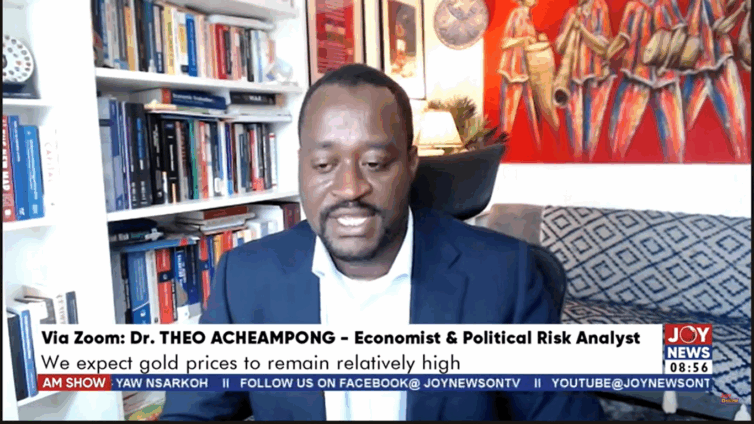
Economist and political risk analyst, Dr Theophilus Acheampong, has hinted at the possible reintroduction of the controversial GH₵1 energy levy, citing mounting financial pressure on Ghana’s energy sector and the growing impact of global geopolitical tensions.
Speaking on JoyNews’ AM Show on Tuesday, 24 June, Dr Acheampong suggested that senior government officials, including the Ministers for Finance and Energy, are likely assessing the fiscal situation and the implications of escalating global conflicts, particularly in the Middle East.
“I think the Finance Minister, the Energy Minister, and the rest of the team would be analysing and assessing the impact. I won’t be surprised if the GH₵1 levy comes back in the coming weeks,” he stated.
He acknowledged that although the previous implementation of the levy faced public opposition, certain segments of the population were relatively accommodating, giving the government possible grounds to revive it—especially if oil prices continue to rise.
The levy, initially introduced earlier this year to support the ailing energy sector, was suspended following widespread backlash from civil society groups and the Minority in Parliament. Nonetheless, Ghana’s energy sector remains in deep financial distress.
“We have serious challenges within Ghana’s energy sector and we need to do something about it,” Dr Acheampong warned.
He also raised concerns over the lack of transparency and accountability in the use of previous energy-related levies, particularly those collected under the Energy Sector Levies Act (ESLA).
“There are concerns as to how monies that have been collected in the past have been utilised, particularly with ESLA,” he observed.
Dr Acheampong urged that any reintroduction of the levy should be accompanied by clear mechanisms for parliamentary oversight and transparent reporting.
“Once we have further assurance and safeguards around the one cedi levy and what it will be used for, and the Minister accounts to Ghanaians through Parliament, perhaps we’ll be looking at some possible solutions to addressing the crisis in the energy sector,” he suggested.
He noted that Ghana continues to grapple with persistent energy problems, including generation shortfalls, rising utility debts, and high dependence on imported fuel.
Ongoing conflicts in regions like Iran, and their potential impact on global oil prices, have further exposed the country’s energy vulnerabilities.
Latest Stories
-
Tyson Fury dominates Makhmudov, calls out Joshua next
13 minutes -
I have supported highway authority financially to fix roads in my constituency – A Plus
1 hour -
US, Iran fail to reach peace agreement after marathon talks in Pakistan
2 hours -
ECG kicks off Phase Two of transformer upgrades at Lashibi; brief outages expected
2 hours -
Port crises loom as 11,000 drivers threaten four-day strike
3 hours -
A source of excellence across generations – Vice President Opoku-Agyemang lauds Mfantsipim
4 hours -
(Photos) Mfantsipim School launches historic 150th anniversary
4 hours -
Knights and Ladies of Marshall group backs Catholic Bishops’ stance on anti-LGBTQ+
5 hours -
Bright Simons writes: All the Filla in the Ibrahim Mahama/E&P – Gold Fields Saga
6 hours -
Monetise Idiocy In Ghana
6 hours -
The Ghanaian prophet and the mysterious death of his scottish wife Charmain Speirs
7 hours -
Nearly 400 sentenced in Nigeria for links to militant Islamists
7 hours -
Ghana’s recovery supported by gold strength despite global oil price pressures – Standard Bank Research
7 hours -
Methodist Church hails Mfantsipim@150; calls for “fresh consecration” to excellence
7 hours -
‘Excellence is our inheritance’ – Nana Sam Brew-Butler hails Mfantsipim’s 150-year reign in leadership
8 hours