

Audio By Carbonatix
To bring quality healthcare closer to communities, the Ghana Health Service (GHS) is implementing a transformative initiative called the "Network of Practice." This initiative aims to enhance the existing Community-Based Health Planning and Services (CHPS) system by connecting health facilities at the sub-district level to a central health centre.
The goal is to improve access to quality healthcare while reducing the overcrowding burden on district hospitals.
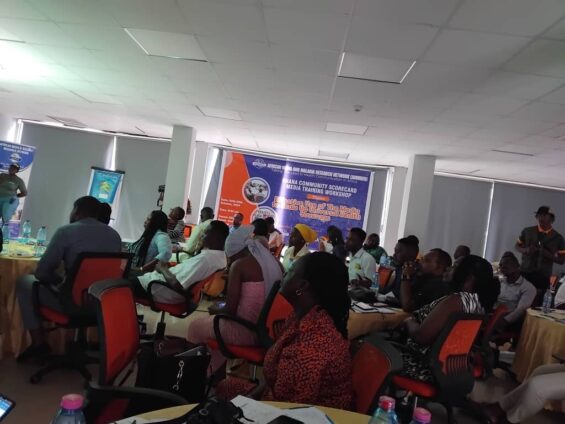
Dr Andrews Ayim, Deputy Director of Information, Monitoring, and Evaluation at GHS, shared insights about the Network of Practice during a recent workshop on the Community Scorecard, a program organized by the Africa Media and Malaria Research Network (AMMEREN), African Leaders Malaria Alliance (ALMA), and the Ministry of Health with funding support from Expertise France.
Addressing Healthcare Accessibility and Quality
Speaking on the urgent need to decentralize healthcare access, Dr Ayim explained that the CHPS compounds, which are the first points of healthcare for many, often have limited resources.

This can necessitate referrals to district hospitals for more complex cases, causing difficulties for patients, especially those with chronic conditions like hypertension. “An elderly patient with hypertension, for example, currently has to travel to the district hospital every month for medication refills. Through the Network of Practice, we aim to equip health centres at the sub-district level to provide these services, thus minimizing travel and ensuring patients have consistent access to care,” Dr Ayim remarked.
Under this system, each sub-district health facility will work in close coordination with a designated health centre that serves as a model. This model health centre will support nearby CHPS compounds with additional resources and expertise, ensuring a seamless transition of cases from CHPS compounds to the health centre and, if necessary, to district hospitals. Dr. Ayim emphasized that this will relieve pressure on district hospitals, which are often overcrowded, compromising the quality of care. “By empowering sub-district health centres, we can filter cases better, allowing district hospitals to focus on more severe cases while enhancing quality at every level,” he added.

Efficient Resource Sharing and Specialist Support
The Network of Practice, According to Dr Ayim also introduces a model of resource-sharing across facilities within the network. In situations where a particular facility has a specialist, their expertise can be extended to other connected facilities. “Even though we don’t have many specialists, the resources available within the network can be shared, enabling all facilities to benefit from the skills of these professionals,” Dr Ayim explained, stressing the importance of collaborative healthcare systems, especially in resource-limited settings.
Role of Journalists in Community Health Advocacy
The training workshop also underscored the role of journalists in bridging the gap between health systems and communities. Dr. Charity Binka, Executive Director of AMMEREN, highlighted that journalists play a crucial role in promoting universal health coverage, particularly as Ghana strives to meet its 2030 goal for health accessibility. “Journalists can bring balanced reporting that reflects both the communities' needs and the health systems’ challenges, fostering growth and improvement in healthcare delivery across Ghana,” Dr. Binka noted. She further urged journalists to avoid sensationalism and focus on stories that emphasize community health development.

The Community Scorecard Initiative
The Community Scorecard, which was a key focus of the workshop, allows communities to assess the performance of local health facilities, providing a direct feedback mechanism that the GHS can use to address shortcomings and improve services. “The scorecard offers a transparent, community-driven evaluation of health facilities, which journalists can report on to bridge understanding and encourage collaborative solutions,” Dr Ayim stated.
With such initiatives and the support of informed media reporting, Ghana is positioning itself to build a robust, community-centred healthcare system that improves lives at the grassroots. The introduction of the Network of Practice reflects GHS’s commitment to quality healthcare, and the active involvement of journalists promises to amplify its reach and impact across Ghana’s communities.

Latest Stories
-
Knights and Ladies of Marshall group backs Catholic Bishops’ stance on anti-LGBTQ+
9 minutes -
Bright Simons writes: All the Filla in the Ibrahim Mahama/E&P – Gold Fields Saga
34 minutes -
Monetise Idiocy In Ghana
41 minutes -
The Ghanaian prophet and the mysterious death of his scottish wife Charmain Speirs
1 hour -
Nearly 400 sentenced in Nigeria for links to militant Islamists
2 hours -
Ghana’s recovery supported by gold strength despite global oil price pressures – Standard Bank Research
2 hours -
‘Excellence is our inheritance’ – Nana Sam Brew-Butler hails Mfantsipim’s 150-year reign in leadership
2 hours -
Kwaku Azar writes: A-G vs OSP
2 hours -
Mfantsipim–Adisadel rivalry built excellence, not division – Sam Jonah
3 hours -
Vice President launches Mfantsipim’s 150 years of shaping Ghana’s greatest mind
3 hours -
I assure Otumfuo, Mahama will join him to commission KNUST Teaching Hospital by end of this year – Haruna Iddrisu
4 hours -
Barcelona dominate derby to extend La Liga lead
4 hours -
Gov’t to roll out free special education for persons with disabilities from July 1 – Education Minister
4 hours -
Importers and Exporters Association declares full support for Publican AI port system
4 hours -
“We used it to test our officiating officials’ readiness” – Bawah Fuseini after CAA Athletics event
5 hours