

Audio By Carbonatix
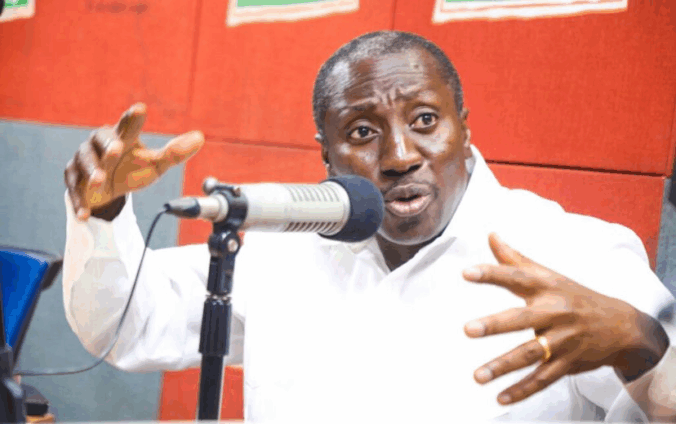
The Minority Leader, Alexander Afenyo-Markin, has called for urgent action to strengthen Ghana’s domestic economy, warning that changes in the global order pose a direct and serious threat to smaller economies.
Addressing a press conference on Monday, Afenyo-Markin said Ghana could no longer rely on traditional narratives of mutual benefit in international economic relations, arguing that global integration is increasingly being used as a tool of pressure and control.
“For a smaller economy like Ghana, this is not an abstract debate; it is a direct challenge,” he said. “We cannot rely on comfortable stories of mutual benefit when the structures of global integration are being used as instruments of leverage.”
According to the Minority Leader, the evolving global environment requires a clear and deliberate national response, starting with the building of a strong and resilient domestic economy.
He stressed the need for strategic autonomy to shield the country from external manipulation through debt, currency volatility or over-dependence on a single export commodity.
“We need enough strategic autonomy so that no outside power can bend us through debt traps, currency games, or control over one key export,” he stated.
“Economic sovereignty cannot remain a slogan; it must become the solid foundation of an independent foreign policy.”
Afenyo-Markin also underscored the importance of diversifying Ghana’s international partnerships.
He called for deeper economic and political engagement within Africa, while maintaining balanced and cautious relations with traditional partners such as the United States, the European Union, the United Kingdom, China and Canada, as well as emerging global powers.
He warned against over-reliance on any single country or bloc, insisting that cooperation must not come at the expense of Ghana’s sovereignty.
Beyond economic strategy, the Minority Leader argued that Ghana’s foreign policy must be grounded in the constitutional values practised at home.
He criticised what he described as a misguided form of pragmatism that tolerates corruption, impunity and injustice in the name of realism.
“A so-called pragmatic policy that turns a blind eye to impunity, corruption and injustice inside our borders is not realism,” he said. “It is a performance of sovereignty that hides a quiet acceptance of dependence. We cannot project moral clarity abroad if we refuse to practise it at home.”
Latest Stories
-
Port crises loom as 11,000 drivers threaten four-day strike
37 seconds -
A source of excellence across generations – Vice President Opoku-Agyemang lauds Mfantsipim
2 hours -
(Photos) Mfantsipim School launches historic 150th anniversary
2 hours -
Knights and Ladies of Marshall group backs Catholic Bishops’ stance on anti-LGBTQ+
3 hours -
Bright Simons writes: All the Filla in the Ibrahim Mahama/E&P – Gold Fields Saga
3 hours -
Monetise Idiocy In Ghana
4 hours -
ECG kicks off Phase Two of transformer upgrades at Lashibi; brief outages expected
4 hours -
The Ghanaian prophet and the mysterious death of his scottish wife Charmain Speirs
4 hours -
Nearly 400 sentenced in Nigeria for links to militant Islamists
5 hours -
Ghana’s recovery supported by gold strength despite global oil price pressures – Standard Bank Research
5 hours