

Audio By Carbonatix
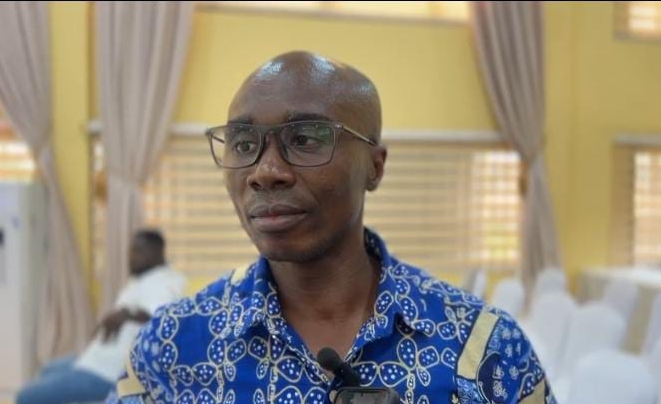
Economist Prof Patrick Asuming has warned that Ghana’s recent macroeconomic gains under the International Monetary Fund (IMF) programme will not translate into a sustainable economic take-off unless the country urgently addresses structural weaknesses and prioritises value addition across key sectors of the economy.
Speaking in response to a question on the concrete fundamentals that must improve for Ghana’s economic transformation, the economist said the most critical outstanding issue is addressing the structural problems that prevent the country from adding sufficient value to its production.
According to him, a strong commitment to value addition, local enterprise support and job-creating growth will be the true test of whether Ghana is entering a sustainable economic take-off phase beyond the IMF programme.
“The IMF programme can stabilise the economy, but it does not automatically improve productivity or determine where and how value is added,” he noted in an interview on Joy FM's Middaynews on Friday, January 2.
He warned that without deliberate efforts to restructure the economy, fiscal adjustments achieved under the IMF programme may not be sustainable. Ghana, he explained, remains highly exposed to international price volatility, particularly in commodity markets.
“If global prices enter a bear market, the value of commodities such as gold that we stockpile could decline significantly, undermining recent gains,” he said.
The economist stressed that encouraging value addition is therefore essential to reducing vulnerability and ensuring long-term economic resilience. He added that growth must also be broad-based, so that expansion in key sectors pulls other parts of the economy along.
Although Ghana’s economy has recorded relatively strong growth in recent times, he pointed out that it has not translated into sufficient job creation. He also highlighted a growing disconnect between economic growth figures and the lived realities of many Ghanaians.
“The most productive sectors of the economy are largely run by foreign interests. When these sectors perform well, it does not necessarily lead to significant job creation for Ghanaians, leaving many people feeling disconnected from the reported progress,” he observed.
To bridge this gap, the economist called for deliberate delivery policies that promote inclusive growth. He emphasised the strategic use of public procurement as a powerful tool to support local enterprises and stimulate domestic value chains.
While acknowledging that government alone cannot create enough jobs for the growing population, he noted that many young Ghanaians are showing innovation in small-scale processing, packaging and manufacturing. He urged the state to prioritise such local businesses in its procurement decisions.
“We must buy Ghana first and only look elsewhere when there is genuinely no local alternative,” he said.
Latest Stories
-
Photos: Housing solutions take centre stage at Day 2 of the 3rd Republic Bank-JoyNews Habitat Fair
18 minutes -
Video: Immunity should be exercised without creating classism – Inusah Fuseini on cocaine bust
51 minutes -
Ghana Air Force passes out 293 recruits after six months of intensive training
59 minutes -
EOCO vrs Baffour Awuah: EOCO should have secured warrant before arrest attempt at court – Inusah Fuseini
1 hour -
Triple fibre cuts disrupt telecom services across Northern, Oti regions – Sam George
1 hour -
Politicisation could undermine parliamentary probe into cocaine seizures – Dr Osae-Kwapong
1 hour -
EOCO chases MP: Can Section 41 cure lacuna in EOCO Act? – Inusah Fuseini asks
1 hour -
GNFS, GWL inspect fire hydrants in Ministries enclave; 23 found faulty
1 hour -
Gov’t directs release of 50,000 bags of grain to ECOWAS
1 hour -
Ghana, Germany deepen cooperation on railways, labour mobility
1 hour -
Huge crowds greet Pope in Paris for open-air Mass
2 hours -
‘I never said I’ll declare a state of emergency’ – President Mahama on galamsey
2 hours -
Bobby Banson condemns EOCO’s attempted arrest of Nana Agyei Baffour Awuah
3 hours -
When Kumasi begins to look like somebody is in charge
3 hours -
Parliamentary probe into cocaine seizure would be a waste of time – Inusah Fuseini
3 hours