

Audio By Carbonatix
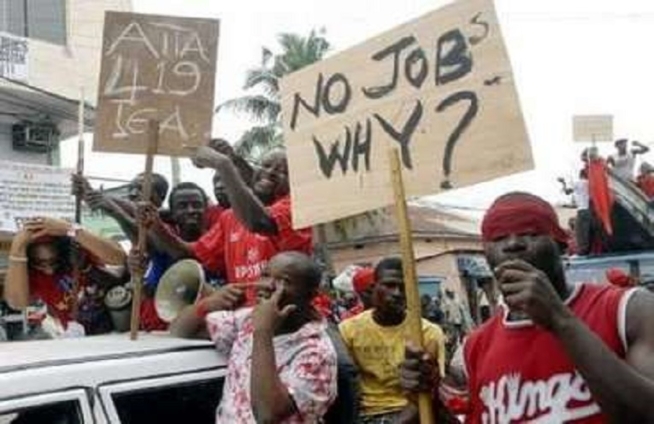
Global youth unemployment increased in 2025 as weaker economic growth, geopolitical tensions and sluggish job creation made it harder for young people to find work, the International Labour Organisation said on Wednesday, warning that AI could add to mounting labour market pressures.
The global unemployment rate among 15-to-24-year-olds rose to 12.4% last year from 12.3% in 2023, equivalent to 67 million 15-to-24-year-olds worldwide, according to a new report by the U.N. labour agency.
The increase marked a reversal of improvements seen after the COVID-19 pandemic and reflected a deterioration in both the quantity and quality of jobs available to young workers, the report said.
The ILO said the share of young people not in employment, education or training (NEET) also edged higher to 20%, representing more than 257 million people.
"The picture is worsening almost universally," the report said, noting that youth unemployment increased between 2023 and 2025 in eight of the world's 11 subregions. Rates also rose across high-income, lower-middle-income and low-income countries.
ARAB STATES, NORTH AFRICA HARDEST HIT
Youth unemployment was highest in the Arab States at 26.2%, followed by Northern Africa at 22.6%, the report said. Some of the sharpest deterioration occurred in wealthier economies, with youth unemployment in North America climbing to 9.8% in 2025 from 8.3% in 2023. Across Northern, Southern and Western Europe, the rate stood at 15%.
The agency highlighted the decline of middle-skilled jobs, including clerical, administrative, sales and manufacturing roles, which have traditionally provided an entry point into the labour market for young people leaving secondary school or university.
"A shrinkage of jobs associated with middle-skilled occupations means longer job queues and growing unemployment for young people with secondary-level education that seek them," the report said.
The trend could intensify as AI transforms workplaces. The ILO estimated that 6.1% of jobs currently held by people aged 15 to 29 are in occupations most exposed to AI-related changes. If just 10% of those jobs disappeared entirely, around 5.6 million young workers, mainly in high-income countries, could face unemployment, career changes or exit the labour force, it said.
While the long-term impact of AI remains uncertain, the report said risks should not be underestimated.
At the same time, jobs in high-skilled sectors such as science, engineering, healthcare and information technology continue to expand in most countries.
In developing economies, however, many young people cannot afford prolonged unemployment and instead take insecure work. Nearly nine in 10 young workers in low- and lower-middle-income countries remain in informal employment, lacking adequate labour and social protections.
Latest Stories
-
GoldBod must be more accountable to Ghanaians – Haruna Iddrisu
12 minutes -
Affi Agbenyo’s EC appointment is constitutionally appropriate, but politically, people have the right to remind us – Haruna Iddrisu
24 minutes -
Education is critical to Ghana’s future and development – Haruna Iddrisu
43 minutes -
Who’s Emelia Affi Agbenyo, the 43-year-old newly sworn-in Deputy EC Chair?
1 hour -
Haruna Iddrisu calls for limits on annual university accommodation fee increases
2 hours -
Today’s front pages: Tuesday, October 13, 2026
3 hours -
Wealth Over Water: How Galamsey Is Threatening Ghana’s Water Security
3 hours -
LA 2028: Black Queens pumped up for second leg of Mauritius tie
3 hours -
LA 2028: Black Queens hold final training session ahead of second leg against Mauritius
4 hours -
Standards are not Seasonal: What the EC appointments teach both sides
4 hours -
King Mohammed VI urges private sector to create youth jobs and spread benefits of growth
4 hours -
KGL U17 Colts 2026: Greater Accra win title after penalties win over Western Region
4 hours -
UK Investment Roadshow opens in London to advance UK-Ghana growth partnership
4 hours -
Assemblies of God requires pastors to resign before entering partisan politics – Rev. Wengam
5 hours -
Ghana targets 20% annual reduction in maternal deaths – Health Minister
5 hours